
Jack Harlow Ghostwriter Claim: Jozzy Speaks Out on Credit Dispute.
By the time Jocelyn “Jozzy” Donald walked into a session for Jack Harlow’s 2022 album Come Home the Kids Miss You, she was already a certified hitmaker. She had co-written the Billy Ray Cyrus remix of Lil Nas X’s “Old Town Road” — one of the most-streamed songs in Billboard Hot 100 history. She had writing credits alongside SZA, 21 Savage and Metro Boomin. By 2024, she would earn two Grammy nominations in the same category for her contributions to Beyoncé’s Renaissance and Mary J. Blige’s Good Morning Gorgeous. In short, Jozzy is not a question mark in this industry. She is a proven, credentialed creative force. She’s worked with Latto, A$AP Rocky, 6LACK, Lil Wayne, A Boogie wit da Hoodie, Lil Durk, Dave East, Saweetie and so many more.
Which makes what she revealed at a Red Bull Sessions event in Atlanta on April 2 so striking — and so important.
According to Jozzy, after spending a full day working with Harlow in the studio, she received a voice memo from the Louisville rapper explaining that he didn’t want anyone to know they had collaborated. His request, as she described it at the event: he wanted her to serve as a ghostwriter, uncredited and unseen. “He pretty much wanted me to be a ghostwriter,” Jozzy said, her words quickly going viral after being captured by the Selective Ignorance podcast’s videographer. “That s*** hurt me. In my head, I’m like, ‘I’m a hit maker — what the f***?'”
Jozzy declined. They never worked together again. And for over three years, she kept it professional and kept it quiet.
She’s not quiet anymore.
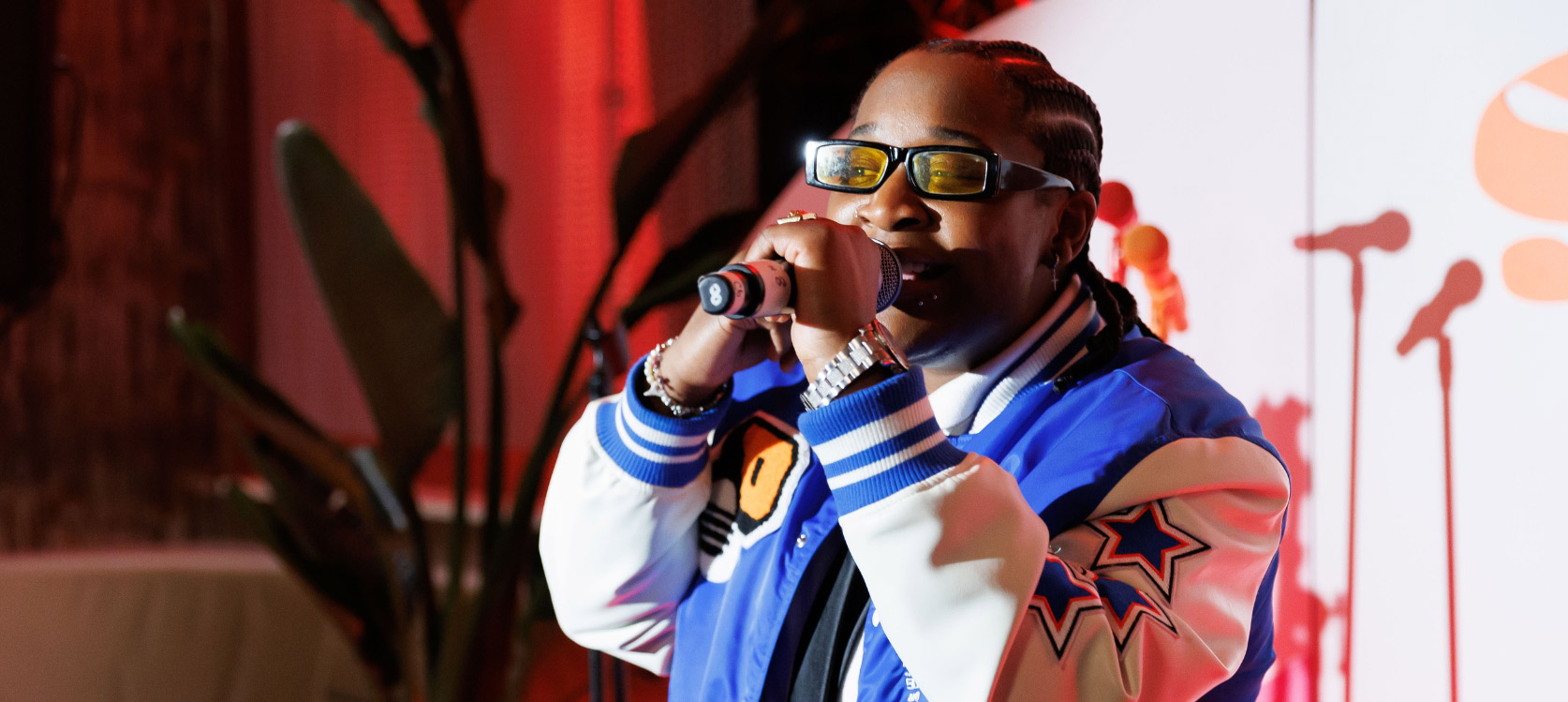
As of press time, Jack Harlow has not publicly responded to Jozzy’s statements.
It would be easy to file this under celebrity drama and scroll past it. Don’t.
What Jozzy is describing — a recording artist asking a collaborator to waive their right to songwriting credit — has direct implications for music publishing, royalty collection, and the legal structure that governs how creators get paid. Under U.S. copyright law, a songwriter who contributes original, copyrightable expression to a composition is entitled to co-authorship unless they have contractually agreed to work-for-hire terms or voluntarily forfeited that right. Asking someone, verbally, to simply stay silent about their contribution doesn’t eliminate the legal foundation — it just creates the conditions for a dispute down the line.
Jozzy’s refusal was not just personal. It was legally sound. “I’m not a ghostwriter,” she said plainly. “If the song comes out, I’m letting n***as know I wrote it.”
Now, the complicating question: if no song from that session was ever commercially released, the financial and legal stakes of that specific collaboration may be limited. But the behavior she’s describing — an artist using their platform leverage to pressure a collaborator into anonymity — is not uncommon in this industry, and it rarely gets said out loud. The fact that she’s saying it now, while Harlow is simultaneously taking heat for his “I got Blacker” comments in a New York Times interview about his R&B album Monica, adds a layer of context that the industry shouldn’t ignore.
A white rapper asking a Black female hitmaker to erase herself from the record — in a session that apparently contributed to the sound of his work — is an awkward creative disagreement. This topic will always come up. Is this a power dynamic that the music business has enabled for decades, quietly and systematically? Not sure.
The Broader Problem with Ghostwriting “Requests”
The ghostwriting conversation in hip-hop typically gets framed around authenticity — does the rapper really write their own bars? That framing, while culturally valid, obscures the economic reality underneath it.
When a writer is asked to go uncredited, they lose more than their name on a liner note. They lose ASCAP or BMI registration on that composition. They lose performance royalty income on every stream, sync placement, and public performance of the track — potentially for the full duration of copyright, which now extends 70 years past the creator’s death under current U.S. law. They lose the portfolio credit that could lead to the next deal, the next collaboration, the next advance. They lose leverage.
For established writers like Jozzy, the math still works — she has enough credits and enough cachet to absorb one missed opportunity. But for emerging songwriters without her platform, the same “request” can cost them a career’s worth of compound income before they ever see a royalty statement.
Jozzy’s willingness to name this publicly — with specifics, with calmness, and without apparent malice — is a service to every songwriter in a room who has been made to feel like their credit was negotiable.
What Happens Next

Harlow’s camp has not issued a response. Whether one comes likely depends on how aggressively this story continues to circulate. Given the confluence of his Monica controversy, ongoing discussions about cultural appropriation in his pivot to R&B, and now this songwriter credit story, the pressure on his team to address it publicly is building.
For the wider industry, the more meaningful outcome would be a structural one: clearer pre-session agreements about credit and compensation, stronger advocacy from publishers and performing rights organizations around songwriter protections, and a culture shift that treats writing credit as a non-negotiable starting point — not a favor an artist grants to the people who help make them sound good.
Jozzy held her ground in that session. She said no. Three years later, she’s saying it again, publicly, with her full name attached.
That kind of accountability is exactly what this industry needs.