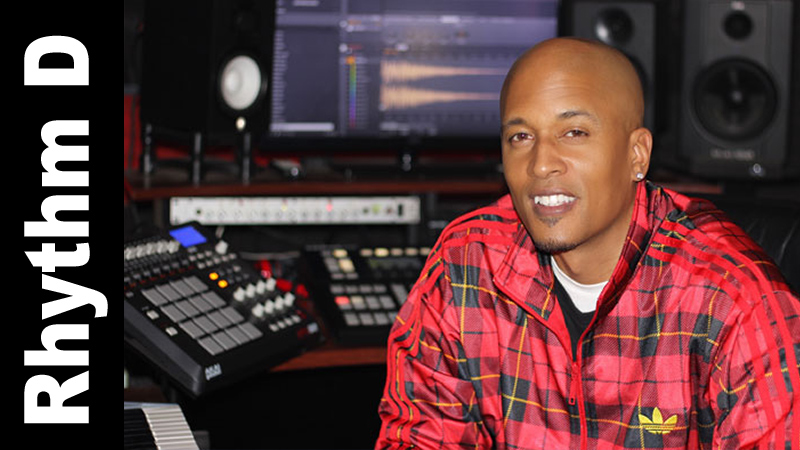
Rhythm D: Ruthless by Design (Interview)
By: Todd “DG” Davis
Rapindustry.com
___
Rhythm D—David Weldon—is a Pacific Coast producer and songwriter who helped shape the foundation of G-funk from the inside out, turning that early Death Row–era energy into a defining sound for the culture.
He started in the Death Row orbit during the The Chronic era, then made a key move to Ruthless Records in 1992, where his sound and identity fully locked in.
His biggest landmark moment came with the late Eazy-E’s “Real Muthaphuckkin G’s,” a defining Left Coast diss record. From there, he delivered Paperboy’s “Ditty” and contributed to Bone Thugs-N-Harmony projects like Creepin’ on ah Come Up and E. 1999 Eternal.
His catalog also includes work with Snoop Dogg, MC Ren, Mack 10, and Kokane, reinforcing his reach across the Western Seaboard movement.
Also known as “Tha Genie,” Rhythm D is still active today, reflecting on and staying connected to the era he helped build while continuing to represent its sound and legacy.
What inspired the concept and overall vibe behind “Chevys”?
It was Kokane’s hook that he laid over the beat. He came up with the concept after he heard it, and it fit the West Coast vibe of our history in Los Angeles and the lowrider culture.
How would you define the sound direction you locked into for this record?
As an original pioneer of the West Coast sound, I decided to create a beat that would take us into the new generation of funk and hip-hop—something the pop-locking culture and dancers could relate to without it sounding dated. It’s more of a futuristic fusion, combining opera with my Roger Troutman–influenced style.
What does “Chevys” represent to you within West Coast culture and your legacy?
“Chevys” represents the elements of lowrider culture and Chevrolet history in hydraulics, including custom-built ’64 Impalas and all old-school cars that became the epitome of hopping and lowering cars and trucks made from the late 1960s to today.
How did your G-funk era influence the foundation of this production today?
Any music genre has its pioneers who paved the way for its sound to be heard. My influences were bands like Cameo, Zapp, Tom Tom Club, Rick James, and George Clinton and Funkadelic. I just chose to make it in my own way.
What was your mindset bringing King T, CJ Mac, Poppa LQ, and Kokane together on one track?
Bringing these four legends together was the only wise choice of rappers I knew who could handle the aggressive West Coast sound I’ve created for so long in this business. It needed real West Coast MCs connected to the streets to flow over it correctly and sound authentic.
How did you balance that classic West Coast feel with a modern edge in the production?
It was all about picking the right claps, snares, and kicks that I have in my production arsenal, while still being able to make the beat appeal to the new generation.
What role did Kokane’s signature vocal style play in shaping the record’s identity?
Kokane’s voice sounds like a mixture of George Clinton and James Brown. His style is authentic, and even though he reminds listeners of past funk pioneers, there is a tonality that adds a familiar cadence.
What stood out most about the creative chemistry during the making of “Chevys”?
The camaraderie of us all coming together for a historic collaboration, with unity from different neighborhoods and life experiences through hip-hop and all walks of life in California.
Where does this record sit in your current evolution as a producer?
My evolution as a musician, producer, mix engineer, and sound designer—living on the West Coast and East Coast and producing artists like Eazy-E, Bone Thugs, Mack 10, Snoop Dogg, and other legendary hip-hop artists over a 37-year career—brings me back to my roots, where it all started with Paperboy’s “Ditty,” my first hit record in 1992.

What does long-term collaboration and legacy mean to you at this stage?
Legacy means determination. It means believing in myself and following my destiny to become the first me. We all have a purpose. I’ve been blessed by the Creator with a talent and opportunity to express it and give it to the world.
What feeling were you aiming to capture the moment the beat came together?
I aimed at keeping my original flavor and style of beats, but adding a choir to switch up the vibe within the musical elements that make me who I am when I produce something funky.
When listeners press play on “Chevys,” what do you want them to immediately feel or experience?
I want them to feel like the West Coast is back—but it never left.
