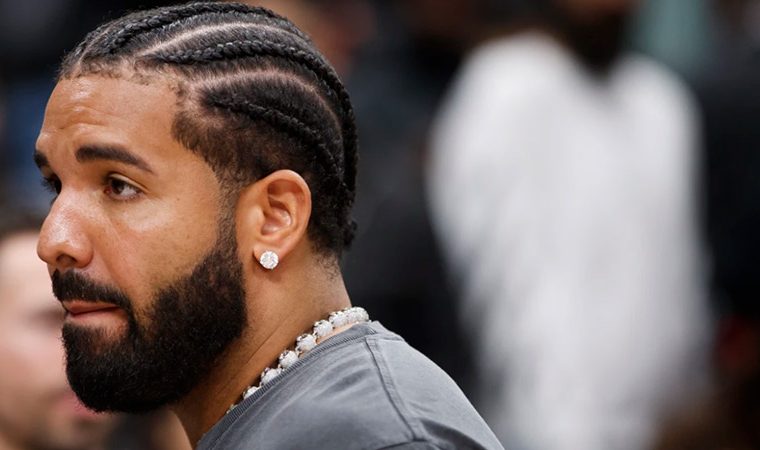
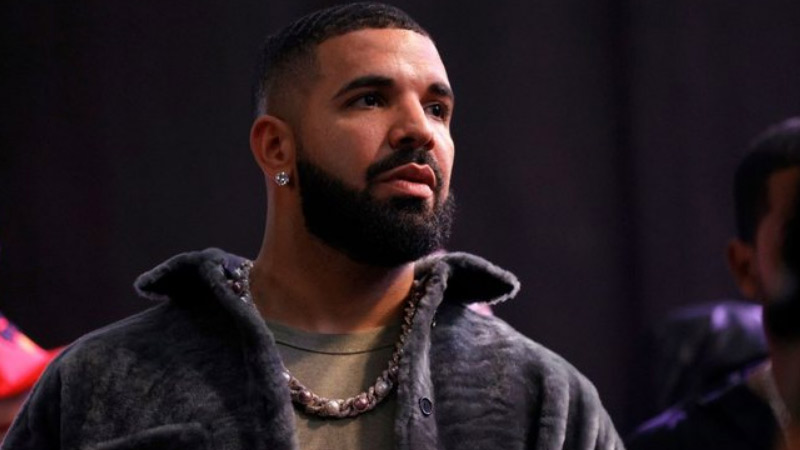
They said Kendrick Lamar killed Drake in 2024. They said “Not Like Us” was the headstone. They said the 6God was done.
Two years, one triple-album supernova, and 14 Billboard Hot 100 No. 1 singles later — Drake just engraved his name above Michael Jackson’s on a record that stood for decades. The question was never whether Drake would come back. The real question was how hard he’d swing when he did.
We have our answer.
“Janice STFU,” from his latest album ICEMAN, debuted at No. 1 on the Billboard Hot 100, giving Drake his 14th career Hot 100 No. 1 single — officially breaking his tie with Michael Jackson for the most chart-toppers ever by a solo male artist in the chart’s 67-year history.
How Drake Flooded the Market With 43 Songs in One Night
Before we get to the records, let’s talk about the move itself — because what Drake pulled off on May 15 deserves its own place in the release strategy hall of fame.
ICEMAN, HABIBTI, and MAID OF HONOUR were released simultaneously on May 15, 2026 through OVO Sound and Republic Records — serving collectively as Drake’s ninth, tenth, and eleventh studio albums. Production was handled by Drake’s frequent collaborators including 40, Boi-1da, and Tay Keith, with guest appearances from Future, Molly Santana, and 21 Savage.
It’s partly a flex of genre range: harder-edged rap on ICEMAN, a more R&B/sad-bangers feel to HABIBTI, and club-forward energy on MAID OF HONOUR. But releasing three albums simultaneously in 2026 is also a flex for streaming stats.
The rollout itself was a masterclass in sustained anticipation. Drake teased the project with a series of public stunts — including a large ice-block installation in a downtown Toronto parking lot with the album’s release date hidden inside, and he launched the project on May 15 by lighting Toronto’s CN Tower in an icy blue hue before surprise-dropping the album alongside its companion releases the same night.
Forty-three new songs. One night. The streaming platforms buckled.
If you work in A&R, streaming strategy, or label marketing, print these numbers and put them on your wall.
ICEMAN opened with 140.2 million first-day streams globally on Spotify, instantly becoming the biggest album debut of 2026 and the second-largest hip-hop debut ever on the platform — trailing only Drake’s own Certified Lover Boy. The Toronto rapper now officially holds the two biggest rap album debuts in Spotify history.
Drake achieved the near-impossible on Spotify by becoming the highest-streamed artist for both album (ICEMAN) and song (“Make Them Cry”) in a single day, with ICEMAN also claiming the top spot on Apple Music’s album charts in 79 countries.
Drake duly became the most-streamed artist in a single day on Spotify this year — a 1,100% increase in simultaneous listeners on Apple Music — and claimed the biggest first-day streaming debut globally on Amazon Music in 2026.
Across all three LPs, Drake’s trilogy amassed 635 million streams on Spotify in its first week alone.
Let that number breathe for a second. 635 million Spotify streams. In one week. From a rapper that half the internet declared culturally deceased 24 months ago.
The Billboard Records: One by One
The chart history Drake made this week didn’t happen in one column — it happened across every significant Billboard metric simultaneously. Here’s the full breakdown for the industry scorekeepers:
Hot 100 Singles Record: For decades, Michael Jackson held the record for male solo artists with the most Billboard Hot 100 No. 1 singles with 13. Drake had been tied with Jackson at 13 since 2023. “Janice STFU” from ICEMAN debuted at No. 1, giving Drake his record-breaking 14th.
All-artist singles milestone: Drake now ties Taylor Swift and Rihanna for the most No. 1 singles among all artists, with 14. Only Mariah Carey with 19, and The Beatles with 20, have more.
Billboard 200 Album record: ICEMAN earned 463,000 equivalent album units and secured Drake’s 15th chart-topper on the Billboard 200, besting Jay-Z’s previous record for most No. 1 albums among solo men and R&B/hip-hop artists.
The 1-2-3 sweep — never done before: ICEMAN, HABIBTI, and MAID OF HONOUR scored the top three spots on the Billboard 200 simultaneously — Drake becoming the first artist ever to occupy Numbers One, Two, and Three at the same time.
Hot 100 entries record: Drake posted 42 entries on the Billboard Hot 100, surpassing Morgan Wallen’s record of 37 from last May. He also became the first act ever to amass more than 400 career entries on the Hot 100.
Top 10 stranglehold: “Janice STFU” was one of nine songs Drake placed in the Top 10 of the Hot 100, extending his record of total songs to crack the Top 10 to 90. The only non-Drake song holding ground was Ella Langley’s “Choosin’ Texas” at Number Five.
In a week where Drake could have broken any one of these records and called it a career achievement, he broke all of them at the same time.
The Michael Jackson Connection: Was This Was Always the Plan?
Nothing about the MJ angle seems accidental. The album artwork leans hard into the iced-out aesthetic, paired with what reads as a nod to Michael Jackson’s iconic crystal-studded glove — feeling like preservation, as if Drake is trying to freeze a version of himself before the narrative fully slips away.
Drake celebrated surpassing MJ’s record on Instagram, captioning an illustrated image of Michael Jackson with Iceman-blue braids: “Neck broke from carrying the chain / Back broke from carrying the game / Records broken carry on my name / Carry on carry on.”
View this post on Instagram
That’s not a clapback. That’s a coronation statement. Drake has been telegraphing this moment for years, and the ICEMAN album name, the MJ-coded rollout, the CN Tower stunt — all of it was building toward a single headline: solo male artist, most No. 1s ever.
It feels like he built the whole album campaign around the record he intended to break.
The Kendrick Question: What the Critics Got Right (and Wrong)
Here’s where the story gets nuanced, because the chart numbers and the critical reception are living in two completely different universes right now.
By making Drake an underdog for the first time since his halcyon days as a mixtape rapper, Kendrick Lamar positioned him to make a spectacular comeback — and that comeback is ICEMAN. While the album does fall short of spectacular, it succeeds as a vindication: a dexterous if bloated project that also arrived alongside two surprise albums, HABIBTI and MAID OF HONOUR.
Critics generally found ICEMAN — the flagship project — to be the weakest of the three. The consensus forming is that HABIBTI and MAID OF HONOUR are clearly better records — not just because they are more consistently interesting forays into moody R&B and party-starting club-rap, respectively, but because Drake actually lets himself loose, while ICEMAN is about how much he wants to be set free.
On ICEMAN, Drake takes aim at everyone from Lamar to A$AP Rocky to Universal Music Group CEO Lucian Grainge.
The shots at Grainge, in particular, are worth noting for the industry people in the room. Drake is publicly firing at the head of the label he’s signed to — and doing it on a release that just generated hundreds of millions in streaming revenue for that same label. That tension is not a small thing.
But for the RapIndustry.com audience, here’s the critical nuance: critics talking about Drake’s artistic decline don’t pay his bills. Releasing three albums simultaneously is a move designed to dominate conversation and reshape the streaming landscape in a single moment — a strategy that carries real risk if the critical reception hardens into a broader narrative about decline. That risk hasn’t materialized, at least not commercially. The charts don’t lie, and right now, every chart is speaking Drake’s name.

Every label exec, manager, and independent artist in the game should be studying what OVO and Republic pulled off here — because the three-album simultaneous drop is going to be discussed in music business schools for a decade.
The genius of the strategy is in how it weaponizes the streaming algorithm. Three albums means three times the playlist consideration. Three times the “New Release” shelf space across every DSP. Three distinct genre identities to capture three different audience segments simultaneously. And when all three debut in the top three of the Billboard 200, the cultural conversation is completely overwhelmed — there is no room left in the news cycle for anyone else.
It also neutralized the critical pile-on problem. When critics attacked ICEMAN for being too defensive and Kendrick-obsessed, fans were already three albums deep into a different mode with HABIBTI and MAID OF HONOUR. You can’t sink a triple album drop with a bad review of the first disc.
The rollout was equally engineered to perfection. The Toronto Fire Department had to melt massive ice blocks that Drake strategically placed around his hometown to hide the release date. Fans and paparazzi hunted for clues embedded within these installations, creating viral social media moments weeks before a single song dropped.
Where This Leaves Drake’s Legacy
Let’s be direct: as of this week, Aubrey Drake Graham holds the record for the most Billboard Hot 100 No. 1 singles by any solo male artist in the history of recorded music. He owns the two biggest rap album debuts in Spotify history. He released three albums simultaneously and swept the top three positions of the Billboard 200 — something no artist, in any genre, has ever done.
All of this happened two years after Kendrick Lamar declared him dead.
The rap is this: charts and cultural relevance are two different conversations. Kendrick Lamar won the battle. Drake responded by winning every measurable commercial metric available to him. Whether that constitutes “winning” depends entirely on what you value — and for the music business audience this publication serves, the answer is complicated.
What isn’t complicated is that the ICEMAN era just rewrote what a rap album rollout can look like. The streaming numbers, the marketing architecture, the genre diversification across three simultaneous bodies of work — every artist team in the building should be taking notes.
The 6God didn’t just come back. He came back and redrew the entire scoreboard.