
RUNWAY RICHY: ‘Don’t You Know’ — Loyalty Before the Limelight, Love Before the Fame (Interview).
By: Todd “DG” Davis
Rapindustry.com
___
New Orleans roots. Decatur raised. A story of survival, loyalty, and growth.
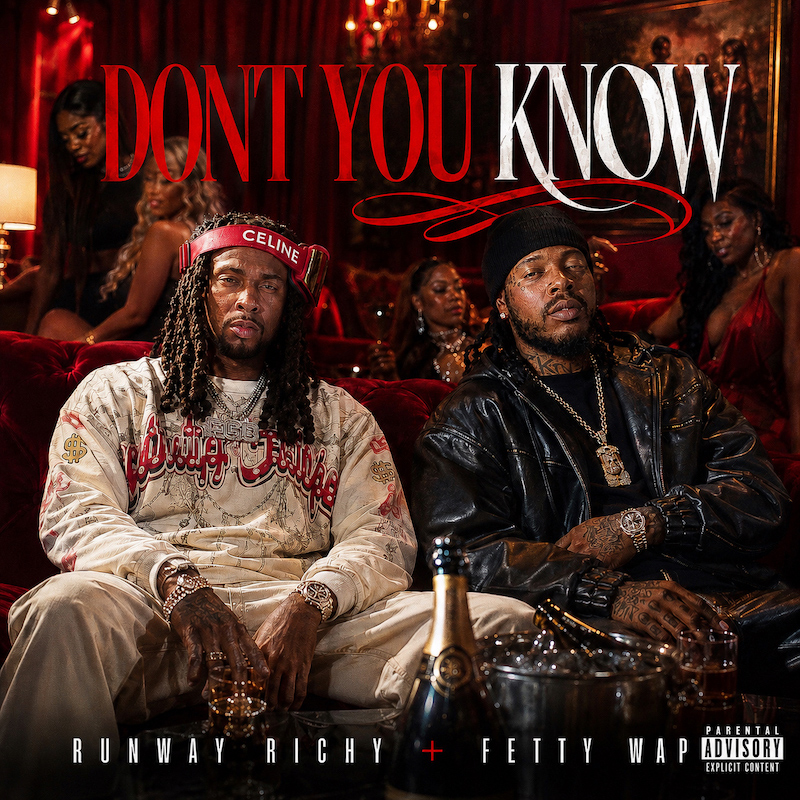
In hip-hop, everybody wants to celebrate the glow-up, but the real story is often about who stood beside you before the wins, the recognition, and the money started rolling in. Runway Richy knows that journey firsthand, channeling life experience, perseverance, and Southern street perspective into music that speaks to the hustle behind the success. Now, the New Orleans-born, Decatur-raised rapper links with New Jersey hitmaker Fetty Wap for “Don’t You Know,” a melodic, feel-good tribute to the women who hold it down when life gets complicated, the road gets rough, and the dream is still a work in progress.
Directed by Rockstar Colt and iNightLyfe, the video brings lavish-house-party energy while keeping the heart of the record front and center. Beneath the celebration is a message that runs deeper than the champagne and scenery: recognizing the love, patience, and loyalty of a woman who believes in you before the rewards arrive. Richy brings that appreciation to the forefront, while Fetty Wap adds his signature melodic touch, connecting the pursuit of success with the importance of having someone in your corner through every chapter. Together, they give flowers to the women whose support never depended on the size of the bank account or the shine of the spotlight.
Serving as the lead single from Richy’s forthcoming China Cafeteria 3, “Don’t You Know” has surpassed 2 million Spotify streams and generated more than 77,000 TikTok user videos. For Richy, collaborating with Fetty Wap is more than a moment to celebrate; it’s a milestone in a journey built on persistence, personal growth, and believing in the vision. And for Fetty, whose melodic records have left a lasting imprint on hip-hop, the collaboration brings his unmistakable sound to a song rooted in loyalty and appreciation.
Richy has faced challenges that could have derailed his career, including a near-fatal car accident that forced him to relearn how to walk. His return to music reflects the determination behind his artistry—and gives added meaning to a record about recognizing the people who remain in your corner when life tests you. “Don’t You Know” is ultimately about remembering who believed in you before the breakthrough, appreciating who stood beside you during the struggle, and making sure they get to enjoy the blessings when they finally come.
___
Q. New Orleans-born and Decatur, Georgia-raised, your journey has been shaped by different places, experiences, and lessons that ultimately found their way into your music. Take us back to the beginning: What first pulled you toward hip-hop, and how did your upbringing shape the artist Runway Richy would become?
Growing up between New Orleans and Decatur gave me two different perspectives on life. Both places have their own culture and their own way of shaping you. New Orleans has a deep musical history, and Decatur has a certain grit and hustle you really have to experience to understand.
Music was always around me, but hip-hop connected with me differently because it gave people from environments like mine a voice. I could listen to certain artists and relate to what they were talking about. It wasn’t just entertainment. It was real life being put into words.
Coming up, I learned early that nothing is promised. You have to stand on something, believe in yourself, and work for whatever you want. Those experiences built my mentality before I ever took music seriously as a career. Runway Richy is bigger than a rap name. It reflects where I come from, what I’ve survived, and everything I’m still working toward.
Q. Your music has always drawn from real-life experiences, turning struggle, ambition, and hard-earned lessons into something people can relate to. How important has authenticity been to your identity as an independent artist, and what do you want listeners to understand about the man behind the music?
Authenticity is everything to me. One of the biggest mistakes artists make is trying to become whatever is popular instead of figuring out what makes them different. Trends come and go, but your story belongs to you. Nobody else can tell it the way you can.
When I make music, I’m speaking from my experiences. Sometimes that’s the struggle. Sometimes it’s success, relationships, mistakes, or lessons I had to learn the hard way. I’m not trying to paint a picture like everything has been perfect because it hasn’t.
I want people to understand there’s a real person behind Runway Richy. I’ve taken losses, questioned things, and had to make decisions that changed my life. But I learned how to turn those experiences into motivation. That’s what makes music powerful. You might come from a different background, but you can still find part of your own story in mine. I don’t just want people to hear my records. I want them to feel them.
Q. Your journey hasn’t been without adversity, including a near-fatal car accident that forced you to relearn how to walk. How did that recovery reshape your outlook on life, your purpose, and your determination to keep pursuing your dreams?
Man, that experience changed everything for me. When you go through something that serious and have to relearn how to walk, life looks completely different. Things you used to do without thinking suddenly become challenges. That’s humbling.
Before something like that happens, you can get caught up chasing success and worrying about what’s next. You forget how much you already have to be thankful for. Recovery wasn’t just physical. It was mental, too. I had to dig deep and remind myself this wasn’t the end of my story. I had to develop patience because healing doesn’t happen on your schedule.
It taught me that strength isn’t always about how tough you look. Sometimes it’s getting up every day and continuing to fight when things aren’t going your way. So when I talk about perseverance, that’s not something I’m saying because it sounds good in an interview. I’ve lived it. I’m still here, still walking, still making music, and I intend to make that opportunity count.
Q. You’ve built a catalog alongside major names in hip-hop, including Gucci Mane, T.I., Young Nudy, B.o.B., and others. What have those collaborations taught you about the craft and business of making music, and how have you maintained your own identity?
One thing I’ve learned is that talent might get you in the room, but how you carry yourself and handle your business determines how long you stay there. Working with different artists has let me see different creative processes, work ethics, and approaches to the industry. You can learn a lot just by paying attention.
But I’ve always understood that you can’t lose yourself trying to become somebody else. I respect what those artists have accomplished, and part of what made them successful is that they established their own identities. I want somebody to hear my music and recognize Runway Richy.
From a business standpoint, I’ve learned that making a good record is only one part of the equation. You have to understand relationships, marketing, consistency, and ownership. They call it the music business for a reason. Every collaboration is an opportunity to grow, but the bigger goal is taking those lessons and applying them to what I’m building for myself.
Q. Let’s talk about “Don’t You Know,” your collaboration with Fetty Wap. The record celebrates a woman who holds you down before the money, recognition, and rewards arrive. What inspired the song’s message?
“Don’t You Know” is really about loyalty and appreciation. Everybody wants to celebrate with you when you’re winning. When the money comes in and your name gets bigger, it’s easy for people to want to be around. But what about the person who believed in you before any of that?
What about the woman who saw your potential before the world recognized it? The one who was there when you were still figuring things out and trying to turn your dreams into reality? That’s what this record represents. Sometimes we get so focused on reaching the next level that we forget to acknowledge the people who helped us get there.
Loyalty isn’t always about somebody doing something financially for you. Sometimes it’s having somebody who believes in your vision when you don’t have much to show for it yet. That support is priceless. I wanted a record that feels good but also says something real. When you finally make it, you should never forget who stood beside you before the world started paying attention.
Q. Fetty Wap brought a signature melodic style to hip-hop that dominated radio and streaming during his breakout years. What did his music mean to you, and what was going through your mind when the opportunity came to work with him?
First off, you have to respect what Fetty Wap accomplished. He came into the game with a sound that was his own, and that’s not easy. When you hear a Fetty record, you know it’s Fetty. His melodies, delivery, and energy connected with people everywhere. As an artist, I respect that kind of originality.
Having the opportunity to collaborate with him was big for me. But I didn’t want to approach it like I was just trying to get a big feature. I wanted us to make something that actually made sense musically. My style and his style are different, and that’s what made it interesting. I bring my perspective and delivery, and he brings that melodic element people connect with.
With “Don’t You Know,” the goal was to create something with feeling, something people could ride to, sing along with, and relate to. When two artists bring their own identities together without compromising who they are, that’s when you get something special.
Q. You described making a song and video with Fetty as legendary and an opportunity that could change your life. Beyond the excitement, what did that moment represent for your own career?
Honestly, that was a major moment for me. When you look at what Fetty Wap accomplished in this industry, you have to respect it. He created records that connected with millions of people and made a real impact on the culture. Working with somebody of that caliber meant a lot.
As an independent artist, you put in countless hours trying to get your music heard, build relationships, and create opportunities. People see the finished product, but they don’t always see the work that went into it. Making the record was already a blessing, but bringing the video to life took the experience to another level. It let me see the progress from all that work.
At the same time, one opportunity doesn’t define your career. What you do afterward matters. For me, it confirmed that I’m moving in the right direction and motivated me to work even harder. I appreciate the moment, but I’m nowhere near satisfied. I’m focused on building something bigger.
Q. The official “Don’t You Know” video, directed by Rockstar Colt and iNightLyfe, pairs a lavish house-party atmosphere with a deeper message. How did you want the visual to complement the record?
I wanted the video to capture the energy of the record while still telling the story behind it. When people hear “Don’t You Know,” I want them to feel good. It’s a record you can ride to, turn up to, or enjoy with somebody special. So visually, we wanted that same atmosphere.
The house-party setting gives you that celebratory feeling. You see people enjoying themselves and experiencing the lifestyle. But when you listen to the lyrics, the message goes deeper than money, parties, or material things. It’s about loyalty and recognizing the people who stood beside you before everything came together.
People can get caught up in the image of success and overlook what matters. You can have all the money in the world, but you can’t just buy genuine love and loyalty. Working with Rockstar Colt and iNightLyfe, I wanted the visual to entertain without losing that message. Hopefully, somebody watches it and thinks of the person who’s been holding them down.
Q. With “Don’t You Know” surpassing two million Spotify streams and generating more than 77,000 TikTok user videos, how important has that organic response been?
It’s a great feeling, especially when you’re independent and understand how much work goes into getting a record heard. Seeing “Don’t You Know” reach over two million Spotify streams and generate more than 77,000 TikTok videos shows me people are connecting with the music.
You can spend money promoting a record, but you can’t force somebody to love it, share it, or make it part of their everyday life. That connection has to be real. Streaming and social media have created opportunities for independent artists that weren’t available the same way years ago. You don’t necessarily have to wait for a label or radio station to introduce your music to the world.
But streams and views are only part of the equation. The goal is turning listeners into supporters who follow your journey, hear the next project, and grow with you. That’s how you build longevity. I’m grateful for everybody who streamed, shared, or made a video with the record. It motivates me to keep delivering quality music.
Q. “Don’t You Know” leads into China Cafeteria 3. What does this installment represent in your evolution, and what can fans expect?

China Cafeteria 3 represents growth, but it also represents staying connected to where I come from and the sound that helped establish me. Every project has represented a different chapter. As you get older and experience more, your perspective changes, and naturally, your music reflects that.
You’re still going to get the Runway Richy sound my core supporters know: street energy, authenticity, and real-life experiences. But I want to show people I’m not limited to one type of record. “Don’t You Know” is a good example. It’s a different vibe, but it’s still me. Growth means being comfortable exploring different sounds without losing your identity.
I want longtime supporters to recognize the growth, and I want new listeners to hear this project and go back through my catalog. I’m not just trying to put another project out. I’m trying to make sure every release moves the music and the brand forward.
Q. As an independent artist, what has been the biggest lesson in staying consistent, and what advice would you give an emerging artist waiting for a breakthrough?
The biggest lesson is that you have to believe in yourself before you expect anybody else to believe in you. Everybody wants success, but not everybody understands what comes with it. When you’re independent, you’re not just the artist. You’re dealing with the business, marketing, relationships, finances, and decisions that affect your career.
Talent alone isn’t enough. You can be the hardest artist in your city, but if you don’t understand how to position yourself, promote your music, and handle business, that talent might never reach its potential. And you have to be patient. Social media makes it look like everybody is supposed to blow up overnight, but you don’t see all the years of work behind somebody else’s moment.
My advice is to build your own lane. Learn the business. Protect your music. Understand your paperwork. Build genuine relationships and invest in yourself. Don’t let somebody else’s success make you feel like you’re failing. Keep learning and putting yourself in position so you’re ready when opportunities come.
Q. Looking at the journey from New Orleans to Decatur, through adversity and into China Cafeteria 3, what are you most proud of, what do you want your legacy to stand for, and what’s next?
When I look back at everything I’ve been through, I’m most proud that I never stopped believing in myself. Coming from New Orleans, growing up in Decatur, and going through an accident where I had to learn how to walk again changes the way you look at life. There were plenty of situations that could’ve made me give up. But I’m still here, creating, growing, and chasing something bigger. I don’t take that for granted.
Of course, I want the hit records, plaques, sold-out shows, and financial freedom. Anybody who takes their craft seriously wants to see the results of their hard work. But beyond that, I want my story to mean something. I want people to understand that where you start doesn’t have to determine where you finish. You can face adversity and setbacks and still move forward.
I want my music to represent authenticity. When you hear me speak about something, it’s coming from a real place. Right now, I’m focused on building on the momentum of “Don’t You Know,” reaching new audiences, making meaningful collaborations, and taking China Cafeteria 3 to another level. I’m not just chasing a moment. I’m building a legacy. And after everything I’ve been through, I still feel like I’m just getting started.