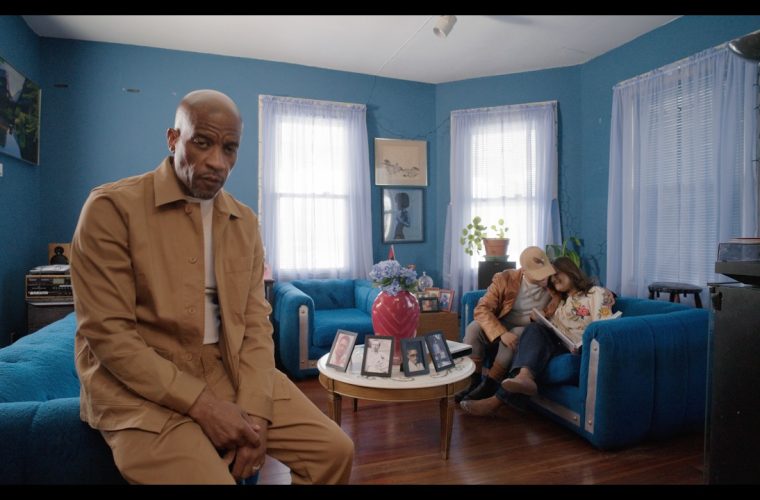

Pearl Gates: Brooklyn State of Mind [Heights Edition]
By: Todd “DG” Davis
Rapindustry.com
___
Pearl Gates is an underground hip-hop artist from Washington Heights, New York — a place where sound doesn’t just surround you, it shapes you. Raised in that collision of cultures, he carved out a lane built on soul, lyricism, and boom-bap discipline, pairing reflective storytelling with hooks that carry real emotional weight.
His entry into the wider hip-hop conversation sharpened after linking with eMC on The Tonite Show, a moment that opened doors to Below System Records and set the foundation for a run of grounded, purposeful releases. From the introspective ‘Diamond Mind‘ EP to the full-length ‘Live From The First’, and the collaborative project “Champion Sounds” with Wordsworth, his catalog reflects growth without losing resolve.
Across the journey, Pearl Gates has shared space with lyrical heavyweights like Masta Ace, Talib Kweli, Kool G Rap, and members of the Juice Crew — not as name drops, but as evidence of a pen that belongs in those rooms. His music sits in that rare intersection where golden-era sensibility meets lived experience, built for listeners who still value substance over surface.
What was it like growing up in Washington Heights, and how did that environment shape your voice before you ever recorded music?
Growing up in Washington Heights was fun, challenging, and incredibly diverse from both a people and musical perspective. I had access to everything — salsa, merengue, bachata, jazz, classical, and hip-hop — all living side by side in the neighborhood. That kind of exposure expanded my artistic palette early and allowed me to approach creativity without limitations. It helped shape the multi-faceted style I bring into my music today.
When did you first realize your pen was connecting beyond your immediate circle and neighborhood?
I entered a showcase outside my neighborhood at 16 with the promise of opening for Method Man and Redman. I ended up winning the showcase but got scammed out of the opportunity. Still, what stayed with me was seeing complete strangers connect with my music. That moment encouraged me to seriously pursue my passion.
How did early work like ‘Diamond Mind’ set the tone for the artist you were becoming?
‘Diamond Mind’ laid the foundation for the honesty and authenticity that still defines my music. Even though it was my first official release, I approached it like it could be my last. I let myself speak my truth unapologetically, and that gave me the confidence to keep growing fearlessly with both my audience and my story.
What shifted creatively for you between your early releases and ‘Live From The First’?
‘Live From The First’ felt like an evolution creatively and personally. Sonically, it was a journey from darkness to light in a much more direct way than my earlier work. I also leaned more into singing, balancing melodies with bars, and collaborating with artists I deeply admire pushed me to elevate my pen even more.
What did collaborating with Wordsworth on ‘Champion Sounds’ teach you about chemistry between lyricists?
Working with Wordsworth and Quincey Tones was unforgettable. It taught me how to trust both my process and someone else’s process at the same time. There was healthy competition, but it was always rooted in teamwork. Sometimes you have to let another person’s greatness steer the moment and just create magic together.
How did ‘Play This 2′ reflect your balance between traditional hip-hop roots and a more modern sound?
‘Play This 2’ blurred the line between classic boom bap and modern melodic hip-hop. Working with Syll Muzik made that transition natural. At that time, I was really diving deeper into singing and experimenting with another layer of creativity beyond straight rapping.
What does being connected to eMC and the broader Juice Crew legacy mean to you personally?
It’s honestly a dream come true. When I started making music, my goal was to become part of the fabric of hip-hop culture — the same culture that changed my life. Working with legendary names like eMC and members of the Juice Crew made something that once felt impossible become reality.
What did it mean to work alongside Masta Ace and RZA on new Juice Crew Allstars material?
RZA is literally one of the reasons I started making music. Hearing his verse on “Triumph” for the first time changed everything for me creatively. So being able to work with Masta Ace, who’s become a mentor and brother to me, while also rhyming over RZA production alongside Mathematics and the Juice Crew legacy — that’s history to me.
How do collaborations with artists like Kool G Rap and Talib Kweli continue to sharpen your approach to writing?
Sharing records with lyrical giants is not for the weak. But it reminds me how much love we all still have for the craft and the culture itself. I just focus on being myself and delivering my message in the illest, sharpest way possible. That naturally forces me to level up.

What inspired the message behind your latest single ‘Single Mothers‘?
On the surface, the song was inspired by Roxanne Shanté and her personal journey. Learning her story moved me deeply. But at the core, it’s also inspired by my own mother and everything I witnessed her endure. The song is really for all single mothers — just a reminder that they’re loved, appreciated, and deserving of recognition.
What do you hope listeners take away emotionally from ‘Single Mothers’?
Parenting is difficult, but being a single mother comes with another level of sacrifice. I hope listeners reflect on their own mothers — or themselves if they’re mothers — and realize how sacred that love really is. It deserves to be celebrated in hip-hop and beyond every chance we get.
Looking at your full journey so far, what defines the Pearl Gates story in hip-hop today?
Pearl Gates has always been one with the people. My name represents being aligned with something higher, and whether I’m in my darkest or brightest moments, I lean on that connection to bring truth and light into the music. My story is rooted in the essence of hip-hop that lasts — the part built on honesty, humanity, and love.