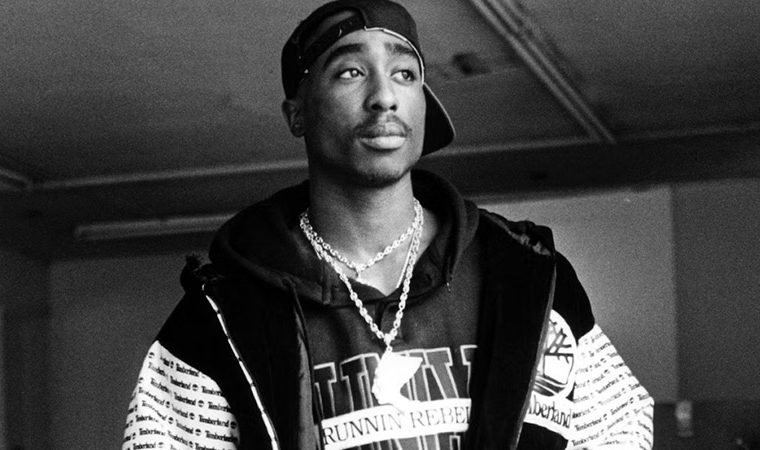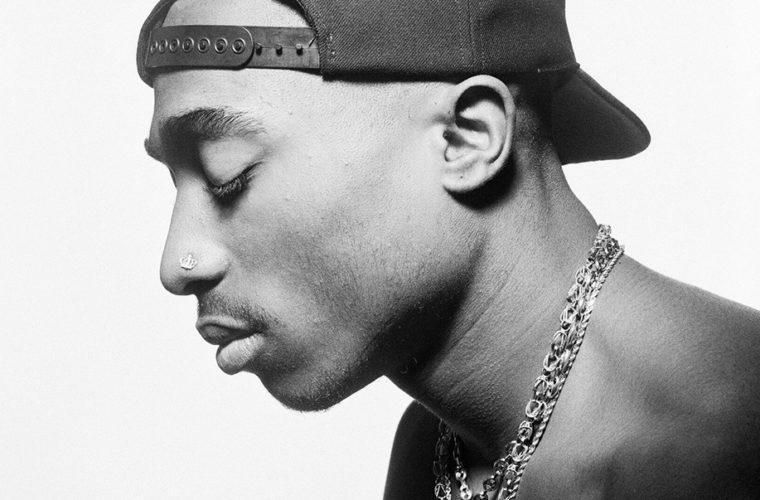

Nearly three decades after the world lost its most electrifying voice in hip-hop, Baltimore did what it should have done years ago. On Friday, a portion of Greenmount Avenue was officially renamed “Tupac Shakur Way,” in honor of the late legend who lived in Baltimore during his formative teenage years — nearly 30 years after his death.
For too long, the Tupac narrative has been monopolized by coasts — New York claimed his birth, California claimed his death, and everyone in between argued over his legacy on the internet. But the truth that Baltimore has always known? Tupac moved to the city in 1984, attended Roland Park Middle School, Paul Laurence Dunbar High School, and eventually the Baltimore School for the Arts. The rawest, most intellectually ferocious version of Tupac Amaru Shakur — the poet, the thinker, the revolutionary — was shaped right here, on these streets.
And now one of those streets carries his name.
The rededication event on Greenmount Avenue — where Tupac’s childhood home still stands in the 3900 block — included rap and spoken-word performances, a special appearance by the Baltimore Oriole mascot, and the formal unveiling of both the Tupac Shakur street sign and a peace pole.
That peace pole matters more than people realize. The Tupac Amaru Shakur Foundation plants peace poles in cities across the country as part of an ongoing effort to create safe spaces within communities. This wasn’t just memorabilia — it was mission-driven, the kind of community-first thinking that Tupac himself breathed into his music every single bar.
Tupac’s sister, Sekyiwa “Set” Shakur, was in attendance and spoke with raw, unguarded emotion about what she wants the space to represent: “I’m begging the community to allow this park to be a place of safety and refuge. When children are in pain, or in need, or running from danger, any adult that’s around should offer protection.”
Let that sink in. The sister of arguably the greatest rapper who ever lived, standing on a renamed Baltimore block, begging for children to be protected. That’s the Shakur spirit in full effect — not spectacle, not nostalgia, but purpose.
Mayor Scott Kept It 100
Baltimore Mayor Brandon Scott didn’t come to the podium to give a generic politician’s speech. He came as a fan, as a witness to history, and as a man who felt Tupac’s death personally.
Scott said Baltimore was where Tupac “really became a rapper,” pointing specifically to early work written at Mullan Park, winning his first rap contest at Enoch Pratt Free Library, and performing his very first concert at the Cherry Hill Recreation Center.
Every aspiring MC in Baltimore reading this needs to understand that the greatest rapper of his generation practiced his craft in the same libraries and recreation centers you walk past every day.
Scott, who was in seventh grade at Roland Park Middle School when Tupac was killed, recalled the moment: “I will never forget the call I got when Pac got to be with the ancestors. My cousin rang my phone off the hook. It felt like a gut-punch. We cried in school for days. What we felt was that our voice, the voice of young, Black America, had just been snuffed out like that.”
And then the Mayor landed the quote of the day, pulling directly from Tupac’s own words: “I’m not saying I’m gonna change the world, but I guarantee that I will spark the brain that will change the world.”
Thirty years later, that brain keeps getting sparked. Every day.

The School That Made Him
At the Baltimore School for the Arts, Tupac studied acting, poetry, jazz, and ballet — and it was there that he befriended a young actress named Jada Pinkett Smith. Think about that curriculum for a second. The same man who wrote “Dear Mama” and “Keep Ya Head Up” was formally trained in classical disciplines that most rappers never touch. His pen was sharp because his mind was sharpened by a school that refused to put a ceiling on Black artistic expression.
That’s the origin story Baltimore needs to own, loudly and permanently.
In a move that bridged hip-hop and Baltimore’s sports culture, the Baltimore Orioles gave away Tupac Shakur bobbleheads to fans attending Friday’s game, and Sekyiwa Shakur threw out the ceremonial first pitch.