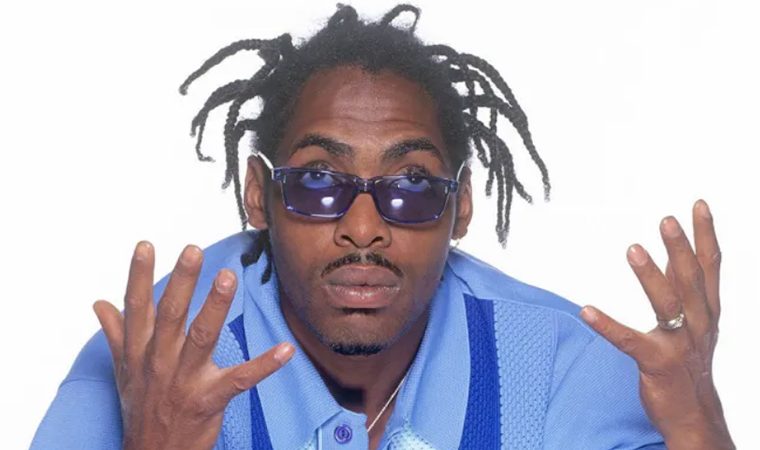

DWAYNE “MUFFLA” SIMON: You Know The Records. Now Know The Man (Interview)
By: Todd “DG” Davis
Rapindustry.com
___
Before the West Coast had a commercial “sound,” before East Coast/West Coast became one of Hip-Hop’s most overused chapters, and before anybody was handing out flowers for helping change the culture, Dwayne “Muffla” Simon was already in the room making noise.
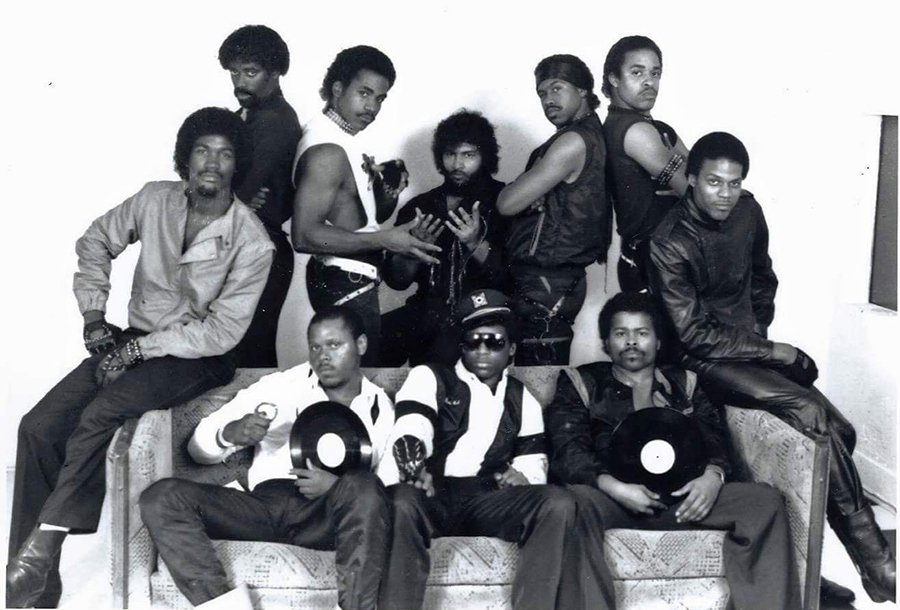
South Los Angeles. Uncle Jamm’s Army. L.A. Posse. That was the laboratory. The parties were packed, the streets were talking, and the music was evolving in real time. Muffla learned early that you better keep your ears to the street—because rhythm isn’t just something you hear. You feel it. You watch how a crowd moves. You understand what makes people react. You know when the funk is right.
Then came New York.
In 1986, Muffla and the L.A. Posse crew arrived at the Universal BRE as West Coast wildcards and returned the following year as something much bigger: pioneers who had helped kick open a door between two Hip-Hop worlds. Working alongside DJ Bobcat, Big Dad and the L.A. Posse family, Muffla brought something New York couldn’t manufacture—L.A. originality, precision, phonic energy and that unmistakable FUNK.
That chemistry landed them in the studio with LL Cool J and helped shape Bigger and Deffer, a record that still stands as one of the defining albums of Hip-Hop’s Golden Era. And then there was “I Need Love.” Today, it’s legendary. Back then, Russell Simmons reportedly wasn’t hearing the vision. Muffla and the crew did—and they pushed LL toward a side of himself that even he needed convincing to reveal.
That’s the kind of history that can get lost when we only remember the face on the cover.
Muffla wasn’t simply making records. He was helping connect dots that weren’t supposed to connect yet. From LL Cool J to Run-D.M.C.’s “Beats to the Rhyme,” his fingerprints sit inside a period when West Coast production was quietly reaching across the country and influencing the very center of the national Hip-Hop conversation.
And the story doesn’t stop at the boards.
There’s the Air Force veteran. The football coach. The mentor. The community-minded brother who understands that commitment and discipline don’t change just because the uniform does. Music became one chapter, football another, but the common denominator has always been the same: relationships, loyalty, work ethic and showing up.
That’s also why Muffla’s story hits differently today.
He’s not looking back from the sidelines. He’s still standing in the picture. Still connected. Still giving flowers to Bobcat, DJ Pooh, Big Dad, Breeze and the entire Uncle Jamm’s Army family. Still carrying the memories of a time when producers had to turn knobs, trust their ears and sometimes build a kick drum out of quilts and a cinder block because there wasn’t an endless menu of presets waiting at the click of a mouse.
Yeah… they don’t make ’em like that anymore.
Dwayne “Muffla” Simon came to New York as a wildcard and left with history attached to his name. Decades later, the résumé speaks for itself—but so do the relationships, the records and the people who were there when it was all being built.
So before we talk about what Muffla did, let’s acknowledge who Muffla is: a West Coast original, a Golden Era pioneer, a bridge-builder before bridge-building became a talking point, and one of the brothers who helped make sure Los Angeles wasn’t just part of Hip-Hop’s story—it was writing some of it.
The records say the rest.
_____
Q. Before L.A. Posse, Def Jam and platinum records, you were DJing in South Los Angeles as part of Uncle Jamm’s Army, when the West Coast was developing its own Hip-Hop identity in real time. What did those parties teach young Dwayne Simon about rhythm, crowd control and making music move people before producing became the mission?
Dwayne “MUFFLA” Simon: Keep your ears to the street. Understanding street vibes was a key asset.
Q. Uncle Jamm’s Army could pack huge venues at a time when the national Hip-Hop conversation was still heavily centered on New York. When people tell the story of early rap today, what do they still misunderstand about how established and innovative Los Angeles Hip-Hop culture already was?
Dwayne “MUFFLA” Simon: As my partner Darryl put it, NY had a genuine Hip-Hop culture as its foundation. L.A. Hip-Hop had a gang culture as its foundation.
Q. L.A. Posse eventually put you, DJ Bobcat, Big Dad and the crew into rooms with Russell Simmons and LL Cool J—a remarkable collision of two coasts before “East versus West” became an industry narrative. What did you guys bring from Los Angeles that Russell and LL heard and said, essentially, “We need that”?
Dwayne “MUFFLA” Simon: Originality. Precision. Phonic energy. We brought that FUNK!
Q. Bigger and Deffer became a defining album, but one of its most fascinating qualities is its range. LL could go from the aggression of “I’m Bad” to the vulnerability of “I Need Love” without either feeling out of character. What did working on that record teach you about producing the person instead of merely producing the rapper?
Dwayne “MUFFLA” Simon: He was a natural crooner from “I Want You & I Can Give You More.” We encouraged his croonability. We actually had to talk him into making “I Need Love.”
Q. “I Need Love” became a landmark rap ballad and opened territory countless MCs would later occupy. When you were creating it, was there any concern that slowing things down and exposing that softer side might be rejected—or could you already hear that Hip-Hop was big enough to contain vulnerability too?
Dwayne “MUFFLA” Simon: The only person that had ZERO confidence in “I Need Love” was Russell. He hated that song. It’s why it was NEVER a single.
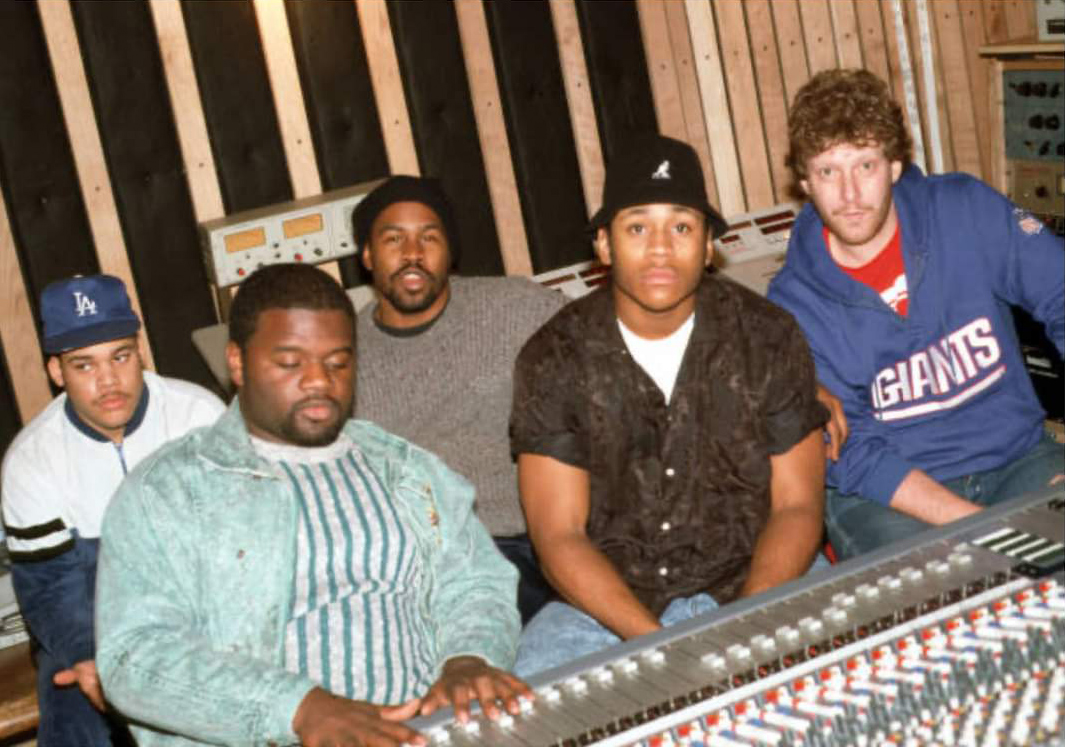
Q. Your relationship with Jam Master Jay led to another important chapter with Run-D.M.C. and “Beats to the Rhyme.” Jay was already one of Hip-Hop’s defining DJs, but what was he like creatively when the cameras weren’t around—and what did working beside him teach you about simplicity, drums and knowing when a record already has enough?
Dwayne “MUFFLA” Simon: Jay was big on stripping songs down to the bone to rebuild them even better. He was very much open when it came to collaborations. Got a lot of work done in between Madden challenges.
Q. There’s a beautiful contradiction in the L.A. Posse story: West Coast producers were helping shape major New York records before America fully understood what a distinct West Coast rap sound was. Did you realize at the time that you were quietly helping erase geographical rules before those rules had even been written?
Dwayne “MUFFLA” Simon: Never crossed our minds. We were just trying to make the best shit possible. In hindsight, we were actually ahead of the track game by between 5 and 8 months.
Q. After years of building records for other artists, L.A. Posse stepped from behind the boards with They Come in All Colors. What did making your own album reveal about the difference between being the people responsible for somebody else’s vision and finally having the entire canvas to yourselves?
Dwayne “MUFFLA” Simon: We were forced to make that album. We wanted to debut our production roster consisting of BREEZE, LADY OF RAGE, MONIFA, AMEL LARRIEUX, PHAROAHE MONCH & PRINCE POETRY, NIKKI D, ILL AL SKRATCH, & JOI CARDWELL. Sylvia Rhone charged us to be the artists.

Q. Your era demanded ingenuity because equipment had limitations—you couldn’t open a laptop and audition ten thousand kicks, snares and samples. How much of the L.A. Posse sound came from being forced to solve problems creatively, and do unlimited options sometimes make today’s producer’s job harder rather than easier?
Dwayne “MUFFLA” Simon: Today’s sound is cookie-cutter. Presets make me sick. I like to turn knobs. Like safe cracking, where you have to FEEL the frequencies. We would actually pile up a bunch of quilts, mic it, and slam a cinder block on it to create a kick. Today’s sound requires very little skill. Innovation is no longer prevalent.
Q. Music is only part of your story. You served in the Air Force and later poured years into football and coaching. Producing records and coaching athletes seem like different worlds, but both require recognizing potential, building confidence and knowing when to push somebody. Has coaching ultimately taught you that a producer and a coach aren’t all that different?
Dwayne “MUFFLA” Simon: I try to keep those two worlds separate. My athletes never even knew I did music until YoYo spilled the beans when I invited her to speak at Music Appreciation Day at my alma mater, where I was coaching. The two only favor when it comes to commitment and discipline. I can’t want it for you MORE than you want it for yourself. Like Rage said, “Muff goes hard.” If I’m pushing you to tears and arguments but you keep coming back stronger, then I know. But if I’m not pushing you…
Q. History tends to remember the artist whose photograph was on the album cover, while the people constructing the music can become names buried in liner notes. When Bigger and Deffer, “I Need Love” or “Beats to the Rhyme” come up today, what part of Muffla and the L.A. Posse’s contribution deserves more light?
Dwayne “MUFFLA” Simon: We single-handedly bridged the East Coast/West Coast gap. When LL got his star on the Hollywood Walk of Fame, I/we were there. When LL & Run-D.M.C. got into the Rock & Roll Hall of Fame, I was there. When LL launched Rock the Bells Radio, I was there. Not to sound self-serving, but there’s none of that without us.
Q. You’ve lived enough chapters to know success isn’t limited to plaques or credits: South L.A. DJ, Uncle Jamm’s Army, L.A. Posse, major records, military service, coach and community leader. Looking back across all of it, what does Dwayne Simon measure success by today that Muffla couldn’t have understood in the ’80s?
Dwayne “MUFFLA” Simon: The relationships built through it all. Never burned any bridges. Stayed in good standing with everyone.
Q. You helped make LL Bigger and Deffer, helped Run-D.M.C. put “Beats to the Rhyme,” and helped prove Los Angeles belonged in Hip-Hop’s production conversation long before the West became commercially dominant. When the complete history is written, what do you want that final paragraph to say about Dwayne “Muffla” Simon and the sound he helped put into the world?
Dwayne “MUFFLA” Simon: Went to NY from the Universal BRE in 1986 as wildcards. Returned to the Universal BRE in 1987 as Golden Era pioneers of the most powerful music genre in the world. The résumé says the rest.
Shout-out to Bobcat, DJ Pooh, Big Dad, Breeze, and the whole Uncle Jamm’s Army family.