

Carolina Dreamin’: Damage on Yaggfu Front, Golden Era Creativity, and Staying True to the Craft (Interview)
By: Todd “DG” Davis
Rapindustry.com
___
Hip-hop has always belonged to the artists willing to color outside the lines. Long before North Carolina became a respected hip-hop destination, Yaggfu Front proved originality didn’t need a major market—it just needed vision.
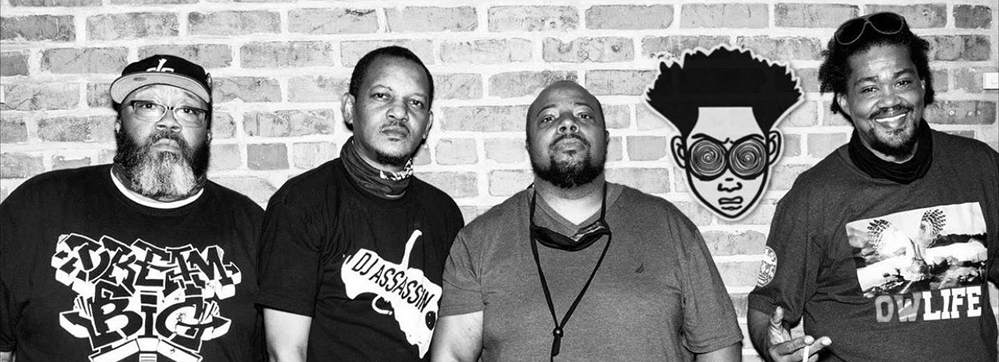
Born out of the late-night airwaves of WKNC at North Carolina State University, the trio carved out a lane that was entirely their own. With jazz-soaked production, sharp lyricism, offbeat humor, and fearless creativity, they made music that challenged convention instead of chasing it.
When Action Packed Adventure! arrived in 1994, it wasn’t just another debut—it was a statement. Cinematic, unpredictable, and unapologetically different, the album showed that hip-hop could be intelligent, playful, experimental, and deeply musical all at once. It may have been ahead of its time, but it never sounded out of place.
More than three decades later, Yaggfu Front’s legacy isn’t measured by charts—it’s measured by influence. From The Secret Tapes to Golden Bars, they’ve stayed true to the same philosophy that put them on the map: think differently, create fearlessly, and never let the industry define your voice.
Some groups follow the culture.
Yaggfu Front helped prove the culture could grow anywhere.
___
Before Yaggfu Front became known as one of North Carolina’s most unique underground groups, there was just a group of young creatives finding their voice. How did those early days at WKNC college radio shape the artists you became?
Damage: WKNC played an important role in our development because it exposed us to music far beyond what commercial radio offered. We weren’t just listening to hip-hop—we were soaking up jazz, funk, soul, reggae, rock, and anything else that inspired creativity. It also gave us an environment where experimentation wasn’t discouraged. At the same time, we were already developing our identity before the record deal. WKNC reinforced the idea that we didn’t have to sound like anyone else, and that became a defining part of Yaggfu Front.
The name Yaggfu Front immediately grabbed attention. Beyond the acronym, what did “Front” represent to you culturally, and why was that message important in hip-hop at that time?
Damage: The acronym definitely caught people’s attention, but “Front” was really about authenticity. In our culture, fronting meant pretending to be something you weren’t. Hip-hop has always respected being genuine, so the name challenged that idea. We weren’t encouraging violence—we were encouraging people to stop pretending and simply be themselves.
The early ’90s underground scene was filled with artists pushing boundaries. What made Yaggfu Front’s chemistry different from other groups coming out of that Golden Era?
Damage: Our chemistry came from trust. Nobody was competing against each other creatively. We all brought different ideas, influences, and personalities into the room, and instead of rejecting unusual ideas, we embraced them. That freedom allowed us to make music that was unpredictable while still sounding like us.
Action Packed Adventure! was unlike anything else happening at the time—a jazz-infused, almost cinematic hip-hop experience. What was the creative vision behind that album?
Damage: We wanted it to feel like an actual adventure. That’s why there are movie references, transitions, and an overall cinematic flow throughout the album. We grew up influenced by movies, television, comedy, jazz, funk, and classic hip-hop, so all of those influences naturally became part of the music. We wanted listeners to experience the album from beginning to end rather than simply hear individual songs.
Looking back, do you think the industry knew how to understand what Yaggfu Front was creating, or were you simply ahead of where the business was headed?
Damage: I think we were ahead of our time, but more importantly, we were committed to making the music we believed in. Looking back, today’s music landscape is much more accepting of artists who refuse to fit neatly into one category. Back then, labels wanted clear marketing lanes, and we didn’t really fit into any single one. With the tools artists have today, it’s much easier to control your own vision and create music that truly aligns with who you are.
Songs like “Lookin’ for a Contract,” “Busted Loop,” and “Left Field” showcased personality, humor, and musicianship. What do you think listeners missed about the group beyond the surface?
Damage: Some people heard the humor and assumed we weren’t serious musicians. In reality, we took every aspect of our craft seriously—from songwriting and arrangements to production and musicianship. The humor was intentional because that’s part of real life. We wanted to reflect genuine personalities rather than manufactured images.
The album received critical acclaim but didn’t receive the commercial push many believed it deserved. How did that experience affect your relationship with the music industry?
Damage: It taught me that creating great music and succeeding in the business aren’t always the same thing. The experience reinforced the importance of continuing to create regardless of industry politics. Ultimately, the work itself becomes your legacy.
The vault material eventually surfaced through The Secret Tapes. What was it like revisiting those recordings years later and hearing a younger version of yourselves again?
Damage: It was both nostalgic and inspiring. You hear the hunger, the excitement, and the fearlessness we had as young artists. It also reminds you how much incredible music never reaches the public. I’m grateful people eventually had the opportunity to hear another chapter of that history.
You’ve continued creating as a producer and beatmaker with projects like The Magnificent Seven and Golden Bars. How has your approach to making beats changed from the Yaggfu Front days to today?
Damage: Experience changes everything. Back then, I wanted to prove what I could do. Today, I’m more interested in creating music that lasts. Technology has evolved tremendously, but the objective hasn’t changed. A great beat should still move people emotionally decades after it’s made.
Production has always been a major part of hip-hop culture, but producers don’t always receive the recognition they deserve. What makes a beat timeless?

Damage: Timeless beats aren’t built around trends. They’re built around musicality, groove, emotion, and space for the artist to communicate. If it still feels good years later without sounding dated, you’ve probably created something timeless.
Hip-hop has changed dramatically since the early ’90s—from vinyl and radio to streaming and social media. What do you think today’s artists can learn from the Golden Era mindset?
Damage: Focus on mastering your craft. Learn music. Learn songwriting. Build genuine creative relationships. Technology makes distribution easier, but it doesn’t replace originality, discipline, or hard work. Those qualities never go out of style.
After all these years, what do you hope people recognize about Damage and Yaggfu Front’s contribution to hip-hop history?
Damage: I hope people recognize that we remained authentic to who we were creatively. We represented North Carolina during a period when the state wasn’t receiving much national attention in hip-hop, and hopefully we helped demonstrate that originality could come from anywhere.
Yaggfu Front represented creativity without limits—a group that proved hip-hop could be funny, intelligent, musical, experimental, and still authentic. When future generations discover your music, what do you hope they understand about the spirit behind it and the people who created it?
Damage: I hope they understand that creativity doesn’t have to fit inside someone else’s definition. We made the music we believed in, enjoyed the process, and weren’t afraid to take risks. If future artists hear our work and feel encouraged to be themselves instead of following trends, then we’ve accomplished something much bigger than commercial success.
Thank you again for the opportunity to participate.


