

Beyond Death Row: The Evolution of SKG (Interview).
By: Todd “DG” Davis
Rapindustry.com
___
For many artists, one chapter defines a career. For Helecia “SKG” Choyce, it was only the introduction. While the world first met her through the legendary Death Row Records, SKG [“Suge Knight Girl”] has spent the years since proving her legacy reaches far beyond one label, one era, or one headline.
Coming out of Los Angeles during a defining period in West Coast hip-hop, SKG earned her place alongside icons including Tupac Shakur, Tha Dogg Pound, and Cold 187um. As one of the few women navigating that influential movement, she helped write a chapter of hip-hop history while forging a path of her own.
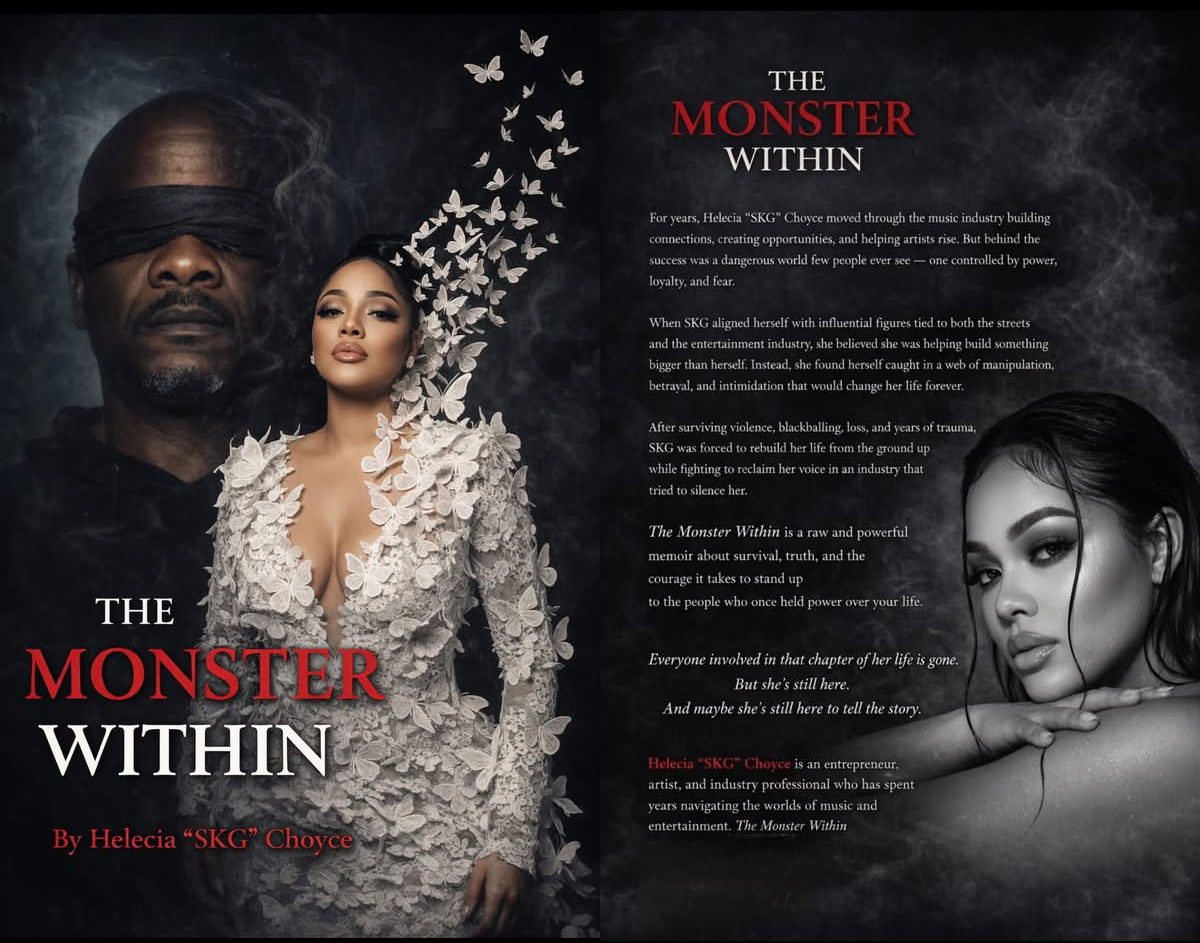
But her greatest triumph isn’t where she started—it’s how she evolved. Through her memoir, The Monster Within, SKG transformed unimaginable adversity into purpose, using her story to inspire healing, resilience, and hope. As an author, producer, entrepreneur, and advocate, she has continued creating opportunities and empowering others long after the music stopped.
In an industry that often celebrates moments, SKG has built a legacy rooted in perseverance, reinvention, and impact. Death Row may have introduced her to the world, but everything she’s accomplished since is what truly defines Helecia Choyce.
You came into the game during one of hip-hop’s most powerful eras when Suge Knight signed you to Death Row Records. What was that moment like, and what did Death Row represent to you at that time?
When I signed to Death Row, it felt like a dream coming true. Death Row wasn’t just a record label—it was the center of hip-hop culture. As a young woman from Los Angeles, I knew I was walking into history. There was excitement, pressure, and opportunity all at once. At that time, Death Row represented excellence, dominance, and being part of something that changed music forever. I understood that I had been given an opportunity most artists only dream about, and I wanted to make the most of it.
Being featured on 2Pac’s Until the End of Time [“Let ‘Em Have It”] cemented your place in hip-hop history. What’s one memory from that experience that fans would be surprised to hear?
What might surprise people is that, beyond the legend, there were real people behind the music. Being part of Tupac’s legacy wasn’t something I took lightly. One thing fans may not realize is how much everyone around him believed they were creating timeless music. It wasn’t about chasing trends—it was about making records that would outlive us. Looking back now, it’s humbling to know I became part of that history.
Death Row Records has become legendary and controversial. From your perspective, what’s the biggest misconception people have about that era and the people who lived it?
The biggest misconception is that everything was chaos all the time. People focus on the headlines, but they forget there were talented producers, writers, engineers, executives, and artists working incredibly hard every day. We were creating culture. Like any company, there were highs and lows, but there was also a lot of creativity, discipline, and passion that doesn’t always get talked about.
You were surrounded by West Coast icons and helped represent that movement. Where do you believe SKG’s contribution fits in the history of West Coast hip-hop?
I believe my contribution is showing that women had a place in shaping West Coast hip-hop too. I’ve always wanted to represent authenticity. Whether it was my music, my performances, or simply surviving and continuing to create decades later, I’ve shown hard work and dedication. My story proves that your career doesn’t end because one chapter closes. You can continue evolving while honoring where you came from.
Working with artists and figures like Tupac, Suge Knight, and Tha Dogg Pound, what did that era teach you about loyalty, creativity, and the music business?
It taught me that talent alone isn’t enough. Loyalty matters, but you also have to understand business. Creativity is your gift, but contracts, ownership, and relationships determine how long your career lasts. I learned to appreciate collaboration, but I also learned the importance of protecting yourself and knowing your value.
The music industry has changed dramatically since your Death Row days. What lessons from your journey do you think today’s artists need to understand about ownership and protecting their careers?
Own as much as you possibly can. Learn publishing. Learn your contracts. Understand your masters. Build your own brand outside of social media because platforms change. Most importantly, don’t confuse going viral with building a career. Longevity comes from ownership, consistency, and treating yourself like a business, not just an artist.
Your memoir The Monster Within revealed some of the most personal chapters of your life. What gave you the courage to tell your story publicly?
For years, I carried pain in silence. Writing The Monster Within became part of my healing. I realized that if my story could help even one person feel less alone, then it was worth telling. I didn’t write it to relive my trauma—I wrote it to show people that healing is possible. Vulnerability became my strength instead of my weakness.
Afeni Shakur played an important role in your life after Death Row. What was the biggest lesson she taught you about business, life, and taking control of your own legacy?
Afeni taught me that no one will protect your legacy better than you. She understood the importance of preserving history while moving forward. She carried herself with strength, wisdom, and purpose. Watching how she handled business and protected Tupac’s legacy reminded me that your name is one of your greatest assets, and you have to guard it carefully.
As a woman navigating hip-hop during a male-dominated era, what challenges did you face, and what do you think female artists today should know about longevity?

Women often had to work twice as hard to earn the same respect. There were moments when I had to prove I belonged simply because I was a woman. My advice is to never let the industry define your worth. Focus on building a career, not just a moment. Reinvent yourself when necessary, keep learning, and remember that your character will outlast your popularity.
You’ve evolved from rapper to author, producer, entrepreneur, and humanitarian. When did you realize your purpose was bigger than music?
After everything I’ve experienced—including the losses, the victories, becoming a mother, writing my memoir, and mentoring others—I realized music was only one part of my purpose. Today, I’m passionate about creating opportunities, helping women heal, producing meaningful projects, and giving back through community work. My voice has become bigger than my music.
Looking back at your entire journey, what part of your story do you feel has been overlooked or misunderstood?
People often focus on the people I’ve been connected to instead of the work I’ve done myself. Yes, I’m proud of my history with Death Row and Tupac, but there’s so much more to my journey. I’ve continued creating, building businesses, writing books, producing films, and reinventing myself. I’m not living off my past—I’m building my future.
After everything you’ve accomplished and overcome, what do you want SKG and Helecia Choyce’s legacy to mean to hip-hop and future generations?
I want people to remember that I never gave up. I hope my legacy shows that success isn’t measured by fame alone—it’s measured by impact. I want future generations to know they can overcome trauma, reinvent themselves, own their story, and build something meaningful. If my music entertained people, my book healed people, and my life inspired people to keep going, then I’ve accomplished exactly what I was put here to do.


