

THA CHILL: Still Most Wanted. Still Compton. Still That Dude (Interview).
By: Todd “DG” Davis
Rapindustry.com
___
Before the West Coast sound became a worldwide movement, before Compton became a permanent fixture in Hip-Hop’s vocabulary, there were artists coming up in the thick of it, turning their surroundings into records that would travel far beyond their neighborhood. Tha Chill, born Vernon Johnson, was one of them. A Compton original, he came into Hip-Hop in the late ’80s alongside childhood friend MC Eiht, helping form Compton’s Most Wanted and establish a sound that was unmistakably theirs. With DJ Mike T, DJ Slip, Ant Capone, the Unknown DJ and the crew around them, CMW represented more than a name on a record sleeve. They were Compton’s voice from the inside—not a version filtered for outsiders, but the music, personalities, humor, pressure and realities of the streets they knew firsthand.
CMW’s arrival with It’s a Compton Thang in 1990 put that voice on record. Then came “Growin’ Up in the Hood,” its place on the Boyz n the Hood soundtrack, and the group’s rise through Straight Checkn ‘Em and Music to Driveby—albums that helped make Compton an essential chapter in the story of West Coast Hip-Hop. But Chill’s own path took a different turn. Incarceration kept him from being part of those next two landmark albums, a difficult chapter that interrupted his run as an MC but did not end his relationship with the music. After returning home, he reconnected with Eiht and continued building, appearing on CMW’s Represent reunion album while finding another way to make his mark: production.
That transition opened an entirely new chapter. The artist who had been in the room absorbing the work of DJ Slip and the Unknown DJ began developing his own skills behind the boards, earning production recognition through MC Eiht’s Death Threatz, then contributing to projects by MC Ren, Above the Law, 213, Snoop Dogg, Warren G, Nate Dogg, Redman, RBX and others. His work on MC Ren’s Ruthless for Life, including “Shot Caller,” and the 213 album The Hard Way showed that his reach extended well beyond the CMW family tree. He was no longer simply the other voice beside Eiht; he was becoming a producer with a sound, a growing résumé and a lane of his own.
And he kept moving. Through Niggaz on tha Run (N.O.T.R.) and the Killafornia Organization, into his own independent ventures and Boomdocz Productions, Chill continued to build. Tha Wind Chill Factor brought his solo identity into focus, followed by Chillafornia, Chillstrumental and 4Wit80—projects that revealed different sides of the artist, from the street-centered MC to the producer comfortable letting the music speak for itself. His membership in 1st Generation, alongside MC Eiht, Kurupt, Jayo Felony, King T and other West Coast veterans, and his later run with Diirty OGz, brought together generations of West Coast history and reaffirmed the value of those connections. CMW, meanwhile, returned with Music to Gang Bang and Gangsta Bizness, keeping the group’s name and chemistry alive beyond its original era.
There is a lot more to Tha Chill than the familiar chapter headings of Compton’s Most Wanted. There is the childhood friendship and musical partnership with Eiht, the early group chemistry, the years away from the microphone, the lessons learned behind the boards, the independent grind, the records made with fellow West Coast originals and the determination to keep creating on his own terms. In 2026, that story is still being written. With “G Sh!t,” the The Art of Succaduccn rollout, the preview of “MIC CHE¢¢” alongside DJ Battlecat and Rob Tee, and his appearance on MC Eiht’s The Story of My Life, Chill is continuing to put new music into the world while carrying decades of history with him. From the first Compton sessions to the latest studio work, he has remained connected to the people, places and sound that shaped him.
Tha Chill helped put Compton in the conversation, helped build CMW’s legacy, and then went on to build one of his own. That’s a history worth revisiting—and a career still deserving its flowers.
_____
Let’s go back to Compton in the late ’80s. What were those early days like before Compton’s Most Wanted became a household name in West Coast Hip-Hop? How did you and MC Eiht first connect, and what inspired the formation of CMW?
THA CHILL: In the early ’80s, I was following the music scene. It was basically techno music, and if it wasn’t that, we were listening to a lot of East Coast music. I met Eiht and his cousins at my auntie’s house, and we shared the same thing: a love for Hip-Hop. We were listening to Rakim, Run-DMC, LL Cool J and people like that. That’s what started our friendship.
After that, we saw a guy who used to be across the street from my house all the time—MC Ren from N.W.A. They were hot on the scene, and we were like, if he can do it, we can do it too. He was also encouraging us to keep writing, so we formed a group: Compton’s Most Wanted.
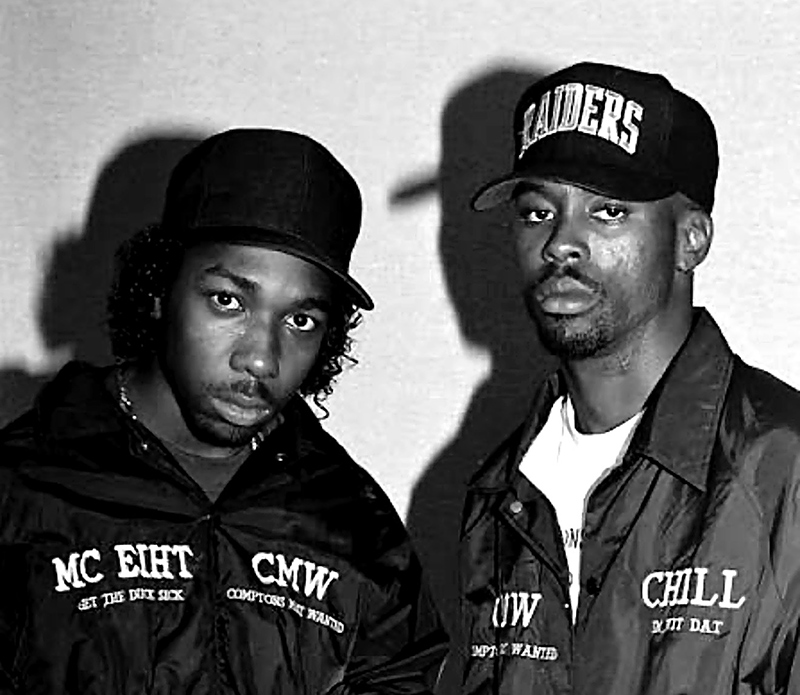
You initially came into the group as a beatboxer before stepping into the roles of MC and producer. How did that evolution happen, and when did you realize that making beats and rhyming would become such a major part of your musical identity?
THA CHILL: I used to beatbox in school. We used to battle people like Snoop Dogg and Warren G. I was a beatboxer, and we would go at it. I guess we were sharpening our tools. I was writing a lot of raps, and I had the beat. I always had rhythm. I played drums—that’s my first love.
A homeboy named Wade had a drum machine, and I used to always play with it. I just picked up the trade and started falling in love with drum machines and keyboards. I love sound.
MC Ren took a liking to my production and decided to give me a shot on his album Ruthless for Life, on a song called “Shot Caller.” I rapped on it and did the beat with one of my homeboys, DJ Raw.
I started learning how to play more keys from a guy named Darren Vegas. Then I learned a lot of programming through Rhythm D and Battlecat, and I just kept getting better and better from there.
I started picking up more gigs, mostly with local groups and homeboys around the hood. Word got around that I had them beats. I ended up on Above the Law’s album, then 213—that’s Snoop Dogg, Warren G and Nate Dogg. Then, around the time I got to do beats for Redman, who I was a big fan of, it was official. I was a go-to producer.
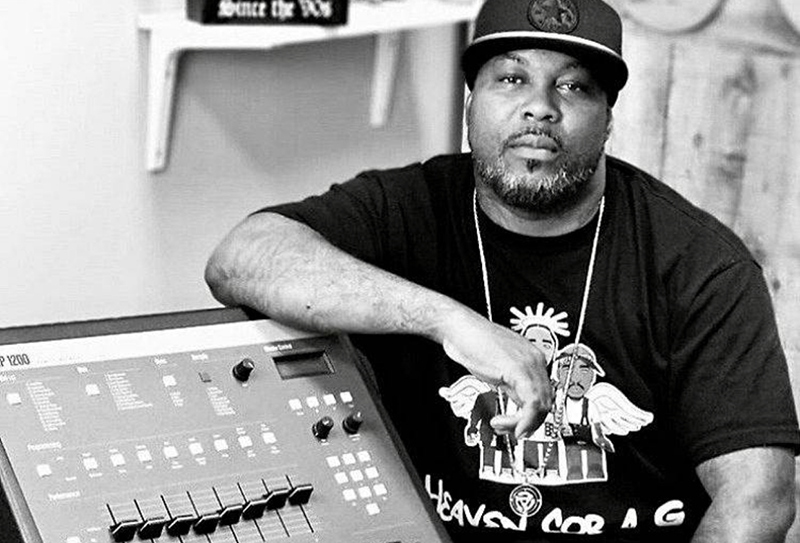
I was producing everything under the sun, predominantly on the West Coast. My boy Kokane, my partner MC Eiht, some more stuff with Snoop Dogg, Xzibit, and a long list after that.
CMW helped introduce the world to a particular perspective of Compton through records like “Growin’ Up in the Hood” and “Hood Took Me Under.” Looking back, what was the chemistry between you, Eiht and the rest of the crew that made those records so authentic and impactful?
THA CHILL: Our chemistry has always been 100. I was just always trying to find a lane I could call my own in the group. Eiht was penning for us back then, and Slip was doing the beats. So I basically asked myself, what could I do to get grounded and become better? That’s when I started writing and producing.
The CMW catalog helped define an important chapter in West Coast gangsta rap, but every classic has a story behind it. Which recording sessions, albums or moments from that era stand out most when you reflect on the group’s rise and the music you created together?
THA CHILL: Those songs were so real because those were real topics, and that’s how life was at that time.
You and MC Eiht have shared a musical journey spanning decades. What has allowed that partnership to endure through changing eras, different projects and everything that comes with maintaining a group legacy? What do you think each of you brings to the chemistry?
THA CHILL: A lot of growth, and growing up from kids to men at the same time. CMW is our brand, our love. Our loyalty to each other as childhood friends won’t let us stray away from that or from our inner childhood. We’re still fans of Hip-Hop.
Beyond the microphone, you’ve established yourself as a respected producer and engineer through Boomdocz Productions. How did your approach to production develop, and what separates the sound you create from what’s happening around you? Is there a particular philosophy you bring into the studio?
THA CHILL: It’s all a feeling. I love what I do. I study the greats and the classics, like Herbie Hancock, Quincy Jones, Dr. Dre, J Dilla, and so on.
Your solo catalog, including The Wind Chill Factor, Chillafornia and 4Wit80, gave listeners another side of Tha Chill outside the CMW banner. What motivated you to step out on your own, and how different is the creative freedom when you’re building a project around your own vision?
THA CHILL: My solo stuff from the start was a way to tell my story, show my talents and show the world the next level of CMW. Eiht had success with movies and solo albums, and I just had to follow that with dope albums and produce dope albums to show that CMW is really them dudes, both solo and as a group. It’s all growth, from boys to men.
You’ve also been part of some formidable West Coast alliances, including 1st Generation with Kurupt, MC Eiht, Jayo Felony, King T and BG Knocc Out, as well as Diirty OGz. What do you enjoy about bringing different personalities, styles and histories together, and what do those collaborations say about the strength of the West Coast family?
THA CHILL: Through the years, you develop friendships with all these different people. I was basically producing for a lot of them, and through our friendships, I wanted to do something big, something massive, something that shocked the world. So I put together the group 1st Generation.
It started as just a conversation, and it ended up becoming a supergroup. I wish we could have gone further with that.
As for the Diirty OGz, it was the same thing. We were all friends, and Weazel Loc and Tray Deee decided to add me to that group. I was all for it. We had a lot of fun doing those projects, and that was super big for the West Coast—not just the West Coast, but Hip-Hop, period.
The passing of DJ Mike T in January 2026 was a tremendous loss for the CMW family and the culture. What did Mike T mean to you personally and musically, and what do you hope people never forget about his contributions to the group’s sound and West Coast Hip-Hop?
THA CHILL: I was in jail, and what hurts me the most is that I couldn’t be there to say goodbye to him. Mike T was always like a big brother to me, from the start to the end.
I came home and just cried, cried, cried so hard because Mike T was always like a voice of reason. He would tell me, you know, go right instead of left, go left instead of right. He always had the answers to everything.
He was super talented from day one. His trickery on the turntables added so much to our group and so much to Hip-Hop. He’s definitely going to be missed and never, ever forgotten.
Your latest album, Straight Outta Tha Hard Drive, with “G Sh!t” setting the tone for the rollout. Fully produced by you and Robtee, the project brings together MC Eiht, OG Big Mike, Bokie Loc, DJ Battlecat and All City. What was the vision behind the album, and how did you approach putting this particular lineup together?
THA CHILL: Well, like I said, I was in jail, and my partner Robtee had my hard drives and all my stuff. We would talk throughout those days, and I was like, hey, let’s give the people something. So we put out “G Sh!t,” and I also had a video in the cut, so I went ahead and released that.
We were going to call the album Straight Outta Tha Hard Drive because I had a lot of songs that we wanted to put out. Now that I’m home, I’ve changed it to The Art of Succaduccn, spelled S-U-C-C-A-D-U-C-C-N.

I feel like I have to get rid of a lot of people who were around me, people who were just clogging up my energy and bringing too much negativity. I feel like I need to pay more attention to my craft and separate a lot of my personal stuff from my professional life.
A lot of people you run into in life are either assets to you or liabilities. Those liabilities, I call them succaz.
I’m probably about 80% done with this project, and I can’t wait to give it to the people. It’s straight from the heart and straight from my chest.
After all these years, you’re still working with longtime collaborators while keeping your music connected to the present. How do you balance preserving that classic Compton sound with allowing yourself to grow, experiment and connect with a new generation of listeners?
THA CHILL: I’m still a big fan of Hip-Hop, and at the same time, I have to stay true to who I am. I never believed in trying to sound like somebody else. I come from the era of being original.
So I still study music. I’m a big fan of Kendrick, J. Cole and a lot of the young gunners. I ask myself sometimes, what would I do if I were on a song with Kendrick? What would it sound like if J. Cole were on one of my beats and I was producing him?
You’ve helped build a legacy that reaches well beyond your own solo catalog, from the foundation of CMW to your production work and the many artists and groups you’ve collaborated with. When you look back at the journey—and ahead to what’s next—what do you want your lasting contribution to Hip-Hop to be, and what should the next generation understand about the history you helped create?
THA CHILL: I want my legacy to be that I was a hard worker, that I always stayed crispy clean with it, and that I studied my craft. I’m always going to be a student of it. My legacy is always going to continue until I’m gone, and even after that.
As for the next generation, I would just tell them to study whatever they want to be a part of. Strive to be perfect. Be a perfectionist about it. You want to know everything about it. Study. I don’t care if it’s playing drums, keyboards, horns or whatever—study the greats.
You know what I mean? Don’t do what they do, but take a little bit of knowledge from what they have and put it into your own craft.


