
Jungle Brothers: Originality, Funk & the Native Tongues Spirit That Changed Hip-Hop (Interview)
By: Todd “DG” Davis
Rapindustry.com
___
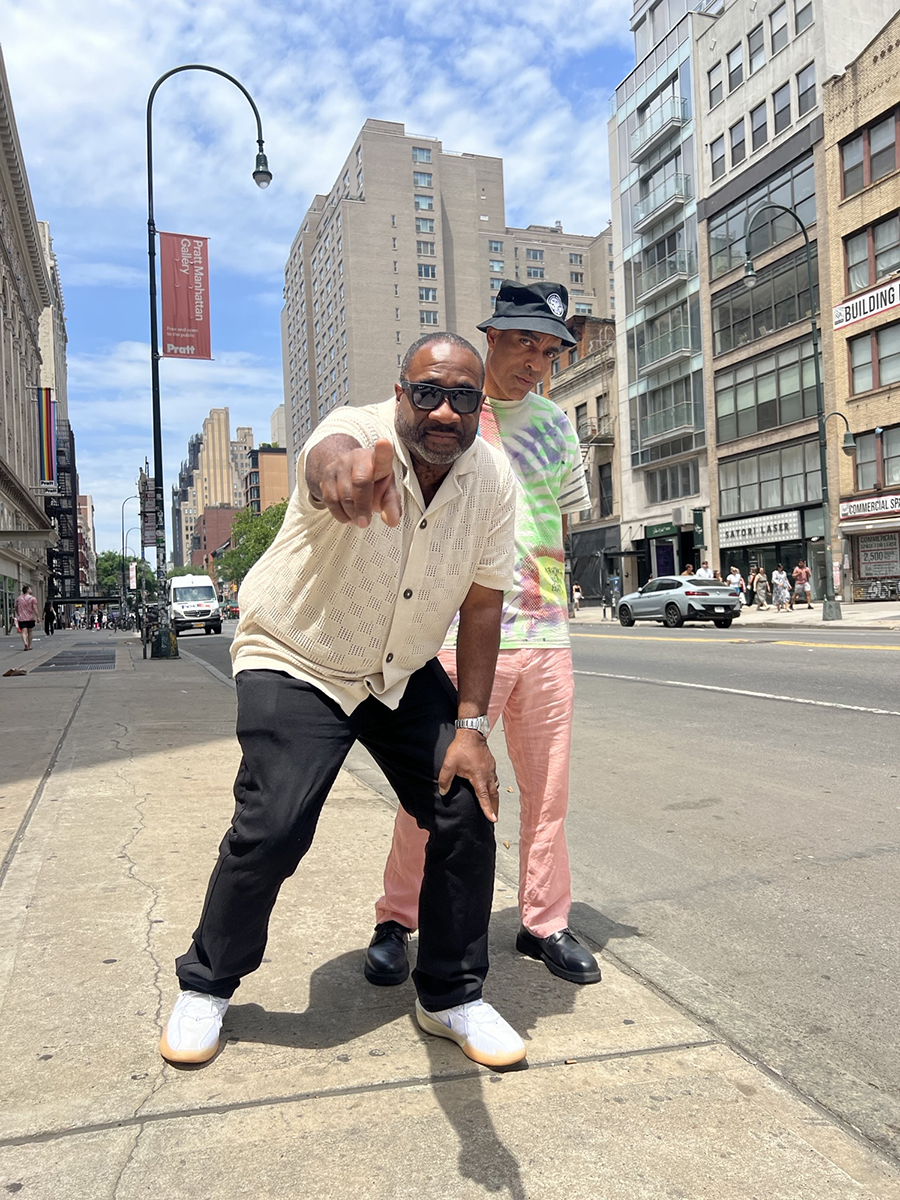
Hip-hop has never stood still, and few groups understood its possibilities as early as the Jungle Brothers. Before genre labels tried to define alternative rap, Mike Gee, Afrika Baby Bam, and DJ Sammy B were pulling from the sounds, ideas, and street-level experiences that shaped the culture itself. Their music wasn’t built around fitting in. It grew from the freedom to experiment, the confidence to be different, and the understanding that hip-hop could carry a message without losing its ability to move a crowd.
Coming out of New York’s fertile mid-1980s scene, the Jungle Brothers brought together the raw energy of block parties and park jams with jazz, funk, house, and Afrocentric thought. With Kool DJ Red Alert championing their early work, their 1988 debut, Straight Out the Jungle, introduced a group willing to explore the full range of its imagination. The following year’s Done by the Forces of Nature pushed that vision further, while “I’ll House You,” created with producer Todd Terry, helped bring hip-hop and house music together on a record that connected the neighborhood to the international dance floor.
Their impact also reached into the creative community taking shape around them. As founding members of Native Tongues, the Jungle Brothers helped create space for artists such as De La Soul, A Tribe Called Quest, and Queen Latifah to explore hip-hop on their own terms. The collective’s spirit was bigger than any single sound: originality, cultural awareness, humor, musical curiosity, and the freedom to follow an idea wherever it led. That spirit helped expand the possibilities for an entire generation.
Decades later, the story is still unfolding. From Keep It Jungle to the 2026 Concrete Jungle EP, Mike Gee and Afrika Baby Bam continue to carry the group’s name into new chapters, while DJ Sammy B remains part of its foundational history. The music has evolved, the industry has changed, and hip-hop has become a worldwide force—but the principles that helped shape the Jungle Brothers remain relevant.
In this conversation, Bam and Mike Gee revisit the people, places, records, and experiences that formed their identity; the community that made Native Tongues special; and the responsibility that comes with helping preserve a culture while continuing to create within it. Their reflections offer more than a look back at a pioneering group’s catalog. They tell the story of artists who learned from those who came before them, helped open doors for those who followed, and still believe the culture belongs to everyone willing to bring something original to it.
____
Q: New York in the mid-’80s was a living classroom for hip-hop, with DJs, MCs, dancers, and graffiti artists shaping the culture in real time. What were you absorbing from those block parties, park jams, and neighborhood scenes as the Jungle Brothers began to take shape?
Bam: New York City’s hip-hop environment in the mid-’80s inspired us to be resourceful and creative in truly pioneering ways. Experiencing DJs piece together specific sections of records to drive the dancers, while MCs commanded the mic as hosts—all surrounded by vibrant aerosol art—was incredible. Because radio mix shows had such limited time slots, you only got a small slice of what was actually happening live at the block parties and park jams. That scarcity made catching the music even more exciting, and it fueled our hunger to recreate that raw energy when we began finding our own voices.
Mike Gee: The ’80s were a learning ground for the Jungle Brothers. In the early ’80s, I can remember Bam saying he was really into b-boying and stuff. I was into graffiti a lot and observing—really witnessing the culture unfold and seeing some of the greatest breakers, b-boys, and graffiti artists come through during that time. But obviously, the thing that captivated me most, where I felt like I could be of use, was being an MC. I would study the tapes my Uncle Red would bring in, over and over. I was just like somebody with a favorite song, constantly listening, mimicking, and singing along, hoping—and maybe even thinking—that one day I’d be in that position to carry on that amazing spirit.
Q: Jazz, funk, house, and Afrocentric ideas all found a home in your music. Rather than follow a ready-made formula, you drew from the sounds and philosophies around you. How did trusting those instincts help you establish an identity that was unmistakably Jungle Brothers?
Bam: The early days of hip-hop were primarily about the mechanics of the culture—the raw beats and the breaks. But for us, the Golden Era was about pushing past those boundaries and exploring what else could be expressed through the music. We didn’t set out with a calculated plan to create a new lane; we were simply following our natural musical instincts. We sourced music, philosophies, and ideas from our real-life experiences—whether that was the underground house music scene, jazz, or Afrocentric teachings. Because those elements were entirely fresh to the culture at the time, simply being true to our own instincts naturally carved out a brand-new lane for hip-hop.
Mike Gee: We were easily following our instincts and what we had learned and witnessed. I mean, any historian or true hip-hop head knows that the soundtrack to hip-hop was a blend of all different types of music genres, if you want to call them that. It was Afrobeat, funk, disco, and jazz. Whatever the DJ felt he could find to move the crowd—that’s what created the sound, the sound rainbow for hip-hop. So, yeah, we just literally followed what we knew. One of the greatest lessons and rules of hip-hop is to be original. So we kept it original and funky. And funk is universal. Funk has no boundaries. That’s what we did. We kept it funky overall.
Q: When Straight Out the Jungle arrived in 1988, songs like “Jimbrowski” and “Straight Out the Jungle” showed listeners that your world could hold humor, cultural awareness, and raw expression all at once. What did you want that first album to communicate about who you were?
Bam: I was determined to make an album fueled entirely by the raw inspiration and ideas I got from digging through my parents’ records and writing in my room. With tracks like “Straight Out the Jungle” and “Jimbrowski,” we wanted people to feel the full spectrum of our reality—from deep Afrocentric pride and conscious awareness to unfiltered, street-corner humor. More than anything, I wanted to share that creative freedom with the immediate community of artists who were actively building hip-hop. I wanted them to hear it and feel inspired to push their own boundaries, keeping the culture alive, raw, and moving forward.
Mike Gee: Our first project was about not taking ourselves too seriously while using our imagination to open people’s minds. Hip-hop is bigger than what you can see, feel, or hear, but the feeling of it matters. For me, I wanted people to feel us. “Jimbrowski” was for humor. “Straight Out the Jungle” was about who we are in this world, what’s going on behind the bush, and giving love and thought to consciousness and a better world. So, it was all of those emotions. There wasn’t just one thing we wanted people to feel.
Q: Artists who step outside the dominant sound can sometimes be treated as outsiders, but the Jungle Brothers approached their music with confidence and a clear sense of self. Did you ever worry that your creative choices might be misunderstood, or did you trust listeners to find their own meaning in the records?
Bam: We never really felt misunderstood because we had total confidence in our vision. Our debut album, Straight Out the Jungle, was a perfect fit for the energy of the Golden Era, but it was also a timeless classic that refused to stick to a rigid script. Instead of just following the dominant, aggressive sounds of the late ’80s, we trusted our instincts to pull in jazz, Afrocentricity, and even house music. To us, it didn’t feel like we were alienating anyone—it felt like we were simultaneously keeping the culture’s roots fresh while boldly moving its boundaries forward.
Mike Gee: Misunderstood? Not at all. Music is expression. Each person may take away something different, and I can live with that. It’s like looking at art: one piece may give one person an angry emotion and another a happy one. That’s the beauty of it, and it’s why we’ve never felt misunderstood.
Q: Native Tongues brought together artists with distinct personalities but a shared commitment to originality. With De La Soul, A Tribe Called Quest, Queen Latifah, and others contributing to that wider creative circle, what made those relationships so meaningful—and what did you recognize in one another?
Bam: The creative chemistry of the Native Tongues collective was revolutionary because it shifted hip-hop away from rigid formulas and toward boundless experimentation. By giving ourselves the creative license to collage disparate ideas—blending jazz, Afrocentricity, humor, and social commentary—we created songs and albums that resonated deeply with the core hip-hop community. Simultaneously, that inclusive, genre-bending approach opened a doorway for people of all backgrounds around the globe to discover and see themselves in the culture for the very first time.
Mike Gee: It was special. I think the timing is what made it so special, considering the hip-hop catalog was still kind of small. There were a lot of new flavors coming out. To witness Q-Tip come into his own and to hear De La Soul when they dropped “Plug Tunin'” was amazing because new, funky shit was dropping right in front of our eyes. And then to actually sit around and collaborate with people like that was dope because, although we were different, we all had the same idea and kept the rule close to heart: be original, keep it funky, no limits. Just go hard and show no mercy. To me, that’s what made it dope. But the timing of when we came out is what made it the dopest—being able to collaborate and watch the boroughs come together, with everybody coming up. That was so super dope.
Q: Kool DJ Red Alert was more than an early supporter—he was someone who knew the culture, understood audiences, and could offer honest guidance. What did his belief and personal support mean to you while you were finding your footing as artists?
Bam: Red Alert didn’t just break our records on the airwaves; his unwavering support provided the foundation that allowed the Jungle Brothers—and the entire Native Tongues family—to change the landscape of hip-hop forever.
Mike Gee: For me personally, it meant a lot because Red has always been more than just an uncle. He’s been like a big brother and, sometimes, even a father figure. He’s always kept it super straight, 100 percent. Watching how he operated, especially during the early days, spoke volumes. When we were working on songs, he would always give his honest opinion. He’s a visionary. His vision was far ahead of most artists because he was a DJ first, and he knows how to read a crowd. It’s great to have somebody like that in your corner. He gave us his strength, just like a big brother, concerned uncle, or father figure would do—which is priceless.
Q: “I’ll House You,” your collaboration with Todd Terry, brought hip-hop and house together at a time when those sounds were often discussed separately. What did you understand about New York’s musical landscape that made the crossover feel natural rather than like a departure from hip-hop?
Bam: “I’ll House You” was born out of pure creative instinct and the energy of New York nightlife. At the time, hip-hop and house music were sharing the exact same underground club spaces, and we were inspired by how fluidly the culture moved between the two sounds. Collaborating with Todd Terry allowed us to bridge that gap on vinyl. We just wanted to make something dope for the dancers, but by following our natural instincts, we ended up creating a blueprint that connected raw New York hip-hop directly to the global dance floor.
Mike Gee: Like I mentioned before, there wasn’t really a big separation between the music. During the jams, all different types of music were being played. We were lucky to be from New York because you could go into different boroughs and find something playing more prominently than the other sounds. You could go to the East Side, Spanish Harlem, and hear more merengue, jazz, and stuff like that. Crosstown, you’d hear more breakbeats, like James Brown. You go to Brooklyn, you’d hear more dance music, more rhythms, maybe reggae. Go to the Bronx, and you’d hear more Caribbean music. Really, we didn’t look at it as stepping out or jumping into some big pool. We were already in the water, just doing our laps. It was no big deal. But we took the same theory and energy that we would put into any hip-hop shit, and we just spread it on a dance track.
Q: Your records could be thoughtful and culturally rooted without losing their humor or party energy. Was that balance something you consciously wanted to demonstrate to hip-hop, or was it simply an honest reflection of your personalities and the way you lived?
Mike Gee: It wasn’t so much about trying to prove something at the time. We just really did what came naturally to us. We didn’t want to be too serious; we wanted to just portray our true personalities. You know, Bam and I are two goofballs sometimes—you know what I’m saying? And then there are times when we sit down and have real deep, brotherly conversations about world issues and stuff like that. We mostly just wanted to be ourselves and put it on a record as best as possible. We hoped people would feel a connection.
Q: By the time you made Done by the Forces of Nature, your travels had exposed you to audiences and cultures beyond New York. How did those experiences change your perspective and feed the ideas that went into the second album?
Bam: The magic of Done by the Forces of Nature came down to our travel experiences. We were touring the world, experiencing new cultures, and deepening our spiritual awareness, which completely elevated our creative process. We were translating our real-life growth onto tape, and that pure energy is what made the album a Golden Era classic.
Mike Gee: It wasn’t so much what was happening in our lives at the time. It was more about what led up to it. On our first tour, we took an intercontinental trip and traveled Europe for months. We saw how people reacted to hip-hop, even people who didn’t speak the language. Then we came back to America, and in all the places we touched, things were different because hip-hop wasn’t the global, one-stop shop it is now. You couldn’t put something out and have everybody around the world get it. There were still a lot of mysteries about how different crowds reacted to certain things.
We took all that energy and everything we learned—from traveling, meeting and performing for a lot of different people in different places, and growing up—and put it into the music. We were literally just out of high school. So, it wasn’t the actual timing, but everything that led up to it. All that growth from the first album led right into the second. Our eyes were wide open, and it all came out.
Q: Hip-hop has grown from a community-driven culture built around local scenes into a global business. Having seen that transformation from the inside, what do you most want today’s artists to hold on to from the culture’s early days?
Bam: The parts of the original spirit that must be preserved are individuality and authentic community. Now that hip-hop is a billion-dollar industry, there is immense pressure to conform to whatever is trending. But the culture was built by pioneers who dared to be different and used absolute resourcefulness to turn nothing into something. Artists today need to protect their creative freedom, dig deep for unique inspiration, and resist the urge to blend in.

Mike Gee: If I could preserve anything, it would definitely be originality. I’d love to see artists keep pushing to give people something different, something that makes them snap their heads back. It’s easy to lean on what already works, but the real magic is in bringing something nobody has seen before. I always love it when an artist hits me with something I’ve never heard before.
Q: With Keep It Jungle and the 2026 Concrete Jungle EP, the music continues beyond the records that first established your name. After so many years in hip-hop, what keeps you motivated to make new music rather than simply celebrate what you’ve already accomplished?
Bam: The hunger stays alive because our relationship with the music is permanent. Projects like Keep It Jungle and Concrete Jungle are proof that our creative instincts are just as sharp today as they were on day one. We don’t make music out of obligation; we make it because the drive to create and express ourselves is baked into our DNA.
Mike Gee: Definitely the love for the music and for the culture itself, because you should do what you love. You can have a million things to do, but if you love something, you’re going to do it no matter what. If you’ve got five things on the table and you know number three is the one you love, you’re going to make it the first thing just because you love it so much. That’s the energy we bring to creating: the love and the happiness of still being a part of it and still enjoying it. I’m still inspired by the new artists and the OGs, and I’m happy to see the old-school artists are still creating. That keeps the whole thing going, and it keeps me hungry for that original headbanger.
Q: Hip-hop history often spotlights chart positions, sales, and the biggest commercial breakthroughs, while the artists who expanded the culture’s creative possibilities don’t always receive equal attention. What do you want people to recognize about the Jungle Brothers’ role in making hip-hop a place where more sounds, ideas, and personalities could belong?
Bam: I hope people understand that the Jungle Brothers gave hip-hop its freedom. Long before “alternative hip-hop” was a recognized term or a commercial market, we were already living it and carving out the lane. We brought jazz elements and house music into the culture when it wasn’t the safe or expected thing to do. Our contribution shifted the entire DNA of the genre, showing that it could be positive, intellectual, and experimental all at once. I want history to remember us as the pioneers who proved that staying true to your own unique, natural instincts is exactly how you move a global culture forward.
Mike Gee: I think when people look back at the Jungle Brothers, I want them to say, first, that we created without fear or boundaries and that we utilized the lessons taught by our brothers—the ones who came before us—including the Cold Crush Brothers, Zulu Nation, Furious Five, Force MCs, and those early DJs.
Q: From the early days of the New York scene to Native Tongues and the music you’re making now, the Jungle Brothers’ story is tied to both honoring those who came before you and making room for what comes next. When you think about your legacy today, what does being a carrier and guardian of hip-hop culture mean to you?
Bam: Before the industry even had names for “alternative hip-hop” or “jazz rap,” we were already living it and letting the creativity flow naturally. We brought the jazz, the house, and the Afrocentric ideas to the table because we knew hip-hop had the power to hold it all. To see those seeds grow into the Native Tongues legacy and watch those genre-blending ideas become the standard for the entire global culture decades later is incredible. Our legacy is proof that originality and resourcefulness matter more than chasing a trend. We gave hip-hop its creative freedom, showing the world that true pioneers don’t just ride the wave—they create it.
Mike Gee: I feel like the Jungle Brothers’ legacy is really about carrying the culture—being carriers of the culture and guardians of the culture.