
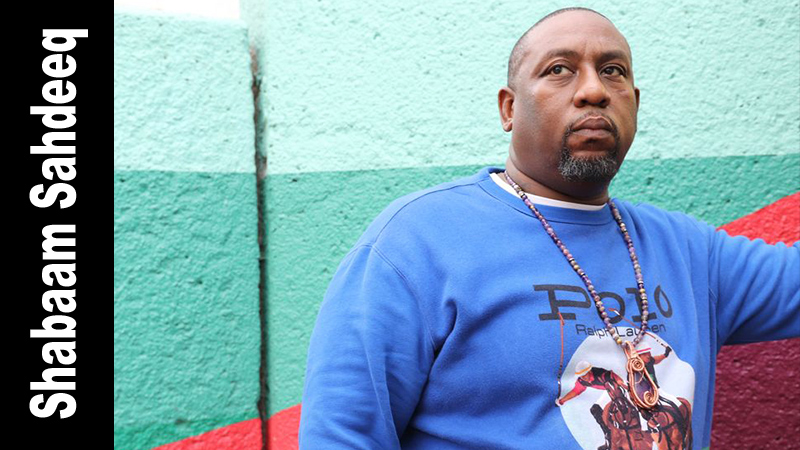
Shabaam Sahdeeq: From Rawkus to Right Now (Interview)
By: Todd “DG” Davis
Rapindustry.com
___
Before algorithms dictated discovery and “underground” became a marketing term, Hip-Hop traveled through late-night radio, mixtapes, record stores, open mics and cyphers. Shabaam Sahdeeq was built in that world.
Brooklyn born and raised, with Northern New Jersey also shaping his story, Sahdeeq sharpened his pen listening to Red Alert and Mr. Magic, studying records, battling in lunchroom cyphers and recording his earliest rhymes on a four-track. By the late ’90s, he was helping soundtrack one of underground Hip-Hop’s most celebrated periods through Rawkus Records, Soundbombing and Lyricist Lounge.
As a member of Polyrhythm Addicts alongside DJ Spinna, the late Mr. Complex, Apani B and later Tiye Phoenix, Sahdeeq further established himself as a lyricist who never needed to follow the crowd. Add his solo work, touring with Us3, memorable “Simon Says” remix appearance and decades of independent releases, and the résumé speaks for itself.
But Shabaam isn’t living off yesterday.
With “Outside the Lines,” “Cold Truth,” “Forged In Fire” and “Top Tier,” he remains what he’s always been: a student of the culture with something left to say and the pen to say it.
Nearly three decades later, trends have changed, labels have come and gone, and Hip-Hop has reinvented itself countless times.
Shabaam Sahdeeq is still here. Still creating. Still sharpening the blade. Still Top Tier.
_____
Q: Brooklyn raised you — what was the energy around you that pushed you toward lyricism and really sharpening your pen early?
Shabaam Sahdeeq: Yes, Brooklyn born and raised, but Jersey also raised me. I went to school in Northern Jersey for some years, so both, in juxtaposition — moving back and forth between the two. But I lived in Brooklyn most of my life, especially my adult life.
What pushed me toward lyricism and really sharpening my pen early was hanging around older kids who were really into the art and old records, coupled with things like listening to Red Alert and Mr. Magic on the radio late at night, playing all the hip-hop greats.
Then later came lunchroom cyphers and open mics. One of my boys’ older brothers had a four-track recorder, and that’s where I first began to record actual vocals.
Q: When you think back to the Rawkus Records era, what did that moment mean for underground hip-hop culture and for you personally?
Shabaam Sahdeeq: For me, it was a chance to get my music out to the world. I didn’t know we would make history later just by being ourselves. I didn’t know Rawkus would become as legendary as it is now. I just wanted to make classic music that wasn’t the norm.
Q: You came up when bars, cyphers, and respect were everything. What did that environment teach you that still shows up in your music today?
Shabaam Sahdeeq: Growing up in cyphers and open mics improved my improvisational skills, and it helped me write quick, witty bars. Nowadays, I choose more slow and calculated methods. But that environment instilled in me a sense of originality over chasing money and fame.
Q: Being part of Polyrhythm Addicts brought together some serious minds. What made that chemistry work the way it did?
Shabaam Sahdeeq: Truthfully, I don’t know what made it work. We were just having fun recording. The ups and downs of the group made for real chemistry. It also gave me a sense of community and brotherhood with my underground heads.
It took away my fear of being myself at a time when everybody in hip-hop wanted to be a shiny big shot or some sort of hustler-killer type.
Q: Building with DJ Spinna, the late Mr. Complex, and initially Apani B — and later Tiye Phoenix — what did that experience teach you about collaboration and pushing creative boundaries?
Shabaam Sahdeeq: Honestly, it taught me nothing. We were just being ourselves and recording what came naturally.
Group dynamics are hard to navigate sometimes, especially when you add women to the equation. I love both of my sisters and brothers, but you know how sisters and brothers do. There were some disagreements among the group and differences in work schedules, ethics, and feelings.
I personally think we should have more albums out, but it is what it is.
Q: Recently losing Mr. Complex was a heavy moment for the underground community. How did his passing affect you personally, and how do you carry his legacy forward in your work?
Shabaam Sahdeeq: Losing Mr. Complex was surprising, even though he had been going through medical complications for some years. It just got worse.
As far as carrying someone’s legacy after they’re gone, I’m not sure how to do that. I just play our songs and reminisce about the good times we had.
Q: The Soundbombing and Lyricist Lounge era helped define a generation. Did it feel historic while you were living it, or did that realization come later?
Shabaam Sahdeeq: I knew it was special, but I didn’t think it would be historic. At that time, I thought I would be the biggest star ever.
I literally had three different situations/deals during that time period. I was on a world tour with the jazz group US3 and appeared on their second album, Broadway & 52nd. I had just gotten my solo deal with Rawkus, and we had a deal for Polyrhythm Addicts.
Q: You’ve worked with some serious lyricists over the years. What brings the best out of you when you’re trading bars with elite MCs?
Shabaam Sahdeeq: Just trying to be the best I can be within the time and the vibe given.
Sometimes you get their verse over the internet before you lay yours, so you get time to listen to their verse over and over and put your best foot forward. Sometimes you send it to the collaborator with yours already on it, so they’re definitely going to try to outdo you.
When you’re in the lab together, vibing off each other, it’s the best spirit of competition and collaboration.
Q: Your 2025 work, like “Cold Truth” and “Aten,” still carries that raw energy. What keeps your creative hunger so strong?
Shabaam Sahdeeq: I just love hip-hop and rap in general — creativity, words, expression. Music and art wake me up every day. It’s my passion. I just want to get better and better.
People ask me how I still have the vigor for this so many years later. It’s the passion — books, information, thinking, and living.
Q: The single “Top Tier” with General Steele feels like a statement. What was the vision behind that record?
Shabaam Sahdeeq: “Top Tier” is a statement about where I’m at in life and how I feel about my career in music. It’s letting the world know that I have grown older, but I still got it. LOL. And I’m still getting better with the pen and the beat selection.
My business is somewhat in order, and I’m enjoying being creative. I actually shot that video myself.
Q: With “Forged In Fire” and the Outside the Lines project, what space were you in mentally and creatively while building this new chapter?
Shabaam Sahdeeq: For “Forged In Fire,” I was thinking about friends and family and how far we’ve come as hardworking individuals through trials and tribulations — the fire we were forged in.
It’s talking about what our status is and how we should stick together. There are a couple of concepts mashed in there together.
Q: The industry has shifted toward full independence and digital platforms. How has that changed the way you move as an artist?
Shabaam Sahdeeq: Since the ’90s, after those first few deals, I have been moving independently. But in this day and age, the world is at your fingertips.

The internet is really the gift and the curse. On one hand, you can reach people across the world in seconds. On the other hand, streaming is making artists disposable and cheapening our art, selling our music for fractions of a penny.
But us independents have been maneuvering with physical copies and merchandising. The accessibility of music resources on the internet is making everybody jump in, and it has become more about being a content creator than an actual artist.
You really have to do more than just have talent. It’s just not enough. You gotta do a lot more.
Q: Underground hip-hop has always been about authenticity. What does “real hip-hop” mean to you today?
Shabaam Sahdeeq: I try to stay away from using terms like “real hip-hop” only because every generation thinks their era is the realest. It’s kind of cliché. Everybody has their own definition of what real hip-hop is.
I remember older people telling me rap wasn’t real music and that it wouldn’t last long.
I’m just into boom bap with more of a message and true-to-life, everyday observations, and less glorifying of death, drugs, killing, and drama — even though that’s a part of life as well.
Q: When you step in the booth now, what still excites you most about creating?
Shabaam Sahdeeq: Just expressing myself to the fullest, stepping my game up, and, most importantly, waking up every day.
Q: When people look at the full story of Shabaam Sahdeeq, what do you hope they understand about your contribution to the culture?
Shabaam Sahdeeq: That I really love the game, and I love to create. Hopefully, my catalog leaves an impact on future generations.


