
When Contract Termination Comes Strapped: What the Poo Shiesty Indictment Reveals About Independent Label Vulnerability.
By: David “G” Kreluer
Hip-Hop Business • Legal, financial, and strategic intelligence for music industry professionals.
______
A federal criminal indictment filed April 2, 2026 in the Northern District of Texas has placed a recording contract termination dispute at the center of a kidnapping and armed robbery prosecution — a development that reframes how independent label operators must think about artist relations, meeting protocols, and the legal architecture of their recording agreements.
What the Record Shows
On January 10, 2026, three music industry professionals — identified in the DOJ complaint by initials only — flew to Dallas for what they believed was a scheduled business meeting at a recording studio. One of the victims, identified as R.D., is described in the indictment as the owner of 1017 Records, a label affiliated with rapper Radric Delantic Davis, known as Gucci Mane, and distributed through Atlantic Records.
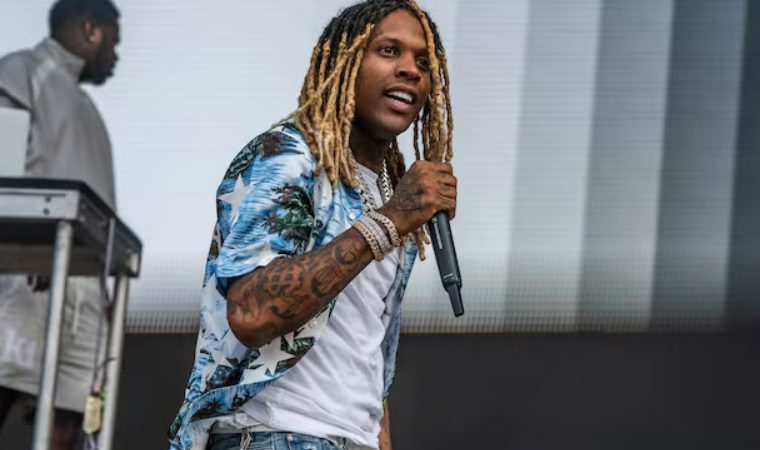
According to the federal complaint filed by the U.S. Attorney’s Office for the Northern District of Texas, rapper Lontrell Williams Jr. — known professionally as Pooh Shiesty — arranged the meeting under the stated purpose of discussing the terms of his recording contract with 1017 Records. Once the three victims were inside the studio, Williams and eight co-conspirators, several of whom had traveled from Memphis, Tennessee, executed what U.S. Attorney Ryan Raybould described at a Thursday press conference as “a coordinated, armed takeover.”
The DOJ alleges that Williams produced an AK-style pistol and forced the label owner to sign contract release paperwork at gunpoint. A second victim was choked to near unconsciousness. A third had cash, jewelry, and personal property taken. Rapper Rodney Wright Jr., known as Big30, is alleged to have barricaded the studio door with his body to prevent the victims from leaving.
Eight of nine named defendants — including Williams, his father Lontrell Williams Sr., and Wright — were arrested Wednesday across Memphis, Nashville, and Dallas. A ninth defendant, Terrance Rodgers, remained at large as of the April 2 press conference.
The evidentiary picture assembled by federal investigators is substantial. Electronic monitoring data placed Williams at the studio in violation of his home detention conditions stemming from a 2022 federal firearms conspiracy conviction out of Florida, for which he served 63 months before his October 2025 release. Cell phone records and license plate reader data corroborated coordinated travel from Memphis to Dallas. Rental car records link Williams Sr. to a vehicle used by the group. Surveillance footage from the studio, a nearby office supply store — where investigators believe the contract termination documents were printed hours before the meeting — and a hotel where several defendants stayed the night after has been recovered. Latent fingerprint evidence from the scene matches at least two defendants. Several defendants posted images on social media within hours of the incident displaying items matching the stolen property.
All defendants face federal charges carrying a maximum sentence of life in federal prison if convicted. At the time of the alleged offense, Williams was on home confinement wearing an electronic monitoring device, conditions that explicitly prohibited him from committing another federal offense or possessing a firearm.
What This Actually Means
Every outlet that covered this story, including us framed it as a crime story. It’s also a contract story, a label operations story, and an industry security failure hiding in plain sight.
The question the trade press hasn’t asked is the one that matters most to professionals reading this column: how does an independent label operator end up in a Dallas recording studio, without security, across a table from an artist disputing contract terms?
The answer is that hip-hop independent labels has never really formalized the operational separation between artist relations and contract negotiation. At major labels, contract disputes route through legal departments, are conducted in controlled environments, and never involve the label principal physically meeting a disputant without counsel present and the exchange documented. At the independent level — where the label owner is often also the A&R, the business affairs executive, and the check signer — those boundaries collapse entirely. The result is what the DOJ described on April 2.
Music managers need to understand what this indictment reveals about their specific role when an artist is in a contract dispute. A manager’s job is to advocate fiercely for their artist’s interests — to negotiate better terms, to leverage the artist’s commercial value, to find a resolution that advances the artist’s position. What this case exposes is what happens when that advocacy operates without structure. A manager working an artist through a genuine contract dispute needs legal counsel in the room, a documented negotiating position in writing, and a clear channel of communication with the label that does not route through an informal studio meeting. The manager’s leverage on behalf of the artist is strongest when the process is formalized — because formalized process protects the artist’s legal position if the dispute escalates to litigation. An undocumented, unstructured meeting at a recording studio protects nobody, least of all the artist.
Entertainment attorneys surely understand that the document allegedly signed under duress in that Dallas studio has no legal validity. Duress invalidates consent under contract law in every U.S. jurisdiction. But the more important structural point is this: if the termination paperwork was being prepared at a Staples location hours before a scheduled business meeting, the label’s attorney was not in the loop. No contract termination discussion of any kind should occur without independent counsel on both sides, in writing, before any meeting takes place. That failure belongs equally to both parties.
The Legal and Financial Mechanics
Three legal layers deserve examination that the general press coverage has entirely skipped.
First, the duress question. The indictment alleges that the label owner was forced at gunpoint to sign a document releasing Pooh Shiesty from his recording contract with 1017 Records. Under contract law principles applicable in Texas and every other U.S. jurisdiction, a contract signed under physical duress is voidable — not void on its face, but voidable at the election of the coerced party. The label owner retains the right to disaffirm that signature. The practical implication: Pooh Shiesty’s recording contract with 1017 Records almost certainly remains in legal effect regardless of what was signed in that room, and any future recording, distribution, or licensing activity he undertakes will be subject to its terms until it is properly terminated through lawful means or litigation resolves the dispute.
Second, the morality clause exposure. Standard recording contracts in hip-hop — including those structured through major label distribution arrangements — contain morality clauses permitting the label to terminate an artist’s contract when conduct brings the artist into public disrepute or subjects the label to reputational harm. Federal kidnapping and armed robbery charges filed by the Department of Justice almost certainly satisfy the triggering threshold of any competently drafted morality clause. The legal irony embedded in this indictment is precise: Pooh Shiesty allegedly attempted to terminate his own contract through force, and in doing so handed 1017 Records the mechanism to terminate it legitimately. Whether Gucci Mane’s label exercises that option — and whether the existing contract structure already addresses incarceration given Pooh Shiesty’s prior conviction — is a question 1017’s counsel is answering right now.
Third, the distribution agreement exposure. 1017 Records operates under a distribution arrangement with Atlantic Records, a Warner Music Group subsidiary. Distribution agreements routinely contain provisions requiring the label to notify the distributor of material legal developments affecting its roster. A federal kidnapping indictment naming the label’s primary commercial artist is unambiguously material. Atlantic’s legal team will most likely be reviewing its agreement with 1017 for suspension rights, audit triggers, and termination provisions. Independent labels operating under major distribution deals need to understand that their distributor is a contractual counterparty with its own risk management obligations — and a federal criminal prosecution of a flagship artist activates those obligations immediately.
What Independent Operators Need to Know
One. Never conduct a contract dispute discussion — informal or formal — in a physical meeting without counsel present on both sides, a documented written agenda distributed in advance, and a neutral location that is not a recording studio. A recording studio is an artist’s operational territory. It is not a negotiating environment. The April 2 indictment is the direct consequence of ignoring that distinction.
Two. Audit your recording contracts today for three specific provisions: the morality clause and its triggering threshold, the suspension clause and whether pending criminal charges activate it, and the incapacity provision addressing an artist’s inability to perform due to incarceration. If your standard contract does not address all three with specificity, it needs to be redrafted before your next signing. Pooh Shiesty’s prior incarceration should have made this audit mandatory for 1017 before his October 2025 release. It apparently was not sufficient to resolve this dispute through lawful channels.
Three. If you operate under a major label distribution agreement, read your notification obligations tonight. Identify every provision requiring disclosure of material legal developments affecting your roster to your distributor. If a signed artist is facing federal charges — whether publicly disclosed or not — failure to notify your distributor per the terms of your distribution agreement creates a separate breach exposure that compounds the underlying problem. Do not assume your distributor’s legal team is not already reading the same DOJ press release you are.
THE BOTTOM LINE
For entertainment attorneys: The document signed in that Dallas studio is legally unenforceable as a contract termination instrument. Your immediate task — if you represent either party — is to establish the contractual status of the artist relationship, assess morality clause triggers, and build the duress record before any parallel civil litigation begins. The criminal case will move on its own timeline. The contract dispute will not wait for it.
For music managers: Your job in a contract dispute is to win the best outcome for your artist — better terms, a clean exit, or a restructured deal. This indictment shows what happens when that fight plays out without legal infrastructure around it. The way you protect your artist’s negotiating position and their long-term legal standing is to formalize every communication, get counsel in the room, and ensure that nothing of consequence happens in an undocumented setting. Informal doesn’t protect your artist. It exposes them.
For independent label operators: You are the most exposed professional category in this story. You are likely your own business affairs department, your own A&R, and in too many cases your own security detail. No artist contract dispute should result in your physical presence at a location of the artist’s choosing without counsel, without a documented agenda, and without someone who knows where you are and why. The three victims in this indictment flew to Dallas for what they were told was a business meeting. Build the protocols now that ensure that situation never describes you.