
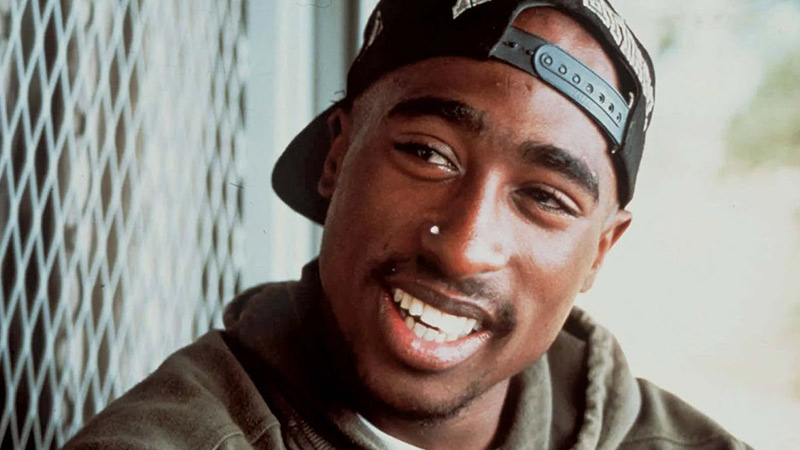
Today is day two of the trial of Duane ‘Keffe D’ Davis, accused of orchestrating the murder of rapper Tupac Shakur in Las Vegas in 1996.
Today we are expected to hear continued testimony from prosecution witnesses, including police, witnesses and possibly family members.
On Monday, both sides laid out their cases: Prosecutors said Davis’ own statements are proof of their accusations, while the defense argue that none of those statements were verified or made as part of the investigation.
After the opening statements, one woman who said she heard the gunshots spoke from the stand, followed by several former officers from both the Las Vegas Metropolitan Police Department and the Los Angeles Police Department who spoke about their investigations.
That statement contradicts previous comments from Davis in which he said he was sitting in the front passenger seat of the car, which pulled up side-by-side with Shakur’s, before the September 1996 shooting near the Las Vegas Strip. Marion “Suge” Knight, the then-head of Death Row Records, was driving the car with Shakur sitting in the passenger seat.
Davis said he granted interviews and admitted involvement in the murder in a book to make money.
LIVE UPDATES
He says he had security outside the hospital room of Tupac Shakur while he fought for his life. Stayed in Vegas for one week after Tupac passed, received his ashes, & delivered them. Prosecutor: Did you have anything to do with the murder of Tupac Shakur? Wright: Absolutely not.
Calls James McDonald like his brother. Has known him for 50+ years. Recalls when he says he learned that Tupac Shakur was shot. He says he was in Club 662 at the time. Says he headed to UMC. People started gathering there. Went back to house of Suge Knight to get his home secure.
Says he received advice from attorney about no weapons, not to carry firearms the night of Tupac’s murder.
662..spells MOB (when you dial on phone), meaning Members of Bloods. Re: Club 662.
He meaning Tupac.
Discussing the Soul Train Music Awards in 1996. Had entourage of about 50 people. Wright says he pulled a firearm. Davis shaking his head when Wright says he was there.
Discussing “Hit em Up,” Wright agrees he is aggressively expressing feelings toward Bad Boy Records. They added security.
WITNESS Reggie Wright Jr.: Father was Compton PD Lt. He was a police officer also & retired in 1996. Says he is in wheelchair as a result of COVID. Was head of security for Death Row Records. Heard of Keffe D. “At one point he was known as a crackhead.” Then a drug dealer.
Juror question: “Did Reggie Wright Jr instruct security not to have guns?” Says he did have guns that night.
Sanft touches on the subpoena. He confirms he was forced to be here. Says he’s here because he has grandkids and didn’t want to run. “Treat me as a hostile witness…” “Was I in the entourage when Tupac got shot? No.”
He is clearly upset and does not want to answer some questions. “When we got back to Compton, it was a gang war…” He is upset & going back & forth with Sanft. To Davis: “Talk to your lawyer, man. This dude is trippin.” This is the first witness where the testimony is heated.
Cross-examination from Michael Sanft: Says he told prosecutors he had nothing to do with this. Metro police were “posted up” that night, meaning they were everywhere. Reggie was watching over Suge Knight’s people. His security was separate. Says he was not present at the shooting.
Says you would have to retaliate…if someone disrespects you… “living that life.” “I put myself in the situation to protect something and somebody…did it for a paycheck….I’m older now, I get it….”
“A lot of things happened that night… Me or anyone else bringing up the dead is wrong… A lot of people got hurt by this situation in & of itself…” Says he’s 61. Bringing back people like him…”you better treat me like a hostile witness.” This is after a question about Orlando.
Learned that night Tupac got shot. Suge came back with a bandage on his head after the shooting. He says Reggie Wright Jr. had nothing to do with Tupac Shakur’s murder. The prosecutor asked about conspiracy theories that Reggie had something to do with it.
9/7/96: was in Las Vegas. His job was to make sure “nothing funny happened” at Club 662. They were the fall guys. Concerned about people… like Crips… coming and causing issues… Reggie Wright Jr.’s job that night was to make sure he didn’t get in trouble.
Points to the situation between record companies, not gangs…says some people got mixed up in it…did almost anything to get a paycheck, especially if they had just gotten out of prison. Death Row Records vs. Bad Boy Records. On both sides…a lot of tension.
Role in Death Row Records: If something happened, Suge would have you take care of that. Suge relied on him to protect his roster of music artists. “Anytime you deal with gang life, there’s gonna be violence at any given time.”
WITNESS: James McDonald, also known as MOB James. Headed security for Club 662. Prosecutor made it clear he did not come to testify voluntarily.
Says police immediately put cones on them. Suggest weapon was Glock 40. On radio: potential suspect vehicle to look for: call initiating code red at 11:17 pm—possible white or light-colored Cadillac with 2 occupants. Update about 12:45 a.m.: white Cadillac, good condition, 4 males.
Pic of cones on road. Exhibit 129 (how this is labeled): package of cartridge cases. Checked for fingerprints. Negative results. He opens envelope. Appears to be seven: Flattened cartridge cases. Several have damage. Misshapen. “This is actually the closest I’ve seen them”
Police were able to determine where several cartridge cases came from due to the street… Placed cones on top of cartridge cases to protect them. One for sure, maybe more were already run over by traffic. Popped flares on the number 3 travel lane where cartridge cases were located.
9/7/96: he was out with gang members, heard about shots fired & a code red on radio. Code red means no other radio traffic… keep radio traffic to minimum…waiting for updates from initial officer, sacred thing, you don’t break the code red. Responded to Koval & Flamingo.
WITNESS: Dean O’Kelley, deputy marshal in district court with judge here. Was a Las Vegas Metro police officer. Started in September 1991, retired July 2012. For almost 8 1/2 years, investigated cold case homicides. 1996: worked in gang unit at Metro, enforcement team.
He worked at Maxim Hotel near Koval & Flamingo. Cross-examination by Michael Sanft: Heidmeyer points to the map to specify locations. Said he saw a white Dodge Stratus, a black BMW behind it, a possible Lexus behind it, another vehicle, a white Chevy…about 10 Vehicles head toward strip
Saw the black BMW with vehicles near it. One man was armed, well-dressed…. He was not firing weapon, he had weapon in his hand, automatic pistol… He believed that person was the suspect. Police asked him which direction a caravan went & he pointed to the Las Vegas strip.
WITNESS William Heidmeyer: Security at nearby casino. Was investigating stolen vehicles on 9/7/96 with police.. “We just suddenly heard a lot of gunfire…” Prosecutor: How many shots? “It sounded like a lot” “It was a series of pops” He was armed and leaned over wall…
Rios: Anderson said a couple of guys who he didn’t know jumped him. Rios learns about shooting later than night and was asked to write a report about interaction with Anderson. Didn’t write report immediately since Anderson didn’t want to press charges.
WITNESS: Kenneth Rios, retired Las Vegas Metro police sergeant. 9/7/96: around 9 pm, working uniformed patrol at MGM. Had contact with Orlando Anderson. Rios is seen on video. Police thought Anderson was a victim. Rios asked if he needed medical assistance; he said he was fine.
Juror question about location of security person who wrote report about MGM incident.
During cross examination from Michael Sanft: I heard the Marshal tell a woman who is in here watching: “You can’t sketch the jury.”
During cross examination from Michael Sanft: I heard the Marshal tell a woman who is in here watching: “You can’t sketch the jury.”
This is video from inside the MGM. Crowd there for Mike Tyson fight.
WITNESS Michael Ingram, investigator for MGM Resorts. Surveillance video recorded on VHS in 1996. Prosecutor: “it appears victim of the beating was wearing that 13 Marino shirt” Ingram agrees. They are referring to Orlando Anderson, nephew of Duane ‘Keffe D’ Davis.
Noting that during this portion where pics of the body of Tupac Shakur were shown, most family members of Tupac Shakur left the courtroom.
Jury question: were there any wounds to head? No. Jury question: were all bullets same caliber? She doesn’t know,

Cross examination from attorney Michael Sanft: Was anything missing in records? Gavin: No… She then notes: “we only took a few photos of his body at the time…”
Pic of projectile recovered from autopsy. Affidavit from Shakur’s mother indicating he was her son. Cause of death: gunshot wounds of chest and abdomen. Homicide.
Doctors did surgery and removed another projectile. Pic of right flank. Wound does not penetrate to body, possibly from projectile that hit something else, then hit body. Shakur had scars suggestive of previous gunshot wounds. Back of right hand: gunshot wound on ring finger.
Bullet entered right side of chest, went across right lung. Projectile recovered. This wound collapsed lung & caused lung to bleed. Removed lung to try to save him. Bleeding out in area from injury. Entrance gunshot wound in right thigh. Went up to abdomen, damaged intestines.
Shown: Pic of toe tag for Tupac Shakur. Graphic pic of the body of Tupac Shakur. Photos show evidence of medical intervention – meaning doctors tried to save his life. Facial pic. Another pic of his body. THUG LIFE tattoo on his stomach. Gunshot wound, right side of chest.
WITNESS Dr. Lisa Gavin: forensic pathologist medical examiner in Clark County. Practicing here for 30 years. Was in medical school in 1996. Reviewed case file, autopsy report for Tupac Shakur, etc.. Medical examiner who did autopsy died. Gavin is giving her expert opinion.
WITNESS Thomas Kern: works for Customs & Border Protection now. Worked as crime scene analyst for Las Vegas Metro police in 1996. Was present at autopsy of Tupac Shakur. Looked at photos to confirm they are legit. No cross examination.
Court resumes with the rest of the Monday’s recording of an interview Davis had with Fred Miller following the murder of Biggie Smalls.
S: 8 NEWS VEGAS


