

More Than a Melody: Leschea’s Place in Hip-Hop History (Interview).
By: Todd “DG” Davis
Rapindustry.com
___
There are artists whose names immediately spark nostalgia, and then there are artists whose voices become part of the soundtrack without always receiving the credit they deserve.
Leschea belongs in the second category.
Raised in Bedford-Stuyvesant at a time when Brooklyn was helping redefine the sound of hip-hop, she arrived with something different. She wasn’t trying to out-rap the rappers or out-sing the traditional R&B singers. Instead, she found the space between them—a place where soulful melodies could ride rugged drums without sacrificing authenticity.
Long before blending genres became the norm, Leschea was already proving there was room for singers inside hip-hop’s DNA.
Her work alongside Masta Ace Incorporated introduced listeners to a voice that felt equally at home over boom-bap as it did over smooth grooves. Then came Rhythm & Beats, an album that has quietly grown into one of those records listeners continue to rediscover, appreciating today what some may have overlooked when it first arrived.
Outside the recording booth, Leschea continued serving the culture through The Leschea Show, where she traded the microphone for the interviewer’s chair and spent nearly a decade documenting the stories of artists whose contributions deserved to be remembered beyond their biggest records.
Today, as she prepares new music while reflecting on a career that has touched multiple generations, Leschea remains exactly what she’s always been: authentic, grounded, and unmistakably Brooklyn.
We caught up with her to talk about the borough that raised her, the records that still resonate, building a life with Masta Ace, preserving hip-hop’s history, and why staying true to yourself never goes out of style.
Brooklyn has always produced people with a certain toughness and pride. Looking back, what are the biggest life lessons Bed-Stuy gave you that continue to guide you both personally and professionally?
Leschea: Brooklyn definitely taught me how to be resilient and confident because it wasn’t always considered the easiest place to grow up. There were always going to be people who tried you, tested you, or assumed you were a pushover. I learned early on that I wasn’t.
That absolutely shaped the woman I am today. I’m confident, I’m resilient, and I have dreams that I still want to pursue. Those are the same values I try to instill in my daughter. Brooklyn definitely made me who I am.
“Fulton St.” has become much more than a fan favorite—it captures a feeling of home. When that record comes on today, where does your mind immediately take you?
Leschea: I don’t just hear the song. “Fulton St.” comes with a whole movement. It takes me back to growing up on Putnam Avenue in Bedford-Stuyvesant, Brooklyn. It reminds me of going downtown to shop for the latest gear, catching movies, going to A&S, Albee Square Mall, and just experiencing Brooklyn.
That song gives me a real sense of home.
Time has given Rhythm & Beats a whole new appreciation. Revisiting that project now, what do you recognize about the artist—and the person—you were becoming during that chapter?
Leschea: When Rhythm & Beats came out, I was definitely in my tomboy era—and honestly, I still think there’s a little tomboy in me today.
At that time, I wanted to make the kind of music I wasn’t hearing from other people. I wanted to sing over straight hip-hop tracks. Some people might say it had been done before, but not quite the way I approached it.
That project helped shape me into the artist and woman I am today.
Your music always carried equal parts soul and hip-hop. Did you consciously set out to bridge those worlds, or was that simply the most honest expression of who you were?
Leschea: It was always natural for me. I wanted to make music that felt authentic to who I was instead of chasing what everyone else was doing. Hip-hop was always part of my DNA, and I wanted people to hear that through my singing.
There was an undeniable chemistry within Masta Ace Incorporated. What made that creative environment so inspiring, and why do you think those songs continue connecting with listeners decades later?
Leschea: Those records were just dope—plain and simple. Everybody brought exactly what they needed to bring to Masta Ace Incorporated.
For me personally, it gave me the freedom to be creative and let those creative juices flow. That experience helped pave the way for everything I eventually did on Rhythm & Beats.
Sharing both life and music with Masta Ace has created one of hip-hop’s most enduring partnerships. What’s helped the two of you continue growing together while still encouraging each other’s individual creativity?
Leschea: I’d say the biggest lesson has been maintaining mutual respect. We have a genuine friendship, great chemistry—both musically and personally—and, of course, love for one another.
Those things have always been the foundation.
Celebrating the 25th anniversary of Disposable Arts across Europe showed just how far this music has traveled. What emotions came with experiencing that kind of appreciation so many years later?
Leschea: Touring Europe was incredible. Being able to share the stage with my husband was special because that’s not something people usually get to see.
It was also amazing being introduced to so many of his fans overseas. They had heard me on Disposable Arts and other projects, but seeing me perform live was different.
The love I received was overwhelming, and it definitely inspired me creatively. I’m working on new music now, and I’m especially excited for the fans in Europe to hear it.
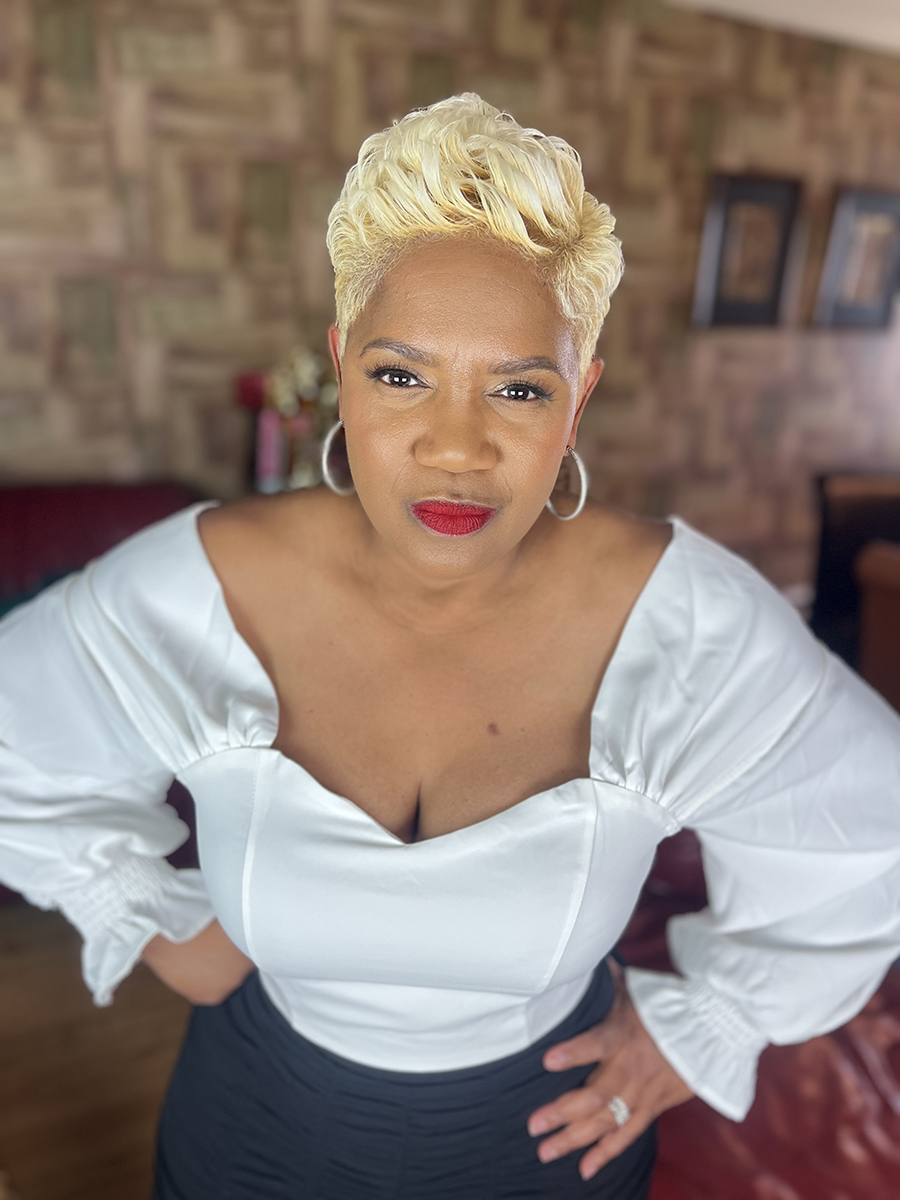
Women have always played an essential role in hip-hop’s evolution, yet many of those stories remain underrepresented. What part of that history deserves a closer look today?
Leschea: I hope people recognize that hip-hop has always been more than rap lyrics, break-dancing, and graffiti. There’s always been a place for singers, too.
I’ve always wanted people to view me as a true hip-hop singer—not someone outside the culture, but someone who added another dimension to it.
Artists often don’t realize how deeply their music becomes woven into people’s lives. Has there been a fan interaction that reminded you just how meaningful your songs have become?
Leschea: People tell me all the time how much “Fulton St.” means to them. I didn’t realize until much later that almost every city has a Fulton Street, so people connected with it in ways I never expected.
I’ve also heard from fans about songs like “Schea’s World” and “Hip Hop.” Those records really meant something to people, and hearing their stories is always special.
After years of interviewing artists on The Leschea Show, you’ve heard countless life stories beyond the music. How has sitting on the other side of the conversation changed your own perspective?
Leschea: Hosting The Leschea Show for nearly a decade was one of the biggest blessings of my career.
I intentionally avoided asking the usual questions because I wanted to know who people were beyond their careers. I wanted to hear about their childhoods, their struggles, and their personal journeys.

What I discovered was that even the biggest legends are just people navigating life like the rest of us. Many of those guests have become like family over the years, and I’m grateful I had the opportunity to tell their stories.
You’re entering another exciting creative chapter. As you prepare to share new music, what inspires you today, and how has experience influenced what listeners will hear this time around?
Leschea: I’m excited that people are excited about my new project.
From my very first single almost 30 years ago, I’ve always tried to do the opposite of what everyone else was doing while staying true to myself.
I think of hip-hop as soul food, and I like to think of myself as the seasoning—the Lawry’s® seasoning—that gives it a unique flavor. That’s still my goal today: to bring something authentic and distinctive to every project I’m part of.
When people reflect on your contribution to hip-hop years from now, beyond the records themselves, what do you hope they’ll remember most about what Leschea brought to the culture?
Leschea: I hope people say I gave them my authentic self.
I’ve always tried to sing about relatable topics while putting my own soulful twist on them. More than anything, I wanted to go left when everyone else went right.
I wanted people to understand that hip-hop is bigger than what most people think it is. It has room for singers, storytellers, and different voices.
If that’s my contribution—to be remembered as a true, authentic hip-hop singer who stayed true to herself—then I’d be proud of that.
