John Brown The Rapper: Boom-Bap Built (Interview)
By: Todd “DG” Davis
Rapindustry.com
___
Some albums get announced. Others feel unearthed. Waxing In Mecca doesn’t chase nostalgia—it brings it back to life, raw and present.
At the center is John Brown The Rapper, sharpened through years of grind and refined at Pendulum Ink. That evolution collided with Da Beatminerz, turning sessions into something deliberate—built, not assembled.
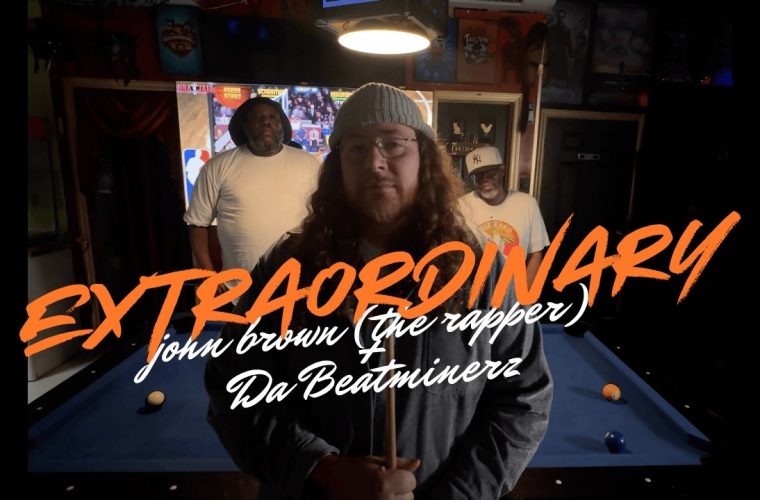
The result arrives June 5, 2026 via Soulspazm/Fatbeats. After a Shade45 tease, the lead single “Extraordinary” sets the tone—menacing, focused, and unapologetic. Brown doesn’t ease in—he establishes presence.
Rooted between Bushwick train rides and Harlem’s deeper meaning of “Mecca,” the album connects place, discipline, and identity without leaning on the past. With features from Your Old Droog and Smif-N-Wessun, it moves with purpose, not trend.
Waxing In Mecca isn’t here to argue hip-hop is alive.
It shows you exactly where it’s been.
What does “Mecca” represent to you in the context of this album?
You know, I’ve always found it interesting that it’s a commonly used expression in English to describe any central location or spot that attracts people as “the Mecca.” We call Madison Square Garden the Mecca of basketball. We say Las Vegas is the Mecca for gambling. The Mall of America could be considered the Mecca for retail, for example. And everybody knows that New York City is the Mecca of hip-hop. It’s where it started, where it came from, and where people who love the culture feel compelled to visit. The city contains the monuments and the history of the birth of this culture.
I am a product of that hip-hop culture. So even though I wasn’t born in NYC, it always felt like my cultural home—where I could feel connected to the things that are most important to me. When my family and I relocated to NYC and it became my actual home, it felt like a return rather than an arrival.
I wanted to make a record that spoke to my experience of living in the Mecca of hip-hop—living and breathing this culture every day. But if you go a level deeper, Harlem has been viewed for over 100 years as the Mecca of Black culture in America. And when the Nation of Gods and Earths was founded, it was right there in Harlem, which they also dubbed Mecca.
So it’s about NYC as a whole, but it’s also about the fact that I wrote and recorded this album while living in Harlem. I wanted to embrace the history and legacy of all the people who came before me and inspired me to become the man I am today. It’s important for me to give recognition and pay dues to the architects of this art form that I’ve benefited from and that has shaped me so significantly.
When did Waxing In Mecca become more than just a collection of songs?
I’d say when we made a song called “The Body Rock,” probably the fourth or fifth track we did together. That’s when things shifted for a couple of reasons.
First, it was the first time Da Beatminerz made a beat specifically for me. Before that, I was just picking from their beat tapes. After that, Walt and E started crafting beats intentionally for this project and sending them to me to get busy.
It was also a love song, and once we started bringing in different sounds and emotions, it put us in album mode. We began thinking about tempo, themes, and variety—how everything would come together for the listener. We didn’t want a bunch of songs that all sounded the same. We wanted to give people a complete meal, like the classic albums that came before.
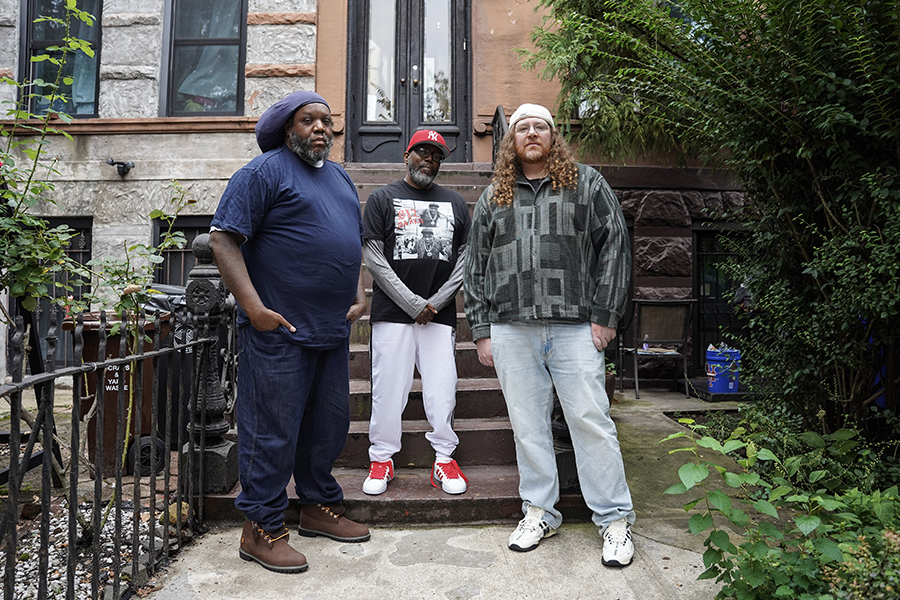
John Brown the Rapper & Da Beatminerz. Photo by: J.Boogie
What did working with Da Beatminerz demand from you that other collaborations didn’t?
They showed me what it really takes to strive for greatness. I could always flow and make good songs, but the time and effort I used to put in was nothing compared to what we did on this record.
We spent almost three years making it—hours and hours locked in the studio, mixing, remixing, agonizing over every detail. Then stepping away, letting it breathe, and coming back with fresh ears.
We only get so much time on this earth, and seeing what Walt and E were willing to sacrifice made me realize I had a responsibility to match that energy. It made me take the craft way more seriously—not just writing rhymes, but delivering them and constructing full songs that resonate.
How did your time at Pendulum Ink shape your writing?
That was a huge part of what made this album special. Pendulum Ink is an elite lyricism academy founded by Mickey Factz, with guest lectures from legends like Pharoahe Monch, Method Man, Masta Ace, Darryl McDaniels, Inspectah Deck, and many more.
It wasn’t just legends either—the next generation like Skyzoo, Elzhi, and Ab-Soul came through too. When I was Lyricist of the Month, I got to perform for Ransom, and that verse ended up on “Basement 2 Penthouse.”
But beyond exposure, the real value was discipline. They taught us how to identify and name lyrical techniques and apply them intentionally. What used to feel like instinct or magic became part of a structured process.
Everybody there is already nice. They can’t make you nice—but they can give you the tools to become sharper and more intentional.
On “Extraordinary,” are you introducing yourself or defining yourself?
Definitely introducing myself. I’m not here to fully define who I am—that’s something people can do after I’m gone. While I’m here, the story is still being written. That track is just the foundation.
What separates a finished verse from an effective one?
I think of it like a figure skating routine. It needs structure—a theme, a beginning, middle, and end that connect fluidly.
At the same time, you need standout moments—two or three haymaker bars that make people stop and say, “How did he write that?” If it doesn’t have both structure and those standout moments, it’s not effective, even if it’s finished.
How do you balance technical precision with emotional impact?
I aim to do both simultaneously. It starts with emotion, but I keep refining until the technical side matches.
Pendulum played a big role in that. You could write something emotionally powerful, but if the rhyme structure wasn’t precise, it would get called out. That forced me to elevate both sides at once.
What does this project say about you now?
I’m just better. My pen is sharper. The songs are stronger. And I believe the next project will be even better. This is a new high point—but not the destination.
How did you approach collaborations?
It depends. With artists like Smif-N-Wessun, we created together in the studio, which felt natural. With others like Your Old Droog, it was about setting the tone and giving them space to build.

Either way, it felt like playing alongside greatness—you have to show and prove.
Did you feel responsible to honor the legacy?
Absolutely. This is about continuation. Hip-hop isn’t dying—you just have to know where to look. It’s always been rooted in the underground.
As Yasiin Bey said, “Forever is a current event.” The goal is to create something timeless.
What was the biggest challenge?
Finances. I’ve got a family to support, a day job, and no safety net. I grew up on food stamps and Section 8. This was self-funded, built out of love.
Like O.C. said, “I’d rather be broke and have a whole lot of respect.”
What do you want listeners to walk away with?
It’s not about me—it’s about us. The culture. The people. The creators.
Mecca is a place, but it’s also a mindset. I want people to recognize the Mecca within themselves.