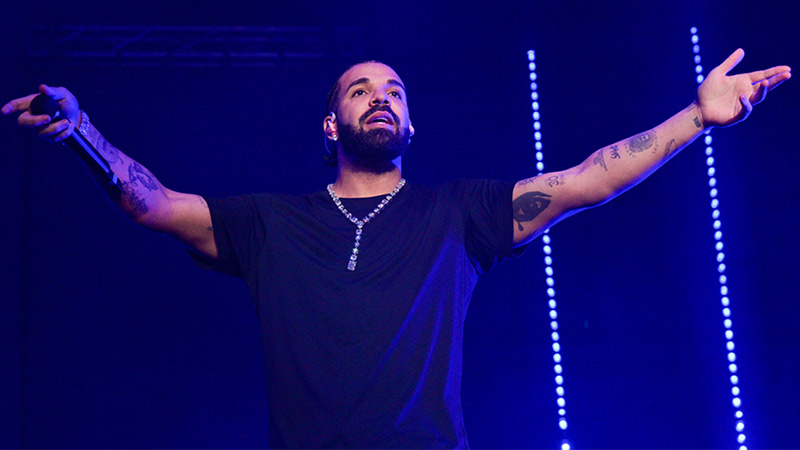
The last time a hip-hop song cracked the Top 10 of the Billboard Hot 100, Drake was asking the world a question. He still hasn’t gotten a satisfying answer.
What Did I Miss?” — released July 10, 2025 — debuted at No. 2 on the Hot 100, amassing 22.6 million streams in its first week, briefly threatening to unseat pop singer Alex Warren’s “Ordinary” before settling in just below the summit. It was a vintage performance from the genre’s most decorated chart artist. It was also, as of today, the last time hip-hop touched the Top 10 at all.
Since then, no rap release has managed to crack the upper echelon of the chart — a rarity for a genre that has dominated streaming and radio for much of the past decade. Nine months. That is the current length of hip-hop’s drought at the top of the most widely cited singles chart in the music business.
The drought got worse before it leveled out. In October 2025, Billboard reported that no rap songs appeared in the chart’s top 40 for the first time since February 2, 1990. At that low-water mark, NBA YoungBoy’s “Shot Callin'” was the genre’s highest-charting entry — at No. 44. For context: 1990 was before The Chronic.
Before Reasonable Doubt. Before rap became the dominant commercial force in American music. That’s the company this moment is keeping historically. And yet — and this is where the story gets genuinely complicated — hip-hop is not struggling. Not even close.
Drake has surpassed 5 billion streams on Spotify in 2026 alone, reaching the milestone in just 96 days, without releasing a single new song. He is on pace for what analysts are describing as the biggest catalog streaming year in hip-hop history. The disconnect between those two data points — zero Hot 100 Top 10 appearances versus 5 billion on-demand streams — is not a contradiction. It is a diagnosis.
The Billboard Hot 100 is weighted toward radio airplay, sales, and streaming. But in 2026, radio’s cultural authority has eroded significantly, and sales are negligible for most releases. Hip-hop has long been a streaming-first genre, but the chart’s algorithmic construction increasingly favors pop crossover tracks built for TikTok virality and playlist saturation across casual listeners — not the core rap audience that drives volume. Industry observers note that the current landscape reflects shifting listening habits, where catalog streaming and playlist-driven consumption can rival or exceed the impact of traditional single releases on weekly charts.
There is also a structural footnote worth addressing directly: Kendrick Lamar and SZA’s “Luther” — which won Record of the Year at the 2026 Grammys and spent 13 weeks at No. 1 on the Hot 100 in 2025 — departed the Billboard Hot 100 following rule changes to the chart that removed the record after 46 weeks. It did not fall out of culture. It was administratively removed. That is a different thing, and conflating the two distorts the actual health of the genre.
None of that changes the bottom line for labels and A&R teams who use Hot 100 performance as a deal-making barometer. If the benchmark metric says hip-hop hasn’t produced a Top 10 hit in nine months, those conversations are happening in boardrooms right now — regardless of what Spotify’s backend numbers say.

Drake will likely end the drought when he releases his next studio album, “Iceman,” although there’s still no release date. DJ Khaled just dropped “One of Them” with Future and Lil Baby today as the lead single off Aalam of God, dropping July 17. The pipeline isn’t empty. But the Hot 100 has moved the goalposts, streaming math is being interpreted differently by different stakeholders, and hip-hop is navigating a chart infrastructure that was not built with the genre’s current consumption patterns in mind.
The drought is real. The genre is not dead. Those two statements can both be true — and understanding the gap between them is the conversation the industry actually needs to have.