

Charlemagne: More Than a Name in the Liner Notes (Interview)
By: Todd “DG” Davis
Rapindustry.com
___
Every great record has a story. Sometimes, the most important part of that story belongs to the person whose name never makes it into the conversation. In hip-hop, where beats become anthems, movements become history and the people behind the music can sometimes get lost in the credits, Charlemagne has a story that deserves to be heard—not just remembered.
Born in St. Lucia and raised in the Bronx, Henri Charlemagne’s relationship with music began long before the industry came calling. It started with records brought home by his uncle, a young mind fascinated by the names in the liner notes, the musicians behind the instruments and the creative process that turned an idea into a song. That curiosity never left him. It became the foundation of a career built on instinct, experimentation, ambition and an undeniable love for the craft.
By 1993, that passion had grown into Fortress Records, an independent operation that helped cultivate talent, develop artists and give rise to Natural Elements. What followed was more than making beats. Charlemagne helped shape a signature sound, encouraged individuality and introduced a three-man lyrical weave that became part of the group’s identity. From New York’s underground circuit to records connected to some of hip-hop and R&B’s biggest names, his fingerprints reached well beyond the neighborhood and the studio.
His journey has crossed paths with The Notorious B.I.G., JAY-Z, Mary J. Blige, Talib Kweli, The Diplomats, Cam’ron and Ice-T, among others. Yet, for all the names, records and chapters, Charlemagne’s story isn’t simply about who he worked with. It’s about what he contributed, the artists he helped develop, the creative risks he took and the independent foundation he helped build when there was no guarantee of where it would lead.
And there’s another side to this story: the business of being recognized for your work. Charlemagne speaks candidly about the lessons, missed opportunities, relationships and frustrations that come with a career spanning more than three decades. He isn’t asking for a ceremonial tribute years from now. He’s asking for the people who know the history to speak on it while he’s here to hear it.
This is not a trip down memory lane for nostalgia’s sake. It’s a conversation about the making of a producer, the building of a movement, the people behind the records and the importance of giving credit where it’s due. From St. Lucia to the Bronx, from Fortress to the present day, Charlemagne has put his time, talent and fingerprints into hip-hop’s story.
The discography speaks. The history is there. Now it’s time to hear from the man who helped make it.
____
You were born in St. Lucia and raised in the Bronx. How did that journey shape your ear, your perspective, and ultimately the producer who became Charlemagne?
In St. Lucia, I was always surrounded by music, and my uncle used to bring American records into the house. The first record I remember was an Elton John album, Captain Fantastic and the Brown Dirt Cowboy. I was fascinated by the credits and wanted to know who played the drums, how they got into the studio, and everything behind the music. When I emigrated to the Bronx in 1976, that curiosity continued. I started playing a toy organ, making up my own songs and discovering even more records. That curiosity helped shape my journey.
You came up in New York’s underground during the early ’90s, when hip-hop was still built heavily on relationships, reputation, and being in the room. What was that scene really like from the inside, and what made you know you belonged in it?
I didn’t know I belonged. I just knew I wanted to make music. My friend, now business partner, Vidal Goring, believed in me and helped me pursue that musical journey. The MCs came later, but we were the ones learning early on through trial and error.
In 1993, you co-founded Fortress Records and became instrumental in developing Natural Elements. What did you see in those young MCs that made you believe they could become something special?
Some, like L-Swift and Dante, I had known for years. Others, like Tim, Mr. Voo, Smallz, G-Blass and KA (yes, that KA), I heard and helped develop their styles. They would tell you that themselves.
You helped develop Natural Elements’ signature three-man weave, which became one of their defining trademarks. Where did that concept come from, and how did you teach three individual voices to function almost like one?
We experimented with different styles. I think I just thought, “What if one person said four bars, then another said four bars, and then another said four bars?” That’s how it was born. We just wanted to be different. It had perhaps been done as a double, but a triple team was different. I also had a guy named Shakespeare (Franklin Rossman), who used to rhyme whole sentences. We were ahead of our time.
You’ve worked with everyone from The Notorious B.I.G., Jay-Z and Mary J. Blige to Talib Kweli and Jermaine Dupri. What did working with artists at that level teach you about the difference between simply making a beat and actually producing a record?
I was producing without even knowing it, going back to my time at Fortress. I made hooks, coached R&B singers, and advised rappers on cadences and styles. I had fewer connections with the major artists. The bigger “producers” were afraid of my ambition and my ability to do it all, and they knew I had heat. I wish I had taken a page from Kanye’s approach and hadn’t been so agreeable to all their demands. I also sometimes think maybe I was blackballed because of it. I was always professional: just do the music and bounce. No smoking, drinking or partying afterward.
Your credits also connect you to The Diplomats’ Diplomatic Immunity and Cam’ron’s Killa Season. What do you remember about that particular New York era and the energy surrounding those sessions that people on the outside probably never saw?
I saw their hunger and determination to make it. They were putting out mixtapes, releasing a tremendous volume of music and freestyles, and taking advantage of their access to Roc-A-Fella. That era was great. Dipset was a dope movement.
Then there’s Ice-T and Criminal Migraine. What made that project and your creative relationship with Ice-T different, and what did he bring into the studio that challenged or inspired you as a producer?
I’ve known Ice for a while now, and he’s one of the most real and genuine people. My brother met him at a supermarket and gave him my beat CD years ago, and we’ve been cool ever since. I stayed in touch, and he eventually reached out and said he wanted to do an album, then fell back. I insisted that he still had it and did a remix of a previous song we had worked on that was catching fire with the Twitch DJs. When he saw that, along with his peers in his age bracket making comebacks, he became convinced to do this new album.
Looking across your catalog, you’ve moved comfortably between underground hip-hop and major artists. How have you managed to keep your own identity while adapting your sound to different artists, eras and expectations?
I think it’s my passion for music that helps me navigate through it. I like creating and seeing people’s reactions to a piece of art that was in my head and came to life. I don’t look at the artists I work with as one being better than another. It’s simply about what’s good for the project.
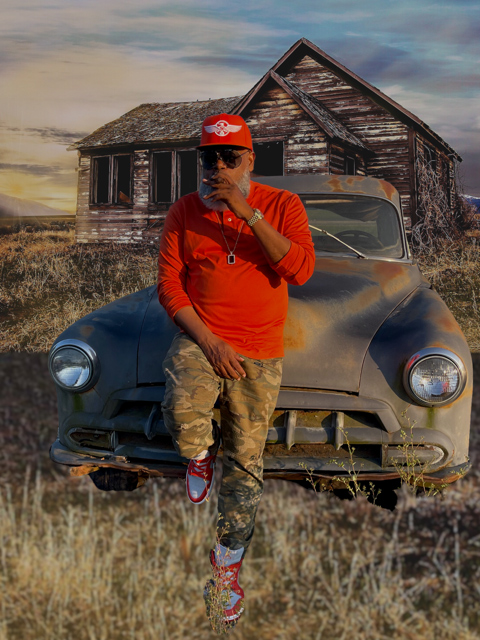
You’ve been around long enough to experience hip-hop before the internet changed the game, through the CD era, digital revolution, streaming and today’s social-media-driven culture. What’s one thing about the old-school way of creating records that you wish today’s generation could experience firsthand?
Just the overall experience: creating something from scratch, the slow-baking process, hearing it when it’s done, having reservations but releasing it anyway, then hearing it on the radio for the first time and seeing the reactions from fans, friends and family.
After all the artists, records, studios and different chapters, what’s a moment in your career that still makes you stop and say, “Damn, I was really there for that”?

First, being part of one of the first independent labels on the underground scene: Fortress Records. I kept my crew out of trouble and helped them channel their experiences and talent into songs. Natural Elements was the crown jewel, and it’s amazing and makes me proud to see them advance. KA was a student, and he taught me about the independent grind, so I’m always learning.
Another moment was being around other producers early in their careers. I knew Kanye and Just Blaze during the Blueprint / “Bassline” era.
And now, it’s the long-standing relationships I’ve maintained, like the one with Ice-T.
Longevity is something a lot of producers talk about, but very few actually achieve. What has kept you creating, evolving and staying connected to the culture for more than three decades?
Again, I’ll go back to my passion for music. If I didn’t love it, I would’ve quit long ago. I love creating. Unfortunately, there have been—and still are—blind spots on the business side that I’ve missed because of my heavy concentration on the creative side.
When you look back from St. Lucia to the Bronx, from Fortress Records and Natural Elements to Ice-T, The Diplomats and the many artists you’ve worked alongside, what do you want your contribution to hip-hop to ultimately mean—and what chapter of the Charlemagne story are you still writing?
My contribution so far has been being that guy you can go to for some dope music, and my discography will speak to that. As for my legacy, it’s still being written because it seems some folks are trying to erase me, my name and my contributions to their careers. I have to fight for my “flowers” every day. I want the people who know what I did and what I’m still doing to speak loudly and not wait until I’m gone to give me my props. In fact, I don’t want them if that’s what it takes for you to give them to me.


