

PLANET PATROL: WHEN R&B FOUND ITS FUTURE IN ELECTRO (Interview).
By: Todd “DG” Davis
Rapindustry.com
___
Herb and Rodney Butler on the voices, vision and movement behind a sound that changed the dance floor
Before electronic beats became commonplace in Hip-Hop, before synthesizers and drum machines helped define an entire generation of music, five R&B vocalists found themselves stepping into unfamiliar territory. What began as a group called The Energetics would eventually become Planet Patrol, a name forever connected to the emergence of electro-funk.
Coming out of Boston with a foundation in traditional vocal-group harmonies, Herb Jackson and Rodney Butler, alongside their fellow members, were suddenly navigating a musical landscape unlike anything they had previously experienced. With Arthur Baker and John Robie steering the creative direction, the group embraced a sound built around electronic programming, futuristic arrangements and the unmistakable energy of New York’s developing Hip-Hop culture.
The transition wasn’t necessarily an easy one. The music was different, the approach was unfamiliar, and even finding a place for their voices within the instrumental arrangements presented a challenge. But what emerged was something special: the marriage of seasoned R&B vocals and cutting-edge electronic production.
In 1982, Planet Patrol made their mark with “Play at Your Own Risk,” a record that became synonymous with early electro and the emerging breakdance movement. Its infectious hook, layered harmonies and driving electronic foundation helped establish a sound that reached well beyond the dance floor. Their self-titled 1983 Tommy Boy Records album continued that musical statement with tracks including “Cheap Thrills” and “Danger Zone.”
More than four decades later, the music remains part of the conversation. Its influence can be heard throughout Hip-Hop, freestyle, breakbeat and dance music, while the original recordings continue to find new listeners. Yet behind the records is a story of artists navigating change, trusting a vision and discovering a place in music history they couldn’t have fully anticipated at the time.
We caught up with Herb and Rodney to revisit the group’s Boston beginnings, the creative chemistry behind their signature sound, the making of “Play at Your Own Risk,” and why Planet Patrol’s contribution deserves its place in the history of Hip-Hop and electronic music.
___
Q. Before the name Planet Patrol entered the picture, you were already an established R&B vocal group known as The Energetics. Take us back to Boston and those early Atlantic Records days. What was happening with the group when the opportunity to reinvent yourselves came along?
HERB: We started out as The Energetics, a five-member R&B vocal group out of Boston. We were signed to Atlantic Records, but truthfully, we were on the verge of disbanding. The industry was shifting in a serious way. Disco was fading, R&B was taking a backseat, and Hip-Hop was rising as the new sound of the streets. We got caught right in the middle of that transition and lost our footing.
Three years later, fate stepped in. I got a phone call from Arthur Baker with an offer to become Planet Patrol. It came with some hard-to-swallow stipulations: a new name, a new genre, and a brand-new musical direction we had never worked in before. And all of this came at a moment when our group was already fractured.
But we took the leap, packed up and headed to Brooklyn. We landed at Arthur’s apartment and got to work, blending electro-funk with our soulful R&B vocals to help build what was becoming an incredibly fresh new sound.
Q. Looking back, the combination of soulful group vocals and electronic Hip-Hop production seems like a natural fit. But at the time, it was unfamiliar territory. How long did it take before you understood what Arthur Baker and John Robie were trying to create?
RODNEY: Honestly, no. The vision Arthur Baker and John Robie had in their heads wasn’t clear to us in the moment. The tracks weren’t R&B like we were used to, and at first, we were lost. We couldn’t find any vocal patterns. We didn’t hear lead melodies or backgrounds. We couldn’t even figure out where the lyrics would sit.
But once we heard the final mix, we kind of knew we had something special. It was a record that didn’t sound like anything else on the radio at that time. Remember, Hip-Hop was still developing, and nobody—I mean nobody—was singing over Hip-Hop beats back then.
Q. “Play at Your Own Risk” would become the record most closely associated with Planet Patrol. When you first received the instrumental, what stood out to you, and how did the group go about discovering the vocal arrangement that ultimately made the song so recognizable?
RODNEY: We were sent a tape of the instrumental for “Play at Your Own Risk,” and the arrangement was electric. It was pure energy. When I first heard the title, I remember thinking, “What are we going to talk about with a title like that?” The track sounded a lot like “Planet Rock,” just without any rap or singing over it. With no reference vocals to follow, we couldn’t get a feel for where our voices were supposed to fit.
Once we got in the studio and started tracking, though, everything began to make sense. It turned into a magical process. We started finding the lead melodies, figuring out who would sing what lines.
The very first thing we cut was the chorus, “Play at Your Own Risk.” We stacked that line seven or eight times, all five of us singing in unison. That moment lit the fuse.
Arthur and John started writing lyrics, John pulled the melodies together, and he pointed at each of us to sing our part, almost like a Five Heartbeats arrangement.
Arthur wanted to keep the signature vocal sound we had built as The Energetics, which is why you hear the second-tenor lead, the falsetto lead and the bass lead sitting right at the center of the record.
The energy in that room was explosive, and that’s when everybody started hearing the sound and style really come together.
Q. Planet Patrol’s music is often discussed alongside Afrika Bambaataa and the Soulsonic Force, particularly because of the sonic relationship between “Planet Rock” and “Play at Your Own Risk.” Did you recognize the historical significance of what was happening around you while you were making those records, or did that understanding come later?
HERB: To be honest, we weren’t sitting there thinking about being part of a movement. We were focused on finishing the album, getting on the road and traveling the world. We didn’t fully understand the impact our style of music was going to have on the industry.
But I’m sure Arthur and John did. They were visionary producers with their ears to the ground, living right in the heart of New York City.
When I look back, there really weren’t any other groups doing what we were doing in the studio with electronic music. It was a musicology experiment, and that’s why the Planet Patrol sound still holds up today.
Those records are life-changing, timeless party anthems that can still pull yesterday’s, today’s and tomorrow’s generations onto the dance floor, “At Their Own Risk.”
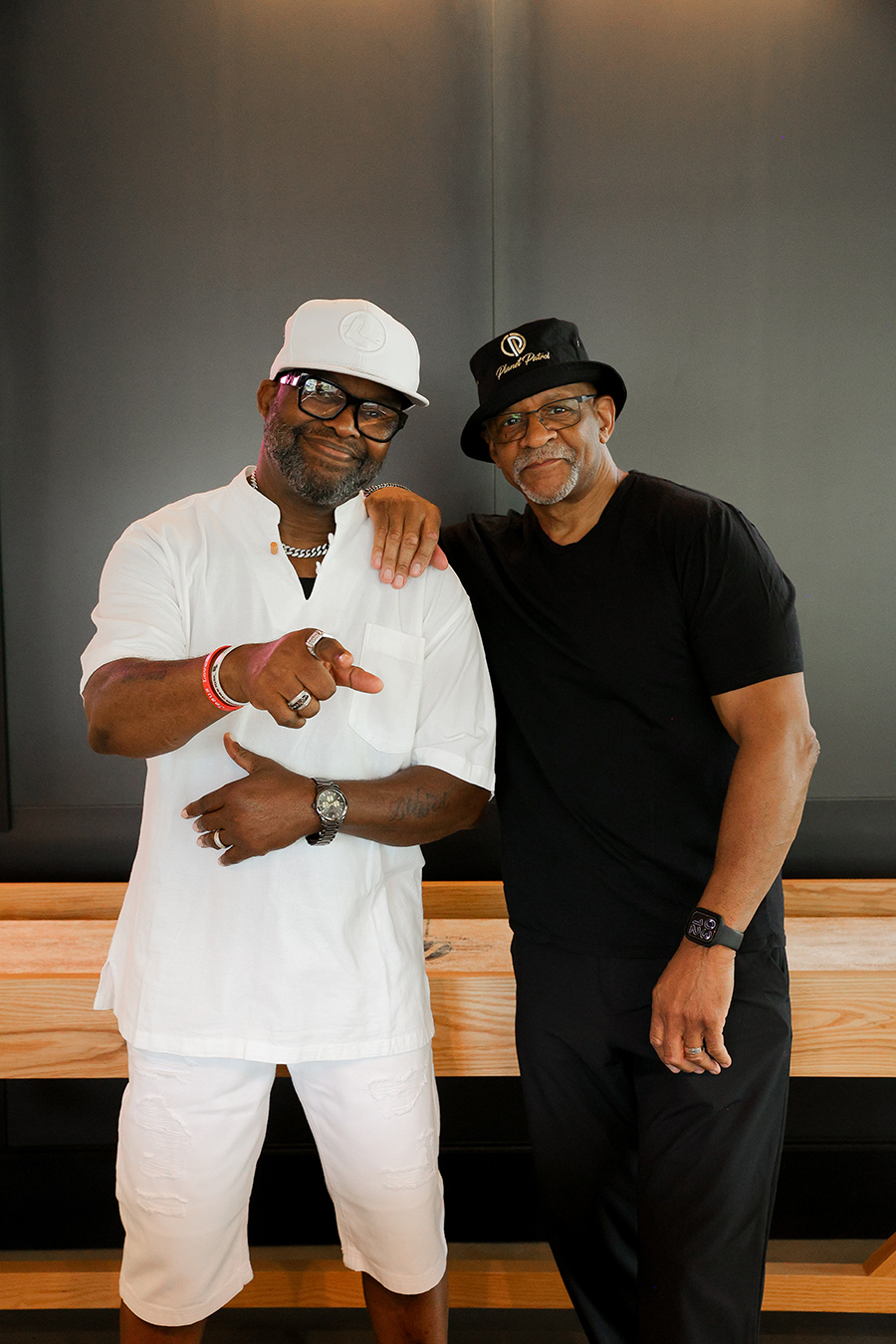
Photographer: Abbie Knights | TAB Agency
Q. Beyond the records themselves, working with Baker and Robie also helped shape Planet Patrol’s identity as performers. How did their production approach influence the group’s attitude, presentation and personality onstage?
RODNEY: The aggressive sounds and the way those tracks were arranged gave our vocals a whole new edge. Those sessions also lit the fuse for a new look, a new identity and a new persona on stage.
It gave us attitude.
Before every show, we would say a prayer, and right after, we would shout, “Attitude!” That word became the mantra for everything we did as artists from that point on—recordings, performances, even photo shoots.
It set us apart from other groups of that era because what you heard on our records is exactly what you heard and felt when you saw us live.
Q. With all the futuristic production happening around you, the foundation of Planet Patrol was still five singers with a shared background in R&B. How did you preserve that vocal-group identity while adapting to a completely different musical environment?
RODNEY: We were a seasoned vocal quintet with a full range of five voices, from tenor all the way down to bass. Arthur Baker had already worked with us on past recordings in Boston, so he knew exactly what we would bring vocally when we walked into the session.
What ended up on tape was a real blend of his sonic vision and our creative input on the leads, the harmonies and the ad-libs.
Those were the ingredients that made the record undeniable.
Q. Planet Patrol arrived during a period when breaking, popping, locking and other street-dance styles were becoming increasingly visible. As someone who helped choreograph the group’s performances, Herb, what did you take from those emerging dance cultures, and how did you incorporate them without losing the group’s original performance style?
HERB: I was one of the choreographers in the group, and I learned by watching the Jackson 5, The Temptations, Blue Magic and a lot of local Boston groups, too. Groups like The Ambitions, The Fourth Amendments, The Indigos, and Chubby and the Turnpikes, who later became Tavares. That’s where all my moves came from.
So when I saw what the New York B-boys, breakers, Beat Girls, pop-lockers and street fighters were doing, it was foreign to me and phenomenal at the same time.
Watching them build on top of our songs was surreal. We kept asking ourselves how we were going to work those styles into our performances without losing our vocal execution.
Our first manager always drilled one thing into us. He said, “You can dance on the dance floor all day and all night, but you can’t dance on a record. Concentrate on vocal execution at all cost.”
So we made a decision to stay true to our old-school vocal-group choreography and just added in a few moves that echoed what everyone else was doing to our records.
Q. Your 1983 self-titled album brought together the group’s distinctive vocal approach and the electronic production that was helping define the Tommy Boy sound. With songs like “Cheap Thrills” and “Danger Zone,” what did you feel the album said about Planet Patrol and the direction music was taking?
HERB: By the time the album was finished, we knew we had captured something fresh. Our soulful, seasoned R&B vocals paired with the electronic arrangements of Baker and Robie created a sound that was reminiscent of the great vocal groups we came up admiring.
In fact, both Rock & Soul magazine and Billboard called us “the new Temptations,” with electro-funk grooves and the innovation of the 808 drum machine driving the arrangements.
Planet Patrol was on a trajectory to help define what the future of music was going to sound like.
Think Motown doing electro-funk, soul and R&B.
That’s why so many groups that came after us borrowed from the Planet Patrol swag and sound.
Q. Today’s producers have access to virtually unlimited digital tools, software and sounds. Your era required a different kind of hands-on creativity, combining programmed electronics with live musicianship. What do you think today’s generation can take away from the way those early records were made?
RODNEY: Musicianship will always be the standard. Real musicians playing real instruments.
Alongside Arthur’s programming of the classic 808 drum machine and John’s masterful playing on the synths, we also had live percussionists on those sessions. Conga drums, chimes and tambourine all made their way onto the Planet Patrol album.
A lot of superstar producers tapped into the sonics and frequencies of our records, and it influenced the creative choices they made on their own projects.
Technology will always be part of the creative process, and I applaud today’s producers for how they paint musical landscapes with the brushes they choose.
Platforms like TikTok have also helped bring electro-funk sounds back to a whole new generation, letting them hear and feel the impact this music had, and still has.
Q. From Hip-Hop and breakbeat to freestyle and electronic dance music, Planet Patrol’s influence has traveled through several generations and musical styles. What goes through your mind when you hear contemporary artists revisiting the sounds and approaches that helped establish your era?
RODNEY: It’s a compliment and a testament to how important the music was, and still is.
Music evolves just like fashion. If you look at what’s happening today, artists like Bruno Mars and Sekou are using real instruments alongside VST plug-ins, virtual instruments, to shape their sounds, build musical palettes, and craft memorable hooks and lyrics. Hit records.
The only real difference between then and now is analog versus digital. We came up in the analog era, but outside of that, the process of making a great record isn’t all that different.
Q. When the history of Hip-Hop is told, the conversation often centers on MCs, DJs and producers. But groups like Planet Patrol helped expand what the music could sound like, bringing melody and R&B vocal arrangements into the equation. Why is it important to recognize that contribution alongside the genre’s other pioneers?
HERB: The early Hip-Hop pioneers weren’t doing much singing. It was all about rapping and telling real-life stories in a poetic way. Those artists are the legacy builders. Without them paving the way, Hip-Hop would never have grown into what it is today.

I remember doing a show with Run-DMC in Boston at a club called Lucifer’s, in the Kenmore Square section of the city. Run and I were talking, and he told me straight up that rap and Hip-Hop were going to take over the music industry.
I laughed and said, “Nah, brother. The Planet Patrol sound is the new thing. Watch, listen and learn.”
We all know how that turned out.
Even so, the contribution of the electro, funky R&B sound of Planet Patrol deserves to be respected and honored. We were foundational—not just for electronic Hip-Hop alongside Bambaataa and the Soulsonic Force, our Tommy Boy labelmates, but also alongside another Boston-based group, the Jonzun Crew.
Together, we pushed a musical movement forward and helped create entirely other styles of music built off our sound.
Freestyle is one of them.
Q. More than 40 years after “Play at Your Own Risk” first made its mark, the record continues to represent a pivotal moment when electronic production and soulful vocals came together in a new way. What do you believe is Planet Patrol’s most important contribution to that musical evolution?
RODNEY: Funk and disco were phasing out. Hip-Hop was introducing a whole new movement, speaking to a generation in a language only the streets truly understood.
I believe Arthur intentionally used our trademark vocals on the track to create something that had never been done before, giving us a lane entirely our own.
Planet Patrol’s distinctive sound was the icing on the cake. We created a vocal template that a lot of our peers used to launch their own careers once they heard the possibility of singing over Hip-Hop beats.
The rhythmic 808 kick-drum pattern also became the defining beat for a wave of hit records that followed. That, combined with our vocal sound, has stayed permanently connected to the industry, both then and now.
We want to thank all the DJs, dancers, press, fellow artists and, most importantly, the fans for their continued love, recognition and support of the music throughout the years.
Q. When the records, performances and history are all considered, what would you most like listeners to remember about Planet Patrol—and is there anything about the group’s journey that you still wish had turned out differently?
HERB: The memories we helped them make. How phenomenal we were as performers. A musical sound that was short-lived but never forgotten.
And honestly, one last question I still carry with me: Why didn’t they give us more?
Connect with Planet Patrol
Instagram: @theplanetpatrol
Facebook: Planet Patrol


