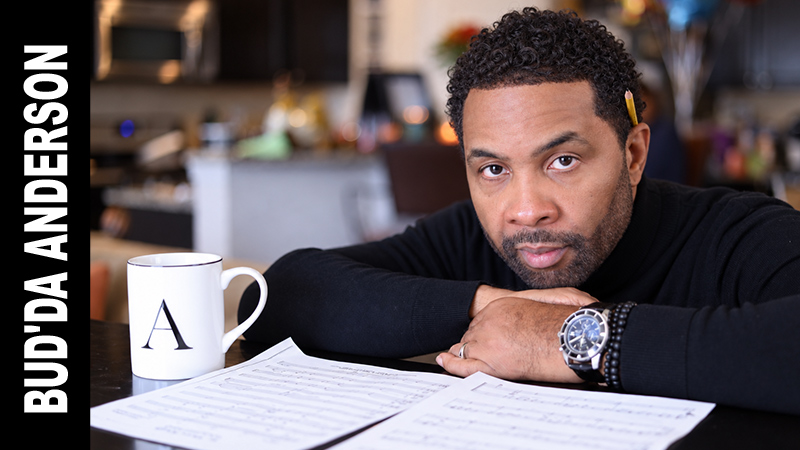
BUD’DA ANDERSON: ‘Bow Down’ Was Only The Beginning (Interview).
By: Todd “DG” Davis
Rapindustry.com
___
Before the Emmy, Bow Down, The Proud Family, BMF, or the many records carrying his fingerprints, Stephen “Bud’da” Anderson was a kid in Pittsburgh with rhythm in his blood. Raised in a musical family and shaped by the drums, he developed an ear that would eventually help him bridge worlds—Pittsburgh and Los Angeles, hip-hop and R&B, records and television.
Then came California.
Bud’da arrived carrying an East Coast ear, a drummer’s feel, and a love for chopping records. His connection with Sam Sneed opened the door, and Dr. Dre soon became part of the education. The lessons went far beyond making beats: instrumentation, arrangement, business, discipline, and understanding how to take a good idea and push it until it became great.
The fingerprints started showing up in big places. His production became part of the “California Love” video, placing his sound around one of the most iconic moments in West Coast hip-hop. Then came Aftermath and “Been There, Done That.” But Bow Down with Westside Connection was where Bud’da truly planted his flag.
With Ice Cube, Mack 10, and WC, Bud’da helped create an album that didn’t simply follow the West Coast sound—it expanded it. Built from SP-1200 grit, sampled Moog textures, hard drums, and a musician’s instinct for rhythm, Bow Down became more than a platinum record. It became history.
But greatness for Bud’da was never about staying comfortable.
Aaliyah, Ice Cube, Xzibit, Tank, and others became part of a production journey built on one simple principle: listen to the artist. Bud’da never needed everybody to sound like him. He learned how to make the sound fit the person—and that versatility became one of his greatest strengths.
Then came the unexpected chapter.
After personal loss and a difficult period in his life, an opportunity through Bruce Smith led Bud’da into The Proud Family and television composition. What looked like a detour became a new beginning. The producer who once made records knock from car speakers was now learning how to score characters, scenes, emotion, and story.
And he didn’t just make the transition. He mastered it.
From The Proud Family to Raven’s Home, Mecha Builders, BMF, Swagger, The Chi, and beyond, Bud’da expanded the same musical instincts that carried him through hip-hop into an entirely different language. The ability to know when to hit became the ability to know when to leave space. The beat became the scene. The sample became the story.
Now comes perhaps the greatest chapter of all: legacy.
Bud’da is creating alongside his son, Stephen Anderson Jr., contributing to the next chapter of A Different World while watching another generation discover its own musical voice.
That’s not just another credit. That’s the full circle.
From Pittsburgh drums to West Coast classics. From SP-1200s to television scoring. From learning the game to helping the next generation learn theirs.
Bud’da Anderson didn’t just adapt to the music. He kept growing with it.
And after all these years, the man who started by following his ears is still listening—and still giving us something worth hearing.
______
Q. Bud’da, before Los Angeles, before Aftermath, before Bow Down, there was Pittsburgh. What did growing up there put inside your musical DNA that you carried with you when you eventually landed in L.A.? Was there something about the Pittsburgh sound, attitude, or culture that you didn’t realize would become part of your production identity until years later?
Pittsburgh gave me an ear for different kinds of music. We listened to everything—East Coast, West Coast, and everything in between. My family had a band, so that musical foundation was there, too. I came into production through sampling and chopping records. When I got to California, that background met the instrumentation happening there. Looking back, bringing that East Coast swing into those melodic sounds was a big part of what made my contribution different.
Q. Your early connection with Sam Sneed is one of those chapters that deserves more than a name-drop. What did Sam teach you about producing, arranging, and surviving in this business when you were still finding your footing? And what did you learn simply by being around him?
Sam helped turn something I loved into a professional opportunity. He brought me to California and connected me with Kausion, which led to my first placements. Being around him and Dre helped expand how I approached instrumentation beyond sampling. I was also learning the business from the beginning. I remember thinking a beat placement paid $500, and Sam explaining that it was $5,000. That tells you how new all of this was to me.
Q. Then you get to Los Angeles and suddenly you’re in the orbit of Dr. Dre. That’s a serious change in altitude. What do you remember about the first time Dre really heard what you could do? Was there a particular record, beat, or moment when you knew the relationship had moved beyond simply being another studio connection?
The funny thing is, Dre knew me from Sam Sneed before he knew I made beats. J-Flexx would write to my tracks, and Dre heard one while Flexx was working. The next time we saw each other, Dre wanted to know why I hadn’t mentioned producing. That beat became my contribution to the “California Love” video. That’s when knowing him became working with him.
Q. There’s a fascinating bit of history around “California Love”: your production was used in the intro and outro of the video before many people outside the studio world even knew your name. What was happening behind the scenes during that period, and what did it feel like to realize your sound was helping frame one of the biggest records in West Coast history?
That music started as a beat in my SP-1200. Dre needed something for the video and asked to use it. Of course, I agreed. Something I had made on that machine became part of this enormous moment. It was an introduction to my work, even for people who had no idea whose music they were hearing.
Q. When Dre left Death Row and began building Aftermath, you became part of that next chapter. You co-produced “Been There, Done That,” which had a very different energy from what people associated with Dre a few years earlier. What was Dre trying to communicate musically during that transition, and how did you approach creating inside a brand-new world?
That record actually began as something for me. Because I was also signed as an artist to Aftermath, I made the beat, and Mel-Man and I wrote the hook. Dre heard it and chose it for his single. I wouldn’t put words in his mouth about his intentions, but he recognized its place in that transition. We kept revisiting the mix. Working with him taught me how much further you can take an idea.
Q. Then Ice Cube comes calling, and you end up producing much of Westside Connection’s Bow Down. That album wasn’t trying to imitate the West Coast sound—it had its own edge. When Cube first brought you into that project, what did he tell you he wanted the music to feel like? And what did you hear in your head that eventually became “Bow Down”?
Cube explained the project and its direction, and I started making roughly 20 to 25 beats a week. I was hungry enough to try to land the whole album. As they selected tracks, I understood more of the energy they wanted. “Bow Down” was already largely complete musically when Cube got it. The vocal additions helped finish it. What Cube, Mack 10, and WC brought to it made it the record we know.
Q. Looking back at Bow Down now, what do you think people still misunderstand about that album’s production? Was there something you were intentionally doing sonically that you don’t think got enough recognition at the time?
People might hear those sounds and imagine I had a room full of equipment. The title track was built on the SP-1200. I sampled Moog sounds and played the notes on its pads. Those limitations affected the texture. Across the album, I was combining different musical influences and programming drums with a drummer’s feel. There was a lot of experimentation behind that aggression. Making those different elements work together was a big part of its identity.
Q. Your résumé eventually stretches from Ice Cube and Snoop Dogg to Aaliyah, Nas, Xzibit, and Tank. Those artists don’t all walk into a studio needing the same thing. What was your secret to recognizing the artist in front of you instead of trying to force everybody into the Bud’da sound?
I’ve always wanted my name associated with quality without having to make the same record every time. With Aaliyah, we talked about the direction and feeling she wanted. The songs could have different musical approaches and still fit her. Tank was open to experimenting, too, and Static knew and heard possibilities other people might miss. You have to appreciate those differences. The artist’s voice and personality should help shape what you create together.
Q. Then comes the plot twist that makes your career so damn interesting: you go from making records that could shake a car to composing music for The Proud Family. What happened inside you that made you say, “Yeah, I can do this, too”? Was that transition intimidating, exciting, or did you simply see it as another musical challenge?
That opportunity came during a difficult period. Aaliyah’s passing and then September 11 had shaken my world. A friend of mine working with Bruce Smith, creator of The Proud Family, told me they were looking for a composer. Bruce knew my music background, which opened the door for me to audition for The Proud Family. It became my first television experience and opportunity. Bruce really helped teach and guide me through that transition. I didn’t know going in how much it would change the direction of my career. I am forever grateful.
Q. Working on something like The Proud Family, Raven’s Home, or Sesame Street requires a completely different kind of storytelling. There’s no room to hide behind a rapper, a hook, or a sample. The music has to establish character, emotion, and world. What did scoring teach you about composition that producing hip-hop records never could?
I’d say producing records gave me a foundation that television expanded. Subconsciously, it taught me music theory through sampling. You’re listening for what the story needs, including moments when the music needs to leave space. A piece can sound great by itself and still need to change for the scene.
With the Mecha Builders theme, for example, I made at least eight versions of the theme song. The production had specific ideas the lyrics needed to communicate. I had to make those ideas feel musical, exciting, and natural for the characters. That’s a different kind of assignment, and I enjoy that challenge.
Q. You’ve now moved comfortably between animation, family television, and much darker dramatic worlds like BMF, Power Book III: Raising Kanan, and Swagger. How do you mentally change gears when you go from scoring something a child might watch with their family to something carrying the emotional weight of a street drama?
One distinction I would make is that my television work includes writing and producing songs for scenes as well as composing. With BMF, Big Tank brought me in to submit songs for licensing. The assignment involved authentic ’80s hip-hop and R&B, an era I knew firsthand. That gave me a specific musical starting point.
Changing gears starts with understanding the people, the period, and what’s happening in the scene. Once I understand that, I can choose the sounds and energy that belong there.

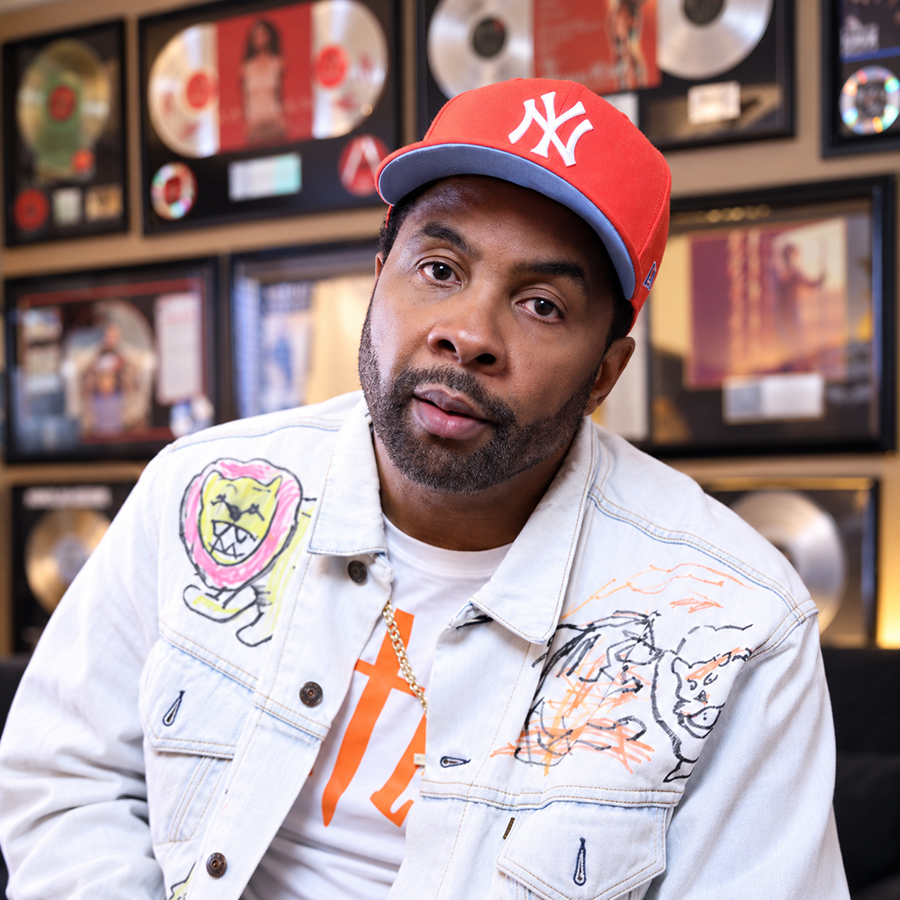
Q. You’ve collected some serious hardware along the way—an Emmy, Tellys, Webbys, and other recognition—but awards can only tell part of a producer’s story. What accomplishment means the most to you that might not be sitting on a shelf somewhere?
Being able to share this gift with my family and encourage somebody else means a lot to me. Being connected with purpose-filled projects like the Eboni Canal is far greater than any accolade. Working with incredible people like Emmai Alaquiva reminds you how much of a need your gift can fulfill. I’m grateful for recognition, but I also care about what people experience when they work with me. Did I help them grow? Did I encourage them? Did I give them something they could carry into their own life? Seeing my children develop their gifts brings a kind of fulfillment that you can’t put on a shelf.
Q. And now you’re helping create music for Netflix’s A Different World sequel series while collaborating with your oldest son, Stephen Anderson Jr. There’s something beautiful about that full-circle moment—a career that started with you learning the game and now includes helping the next generation find its own musical voice. What’s it like working alongside your son, and what do you hope he takes from watching the way you’ve built this career?
Sharing this opportunity with Stephen Jr. is a blessing. I’m proud of the man he’s become and the talent he brings. A Different World means something to so many people, so contributing to that legacy together makes it special. I’m grateful to Big Tank for bringing us into it.
I hope he sees that you can keep growing throughout your career. Keep learning, treat people well, and take your work seriously. And I want him to trust his own musical voice. There’s room for what he hears, too.
Q. You’ve gone from Pittsburgh to the West Coast, from gangsta rap to children’s television, from records to scoring, and from your own generation into your son’s. If you could put one sentence on the wall of every young producer trying to build a career today, what would you want it to say about longevity, adaptability, and staying true to who you are?
Stay true to who you are, stay humble enough to learn, and let your gift grow beyond the first thing people know you for.
Q. Last one, Bud’da. After everything—the records, the studios, the artists, the television sets, the awards, the unexpected turns, and now watching your son step into the world you’ve spent decades navigating—when you finally turn the music down and look at the whole picture, what does Stephen “Bud’da” Anderson’s story mean to you? What do you hope people hear when they hear your name?
When I look at the whole picture, I see God’s grace. I see people who believed in me, opportunities I couldn’t have planned, and difficult seasons that helped me grow. Music has given me a way to connect with people across generations, and I’m grateful I still get to create.
When people hear my name, I hope they think of somebody who cared—about the music, about his family, and about the people around him. I hope my story encourages somebody to keep going and stay open to what God can still do in their life.


