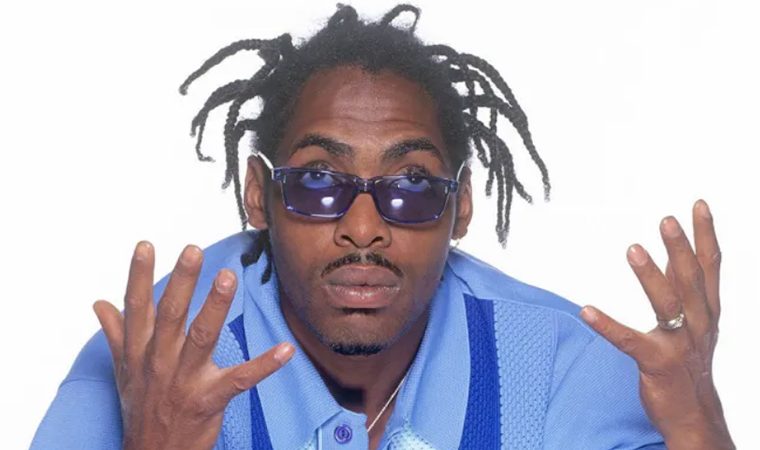

Negros De La Raza: No Translation Necessary (Interview)
By: Todd “DG” Davis
Rapindustry.com
Photo Credit: Memo Ortega
___
Before hip-hop became a global commodity, it was a local conversation.
It traveled through neighborhoods long before it traveled through fiber-optic cables. It lived in swap meets, corner liquor stores, backyard barbecues, lowrider cruises, and family gatherings where James Brown, Vicente Fernández, Parliament, War, Curtis Mayfield, and Cypress Hill all belonged in the same afternoon. Nobody called it multicultural then. It was simply life.
That world produced artists like Sen Dog and Kemo The Blaxican.
Neither man set out to become a spokesperson for Latino hip-hop. They were simply documenting the streets that raised them. Yet history has a way of revealing significance long after the moment has passed. As one of the unmistakable voices of Cypress Hill, Sen Dog helped redefine what West Coast hip-hop could sound like while proving Latino artists belonged at the center of the culture’s evolution. Through Delinquent Habits, Kemo carried that same spirit forward, blending bilingual lyricism, Afro-Latino identity, Chicano pride, and neighborhood storytelling into music that never asked permission to exist.
Their paths have crossed for decades.
Negros De La Raza feels less like a new group than the inevitable conclusion of a conversation that began years ago.
Its debut, La Pura Neta—”the honest truth”—isn’t interested in polishing history or romanticizing it. Produced entirely by Chazz “Fiyastarta” Padilla, the album stands on lived experience rather than mythology. Identity, resilience, family, struggle, humor, faith, and survival aren’t themes borrowed for artistic effect; they’re the language these artists have spoken their entire lives.
That’s what gives the record its weight. It doesn’t perform authenticity. It embodies it.
Whether through the neighborhood pride of “Para Mi Gente,” the commanding presence of “Jefe De Jefes,” or the deceptively playful “Super Vato,” every song carries the perspective of men who understand that legacy isn’t preserved by looking backward. It’s preserved by continuing to create.
In an era increasingly driven by algorithms and fleeting attention, La Pura Neta offers something timeless: cultural memory. It reminds us that hip-hop’s greatest strength has never been trends. It has always been testimony.
Sen Dog and Kemo The Blaxican aren’t revisiting the past. They’re extending it.
And in doing so, they remind us that the most enduring stories aren’t the ones shouted the loudest. They’re the ones lived honestly enough to become history.
_______
Q. Hip-hop has always rewarded chemistry, but chemistry can’t be manufactured. You two have crossed paths for decades, yet La Pura Neta feels less like a collaboration and more like a conversation that was waiting to happen. Why was now the right time for Negros De La Raza?
Kemo The Blaxican: People think music starts in the studio. It doesn’t. It starts in your life—every mistake you make, every funeral you attend, every friend you lose, every victory nobody claps for.
Sen and I have known each other a long time. We didn’t need to force chemistry because life had already done the work. We just had to be ourselves, never pretending we had something to prove.
Twenty-five-year-old me would’ve made a different record. This album could only be made by two people who’ve survived enough to know what’s worth saying—and what’s just noise.
Q. Before playlists, algorithms, and streaming, there were neighborhoods, swap meets, lowrider shows, backyard parties, and mom-and-pop record stores where cultures naturally collided. How much of La Pura Neta is a love letter to that era, and how much is a statement about where Latino hip-hop is headed?
Kemo The Blaxican: Back then, your neighborhood was your algorithm. It didn’t ask what you wanted to hear.
You walked outside and heard funk from one house, rancheras or corridos from another, oldies down the block, and rap blasting from somebody’s ranfla. That’s just how it was, and I loved how music was passed along and discovered. That’s the world that made us.
This album isn’t trying to recreate that time because you can’t bottle yesterday. It’s reminding people that culture comes from neighbors living side by side. Latino hip-hop keeps evolving, and it’s the artists pushing boundaries today who intrigue me the most.
Q. The title translates to “the honest truth,” and that’s a bold promise in a genre where perception often competes with authenticity. What truths about your lives and communities were you determined to tell that maybe haven’t been heard enough?
Kemo The Blaxican: We wanted to show the full picture. Our communities aren’t one-dimensional. There’s struggle, but there’s also love, family, humor, pride, and resilience.
Being Afro-Latino, growing up between different cultures—that’s something I’ve lived my whole life. People like us don’t fit neatly into categories. I’m Black. I’m Mexican. I’m from the Lower East Side of Los Angeles. I’m American. Some people spend their whole lives trying to decide which one you should be. I’ve spent mine refusing to choose.
That’s La Pura Neta.
Q. Cypress Hill and Delinquent Habits helped prove bilingual rhymes and Chicano pride weren’t a niche—they were a movement. Looking back, did you realize you were helping redefine what West Coast hip-hop could look and sound like?
Kemo The Blaxican: Speaking for myself—no, not at all. We were just trying to represent where we came from in a creative, original way while paying the rent and staying true to hip-hop’s roots and foundation. People rewrite history like everyone knew they were changing the world. Most of us were simply trying to make records that sounded like home. Turns out… that’s how history gets made.
Q. This album celebrates Afro-Latino identity and Chicano culture without asking permission or offering apologies. In today’s climate, why is it more important than ever to tell those stories on your own terms?
Kemo The Blaxican: Because if we don’t tell our stories, somebody else will. And they’ll either clean them up or completely distort them. They’ll sand off the rough edges, make us easier to sell—or paint us as something we’re not. Our stories aren’t supposed to be comfortable. They’re supposed to be true. And nobody can tell them more authentically than we can.
Q. One thing that stands out about this project is that it doesn’t feel trapped by nostalgia. It respects the past but never sounds like it’s trying to recreate it. How do you honor your legacy without becoming prisoners of it?
Kemo The Blaxican: The worst thing an artist can become is their own tribute band. We’ve already made those records. They’re still there. Go listen to them.
Our job now isn’t to chase our younger selves. It’s to show people what Kemo The Blaxican and Sen Dog sound like today.
That’s what La Pura Neta is—something familiar with a brand-new groove.
Q. West Coast hip-hop has always been bigger than one city or one sound. From South Gate to South Central, East L.A. to the Bay, every neighborhood added another chapter. Where do you think La Pura Neta fits into that larger West Coast story?
Kemo The Blaxican: I think it reminds people the West Coast has always been diverse. It’s never been just one sound or one perspective.
Our album adds another chapter by reflecting the multicultural reality of California—Black, Brown, immigrant families, working-class neighborhoods.
We’ve all helped shape West Coast hip-hop. La Pura Neta reflects that truth.
Q. What’s the biggest misconception people still have about the culture and the artists who helped build it?
Kemo The Blaxican: The biggest misconception is that we got lucky.
People see the success, but they don’t see the years of fighting just to be heard. We weren’t given a lane.We carved one out. And we’re not here just to remember the past. We’re still creating. The story didn’t end—we just turned the page.
Q. Humor has always been part of great hip-hop, and “Super Vato” captures that spirit while still carrying a deeper message. Why has laughter always been such an important survival tool in communities that have often had to fight to be seen and heard?
Kemo The Blaxican: People smile when they hear “Super Vato,” and that’s exactly the point.
We grew up clowning on each other. No matter how hard life got, somebody always had a joke. That’s part of our culture. But underneath the humor is the truth.
The hook says, “Only love can conquer the demon. Only love can get me off this ride.”
That’s what the song is really about.
We’ve all got demons. We’ve all got scars. The humor gets your attention, but the message reminds you that love is stronger than fear, hate, or bitterness.
To me, a Super Vato isn’t the toughest guy in the room. It’s the one who can take life’s punches, still laugh, love his people, and keep moving forward. That’s real strength.

Q. If a 20-year-old listener discovers Sen Dog or Kemo The Blaxican for the first time through La Pura Neta, what do you hope sends them digging back through Cypress Hill, Delinquent Habits, and the history that made this album possible?
Kemo The Blaxican: I hope they discover something authentic.
If this album makes them curious enough to explore where we came from, that’s a beautiful thing. They’ll hear the evolution—not just of us, but of Latino hip-hop itself. Go back and listen to those records.
If they still move you today… That’s all the answer you need.
Q. You’ve both reached the point where legacy is no longer something people predict—it’s something you’ve earned. When you look around at today’s artists carrying pieces of what your generation built, what gives you the most pride?
Kemo The Blaxican: Watching young artists stop apologizing.
They don’t ask if Spanish belongs. They don’t ask if Black and Brown belong together. They just make music.
That’s what we fought for without ever calling it a fight. When they step outside the box, do it in their own flavor, and blow people’s wigs back… I feel proud for them.
Q. Finally, La Pura Neta is about truth, identity, resilience, family, and pride. When people drop the needle—or hit play—and the album ends, what’s the one feeling or realization you hope stays with them long after the music stops?
Kemo The Blaxican: I hope somebody walks away feeling less alone.
Or more connected. That’s enough. A lot of people spend their lives wondering if anyone else has lived what they’ve lived. Then somebody writes it down. Or raps it. Or sings it. Suddenly, the weight gets a little lighter. That’s what music did for me as a kid. If La Pura Neta does that for someone else, then we’ve done our job. And I hope they walk away feeling like they experienced a complete album—one they never once felt the need to skip a track.