
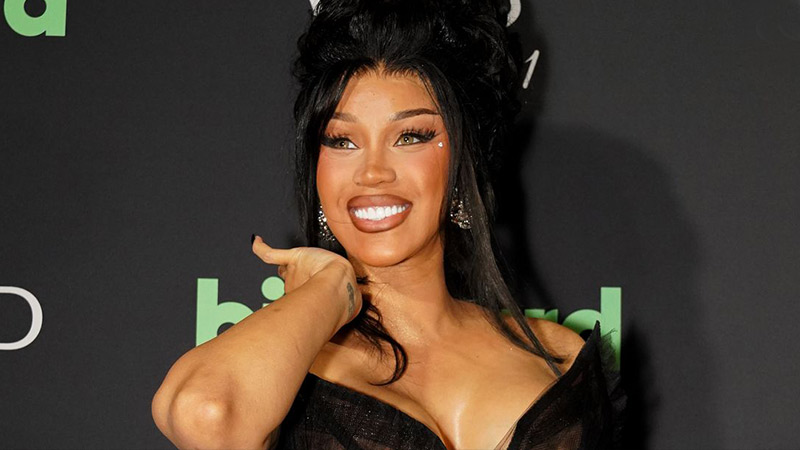
Cardi B and Warner Music Beat $50M Copyright Suit Over “Enough (Miami)” — And the Legal Lesson Is Bigger Than the Win
A Texas federal judge ruled on March 30 that there are fatal deficiencies in a lawsuit brought against Cardi B, Atlantic Records, and Warner Music Group by music producers Joshua Fraustro and Miguel Aguilar — dismissing their claims that her 2024 hit “Enough (Miami)” copied their earlier track “Greasy Frybread.” The ruling by U.S. District Judge Fernando Rodriguez Jr. came down primarily on jurisdictional grounds, with the court finding that Texas was not the proper venue to bring the lawsuit.
The suit had been filed in July 2024. Fraustro and Aguilar — who produce under the name Kemika1956 — alleged Cardi lifted the melody and bassline of “Greasy Frybread,” a 2021 composition that gained wider recognition after its use in promotional material for the acclaimed FX series Reservation Dogs. They claimed the unauthorized duplication damaged their reputations in the industry and caused them to be blacklisted. The lawsuit originally named additional defendants including producers OG Parker and DJ SwanQo, as well as Celebrity Booking Agency — all of whom were voluntarily dismissed before the final ruling, leaving only Cardi B and the two label defendants.
The jurisdictional argument was the first wall the plaintiffs couldn’t scale. Fraustro and Aguilar argued that Cardi did business in Texas through live performances there, but Judge Rodriguez was not swayed: “Plaintiffs do not demonstrate that Almanzar targeted Texas for concert performances, rather than simply including Texas venues within a broader concert tour in numerous states.”
But jurisdiction was only the beginning. Even setting the jurisdiction issue aside, the judge found that every claim in the case would have failed independently. The plaintiffs brought several causes of action under Texas state law — including unfair competition, defamation, tortious interference, and misappropriation of intellectual property. The court found that federal copyright law preempted all of those state-level claims, meaning federal law controls disputes of this nature and Texas law could not be used as a workaround.
Then came the most damaging revelation of all — and the one with the broadest industry implications. The plaintiffs had also attempted to bring federal infringement claims against Atlantic Records and Warner Music Group, but those were undermined by the fact that Fraustro and Aguilar did not have a registered copyright for “Greasy Frybread” at the time they filed the lawsuit. Without that registration, the federal claims could not stand. The copyright was not registered until October 31, 2025 — more than a year after the suit was filed.
The judge disposed of the label claims on the same grounds, writing that the plaintiffs’ failure to register a copyright “renders the claims defective.”
The court also denied the plaintiffs’ request to file a third amended complaint, ruling any further amendments would be futile.
The dismissal is without prejudice — meaning Fraustro and Aguilar could theoretically refile in a jurisdiction with proper authority over the defendants. But given the foundational defects the court identified across every single claim, the path forward is steep.
For the hip-hop business community, the real takeaway here isn’t Cardi’s winning streak — it’s the copyright registration reminder embedded in this ruling. In the current era of sample-heavy production, interpolations, and AI-assisted music creation, producers and independent artists are increasingly finding themselves in copyright disputes. This case is a stark reminder: if you don’t have a registered copyright, you don’t have a federal claim. Full stop. Registration through the U.S. Copyright Office is not optional protection — it is the prerequisite for enforcement.

“Enough (Miami)” hit No. 9 on the Billboard Hot 100 and remained on the chart for 14 weeks. It has since been re-released on the deluxe version of Am I the Drama?, Cardi’s sophomore album that debuted at No. 1 on the Billboard 200. The song remains on the setlist for her ongoing Little Miss Drama arena tour.
Cardi B’s team declined to comment following the ruling.