T.F: Streets, Stories & Soul Assassins (Interview)
By: Todd “DG” Davis
Rapindustry.com
___
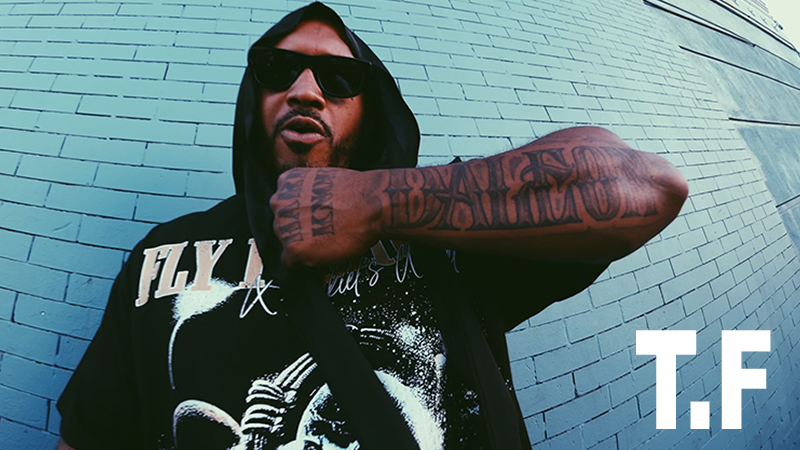
From the sun-baked streets of South Central Los Angeles to the shadowed studios of hip-hop’s elite, T.F has always moved like a man with a story to tell. He broke through on ScHoolboy Q’s “Tookie Knows II,” but that was just the opening chapter—since then, he’s sharpened his craft on projects like Feelin The Power and The Green Bottle, proving that lyrical precision, street wisdom, and cinematic vision can coexist in every bar. T.F doesn’t just rap—he paints vivid worlds, blending South Central hustle, underground philosophy, and an unshakable flow that commands attention.
Don’t Call Me Lucky is the next level: a cinematic collision of T.F’s razor-sharp storytelling with DJ Muggs‘ haunting, Soul Assassins textures. Tracks like “Star Studded – Dusted Edition” and “CLAP” with Ghostface Killah aren’t just songs—they’re immersive experiences, where every verse hits like a pulse, every beat sets a scene, and every word stakes T.F’s claim as one of hip-hop’s most formidable voices. This is a man who honors his roots, pushes the craft forward, and leaves an unmistakable mark on every street, studio, and screen he touches.
You and DJ Muggs have been collaborating for years. How did Don’t Call Me Lucky come together differently than your previous work with him?
I think most of the records we worked on—or had out prior to this album—were actually supposed to be on this album. The process felt more intentional, more cinematic, and more collaborative than anything we’d done before.
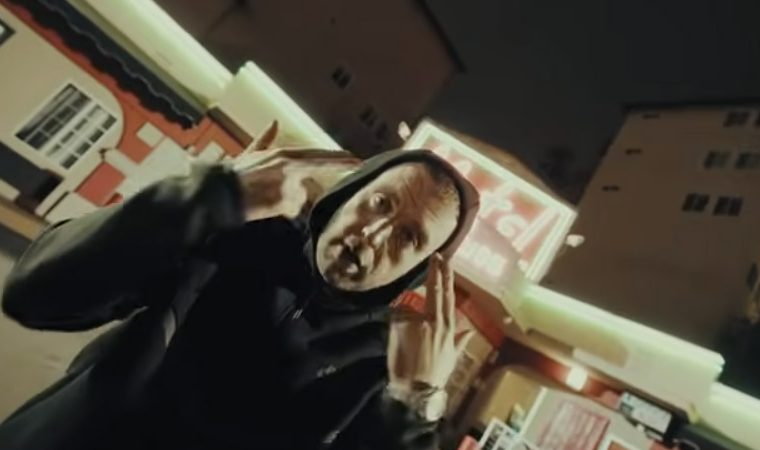
“Star Studded” has a gritty, shadowy vibe. How do the visuals connect the music to the film?
I wrote Star Studded in a Carl’s Jr. parking lot on my way to the gym—literally daydreaming at a red light. That’s how I came up with the hook. For the visual, we wanted to capture what daydreaming of a better life actually looks like—bringing the vibe of aspiration to life.
Your sound has shifted from classic West Coast bounce to a minimalist, cinematic style. How did that influence your approach this time?
What influenced my approach on this project was collaborating with DJ Muggs. He has a signature style and sound that makes it impossible not to get into a raw, visual storytelling bag.
Working with producers like DJ Muggs, Roc Marciano, and Mephux, how do you navigate their signature sounds while keeping your voice front and center?
I make sure none of my albums or projects sound the same. No matter who I’m working with, I want the listener to step into a whole new world every time.
Writing with the film in mind, how did storytelling change when each song had a visual narrative to match?
The movie actually came after the music. I did make a few records that tie into certain parts of the film after seeing rough cuts, but for the most part, the album was done before the movie.
Your lyrics are rooted in survival, ambition, and 51st Street. How do you stay authentic while pushing your sound and visuals forward?
My music is authentic because it’s my story. That makes painting the picture easy. But my end game is film and directing, so until then, my videos will always feel cinematic.
How do you balance the cinematic noir elements of the project with the rawness and immediacy of street rap?
I wouldn’t call it street rap—more storytelling. There’s a big difference between hearing someone rap about street stuff and actually seeing it. With my music being vivid, it’s almost like a script, which makes shooting the visuals easier.
Which part of the process—album or film—pushed you the most creatively, and why?
We put the film together collectively, but I was a small part of that process. It was a new experience for me, building a film alongside the music, so that definitely pushed me.
How do you craft verses that resonate musically while also translating to the cinematic world of the film?
It’s easy—I translate real-life events and situations into storytelling. That makes the visuals flow naturally.

Looking back at your earlier work, what lessons carried into this collaboration with DJ Muggs?
Versatility has been huge. Working with Muggs, you have to be flexible, 100 percent, because his energy pushes you to expand and elevate every time.
Do you see Don’t Call Me Lucky as a culmination of your past work or a launchpad for what’s next?
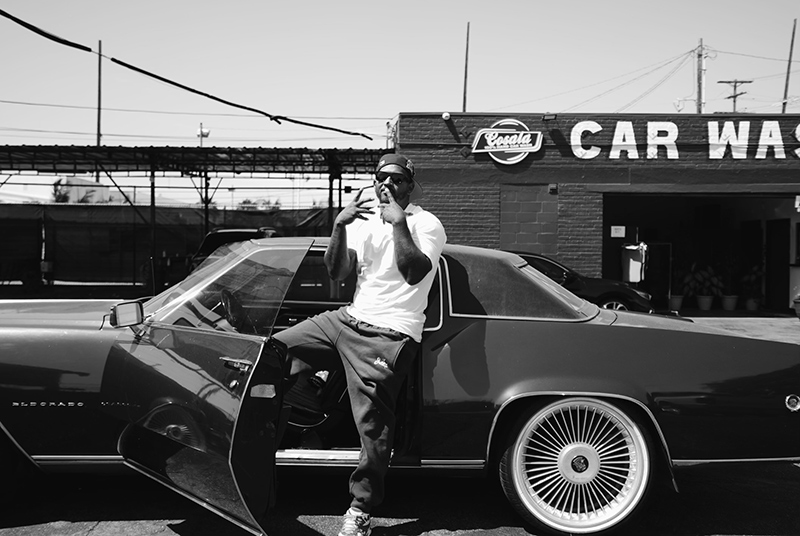
Don’t Call Me Lucky is a culmination of the hard work nobody sees. Like building an old-school car—you craft the engine, interior, exterior, custom paint, and then throw the beat in the trunk. It’s all about the work, not luck.
When people experience the album and film, what feeling or idea do you want to stick with them?
This is nothing normal! I want them to feel the craft, the vision, and the story—everything I’ve built into it. It’s a full experience, cinematic, vivid, and real.