By: Todd “DG” Davis
Rapindustry.com
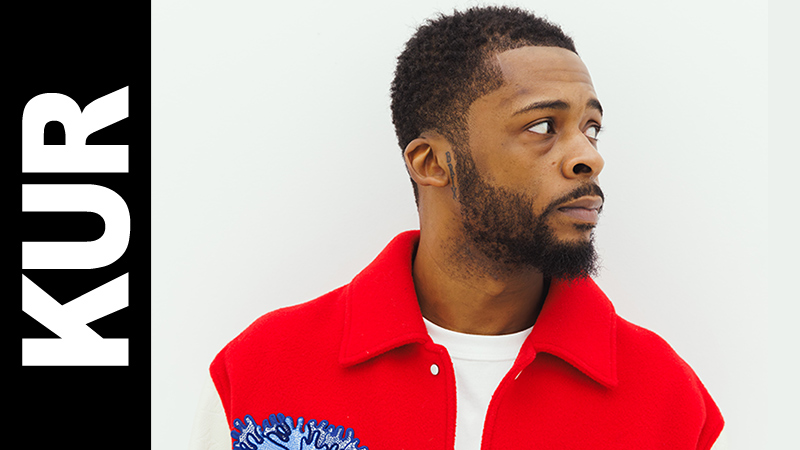
KUR’s story starts in the streets of Philly—free-styling on corners, pressing CDs, writing raps out of his car. That grind built him, shaped his discipline, and forged the code behind ARD.
Now, he moves with intention, every verse and beat deliberate, every silence carrying weight. The past taught him survival, the present sharpens his focus, and the future? That’s all him—unstoppable, unshakable, and fully in control.
ARD isn’t just an album; it’s KUR staking his claim on what comes next.
You’ve been outside since the early 2010s — pressing up physical CDs, hitting DatPiff, freestyling on corners. When did “ARD” stop being slang and start becoming a survival code for you?
I would say “ARD” stopped being slang and became more of a survival code for me recently. It’s something we’ve heard for years, and it kind of had one meaning. Then a few months ago, it clicked and became something deeper.
Back then you were writing raps while living out your car. Now you’re dropping a 16-track statement piece. What did that version of you have to release to become this version?
I think I had to release the fear of the unknown and just work. Not worry so much about the future, but live in the moment.
THURL laid the groundwork in 2024. How does ARD sharpen that philosophy — is this the grown-man chapter of that same code?
Yes. I think “ARD” shapes the “THURL” philosophy because it all ties back together. There’s a saying I use at the beginning of ARD: “You always thurl as long as you ARD, and you always ARD as long as you thurl.” It hit deep because we all go through different battles, but if you remain thurl and your intentions are good, you’ll always be ARD.
Philly says “ard” like punctuation. What made you decide to turn a casual city phrase into something disciplined and deliberate?
I think it was just the space I was in—overwhelmed with certain situations. It just made sense. But I wanted to turn something we say every day in Philly into something with more meaning—something that can get you through whatever you’re dealing with. Something that reminds you everything is going to be fine, even when it feels like it’s not.
In the early days, you were fighting to be heard. Now you’ve got sold-out shows and co-signs. How do you stay grounded when the volume around you gets louder?
I always tell myself: the same way you got it is the same way you can lose it. I appreciate every blessing, big or small. Sometimes the volume does get loud, but remembering the small things and how much I’ve grown keeps me balanced.
You’ve worked with artists like Dave East and Lil Uzi Vert, and earned respect from Meek Mill and Pusha T. What lessons from those experiences show up in ARD?
I would say consistency. It gives me the drive to keep going, knowing I have peers who inspire me and support me. That gives me the fire to deliver a project like ARD.
“HUMBUG” featuring G Herbo feels like two survivors talking. What kind of pressure were y’all channeling on that record?
I’ve been a fan of Herb for a minute, so for it to come full circle was a dope moment. Us being spitters on the same track, coming from similar struggles, was magic. We really rap, so putting us together gave the world exactly that.
Selling out the Theatre of Living Arts three nights straight after THURL — did that feel like you arrived, or like the real work just started?
Both. It felt like I arrived, and like the real work just started. I’ve been trying to sell out the TLA for years, so to do it three times was amazing—it felt full circle. I actually booked the TLA three times before and couldn’t sell it out, so this meant everything.
You’ve seen artists blow up fast and burn out faster. What does discipline protect that talent alone can’t?
Discipline is how you stay consistent. Even if you get a win, you go right back in the gym and keep shooting. You don’t let the win get to your head—you keep working and pushing.
ARD is about restraint over reaction. In a city and an industry that rewards loud moments, how do you make stillness feel powerful?
Through my years of hard work and ups and downs, I feel like I’m the perfect person to tell the world about “ARD” because it fits my journey so well. I’m still growing, but I’ve come a long way. It used to be reaction over restraint for me, and as I grew, it became the opposite.
Looking back at your ShaKUR and Spare Me era, what patterns did you have to break to reach this mindset?
Doing the same things I did when I first started rapping. I had to let go of trauma and the problems that come with where I’m from. In certain environments, we’re taught the wrong things, and I had to unlearn that.
You’ve performed on major stages and pulled up to schools with backpacks and supplies. How does the Art of Release & Discipline apply to leadership in the community?
It shows you where you can be and what you can do if you stay disciplined and release certain things from your life. You can only grow and become the best version of yourself if you let go of certain habits and ways of thinking.

Philly’s called the “land of the spitters.” From the cyphers to now, how has your pen evolved — and what stayed the same?
It evolved a lot—still room for growth, though. I’ve come a long way from the cyphers. I wasn’t afraid to try new sounds, and over time I found what fits me.
What’s something from your past you used to carry heavy that you finally left at ARD?
Feeling like I had to bring the whole hood with me. Feeling like my win had to be everybody’s win.
If someone’s listening who feels pressure with no applause — like you once did — what does this album teach them about surviving the long game?
That you always thurl as long as you’re ARD, and you’re always ARD as long as you’re thurl.
Five years from now, when people look back at ARD, what chapter of your story will they say this was — the pivot, the proof, or the peace?
Definitely the pivot. The shift is happening. This is the beginning of something bigger.